







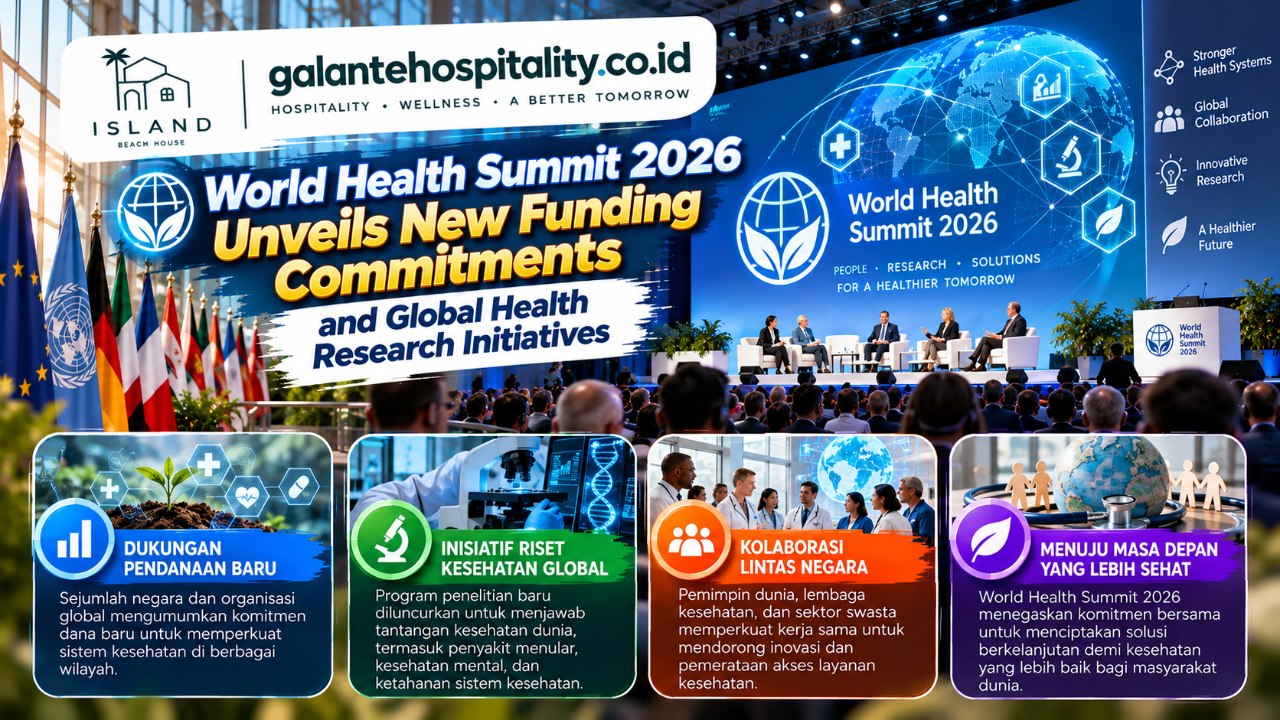

The World Health Summit 2026 concluded in Berlin with new funding commitments, research announcements, and initiatives intended to address major global health challenges. The event brought together more than 4,000 participants from 130 countries and territories, including policymakers, scientists, healthcare professionals, civil society representatives, and private-sector leaders.
Held under the theme From Crisis to Resilience: Innovating for Health, the summit emphasized the importance of international cooperation at a time when health systems face financial pressures, emerging threats, and unequal access to essential services.
The announcements highlight the need to connect scientific research with practical improvements in healthcare delivery, disease prevention, and health system resilience.
New Funding Supports Women’s Health
One of the initiatives announced at the summit was a planned €250 million women’s health program involving the Government of Bangladesh and the European Investment Bank.
The initiative aims to improve women’s health services and strengthen district hospitals and critical care capacity. Its planned focus reflects the importance of improving access to healthcare at facilities that serve communities outside major urban centers.
Access to quality maternal and reproductive healthcare remains an important concern in many regions. Patients may face barriers such as long travel distances, limited staffing, shortages of equipment, or financial constraints.
Strengthening local healthcare facilities can help bring essential services closer to communities. However, funding announcements must be followed by effective implementation, adequate staffing, transparent management, and monitoring of outcomes.
Healthcare programs also need to account for local needs rather than relying on a single model for every community.
New Commitment Targets Stillbirth Prevention
Another announcement involved a joint commitment of US$100 million from the Gates Foundation and Wellcome Leap for the Uzima: A Stillbirth Prevention Program.
The program aims to demonstrate that stillbirth rates can be reduced by half within a decade in selected countries. The initiative is intended to support efforts to improve pregnancy outcomes through research and interventions that can be evaluated in real-world settings.
Stillbirth prevention is a complex public health challenge involving access to antenatal care, identification of pregnancy complications, appropriate clinical management, and timely access to emergency obstetric services.
Research can help identify which interventions are most effective in different healthcare environments. However, progress also depends on trained healthcare workers, reliable referral systems, adequate medical equipment, and continuity of care.
The announced target represents an ambition rather than a guaranteed outcome. Results will depend on implementation quality, the evidence generated, and the ability to scale successful approaches.
Research Highlights Emerging Global Health Threats
The summit also provided a platform for research and discussions on emerging risks to global health.
Among the announcements was a Lancet Commission on 21st Century Global Threats to Health, which identified the malicious use of artificial intelligence and nuclear conflict as threats with potentially catastrophic consequences.
World Health Summit
The inclusion of AI-related risks reflects growing concern about how powerful technologies could affect health, security, and essential services when used irresponsibly.
At the same time, AI may offer potential benefits in areas such as medical research, clinical decision support, administrative efficiency, and disease surveillance. Realizing these benefits requires appropriate testing, privacy protections, human oversight, and safeguards against misuse.
Public health institutions must evaluate new technologies carefully, particularly when errors could affect patient safety or access to services.
International cooperation can help researchers share evidence, develop standards, and identify risks that cross national borders.
Public Trust in Science Remains Important
The summit also featured findings from the Wellcome Global Monitor 2026 concerning public trust in science. The summit’s organizers reported that the findings indicated a decline in trust compared with levels before the COVID-19 pandemic.
World Health Summit
Public trust matters because effective health policies often depend on people understanding and accepting evidence-based recommendations.
Misinformation, inconsistent communication, unequal access to services, and negative experiences with healthcare institutions can weaken confidence in scientific and medical guidance.
Building trust requires more than publishing research findings. Health authorities and researchers need to communicate clearly, explain uncertainty honestly, respond to public concerns, and make evidence accessible to different communities.
Engaging local healthcare workers and community leaders can also help ensure that public health messages are understandable and relevant.
Strengthening Healthcare Systems for Future Crises
Global health challenges often extend beyond the capacity of individual countries. Infectious disease outbreaks, shortages of essential medicines, environmental risks, and disruptions to healthcare supply chains can affect multiple regions at once.
The World Health Summit provides a platform for stakeholders to discuss shared priorities and coordinate potential responses. Nevertheless, international meetings alone cannot resolve these challenges.
Progress depends on sustained financing, effective national policies, strong healthcare institutions, and cooperation between governments and research organizations.
Healthcare systems also need to invest in workforce development, reliable information systems, emergency preparedness, and equitable access to essential services.
Funding should be accompanied by clear goals and transparent reporting so that governments and communities can assess whether programs are improving health outcomes.
Turning Commitments Into Measurable Results
The announcements from the World Health Summit 2026 demonstrate continued efforts to mobilize funding, support research, and address global health risks.
The next challenge is translating commitments into measurable improvements. Programs need realistic implementation plans, reliable monitoring, and the flexibility to respond when evidence or local conditions change.
For communities, the ultimate value of global health initiatives lies in better access to care, safer pregnancies, stronger hospitals, and more effective responses to health emergencies.
The summit’s outcomes underline the importance of combining scientific innovation with practical healthcare delivery. Sustainable progress will require cooperation across sectors and continued attention to the needs of people who face the greatest barriers to essential health services.
As global health priorities evolve, the ability to turn research and funding into accessible, effective care will remain central to building healthier and more resilient communities.


