







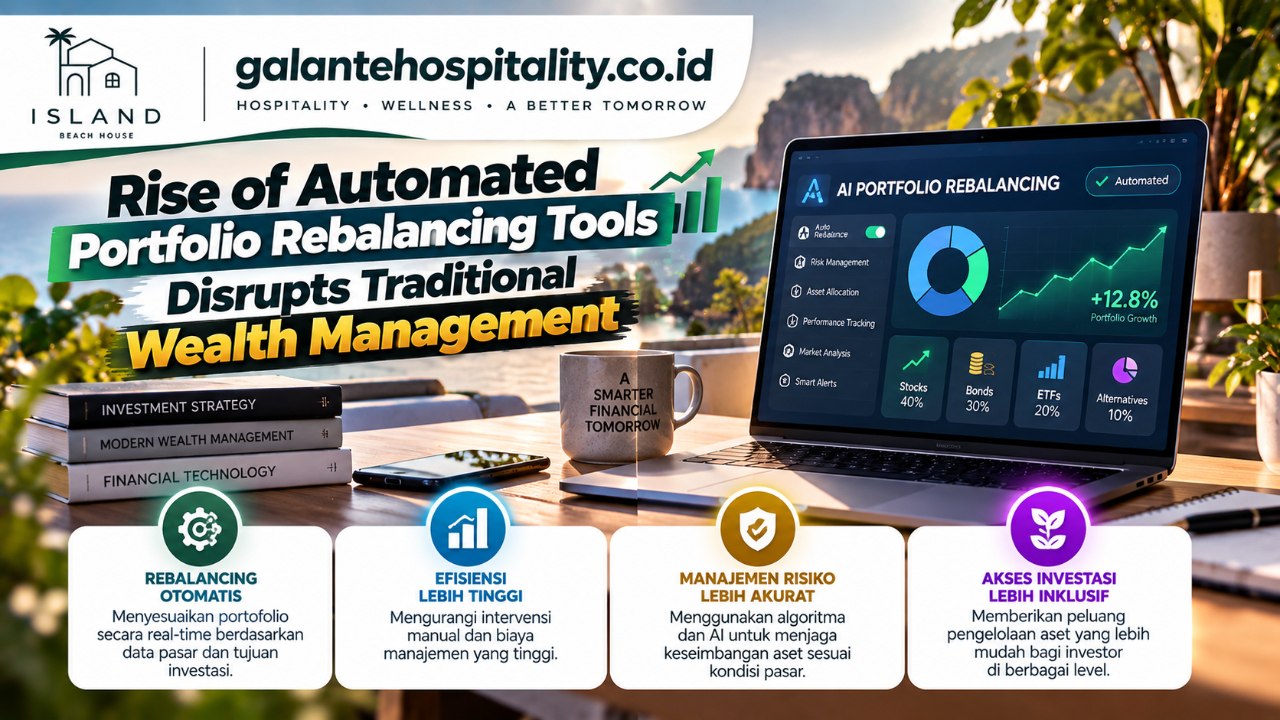

Automated portfolio rebalancing tools are changing how investors manage their investments as digital financial services become more accessible. These platforms use algorithms to monitor asset allocations and adjust portfolios when market movements cause investments to move away from predefined targets.
Traditionally, portfolio rebalancing has been a task performed by financial advisers, wealth managers, or individual investors. The process involves reviewing a portfolio’s composition and buying or selling assets to restore the intended balance between investments such as stocks, bonds, cash, and other financial instruments.
For example, an investor may establish a portfolio with a target allocation of 60% stocks and 40% bonds. If stock prices rise significantly, the portfolio could gradually shift toward a higher stock allocation. A rebalancing system would identify the deviation and recommend or execute transactions intended to bring the portfolio closer to its original structure.
Automated tools can perform these calculations continuously or at scheduled intervals, depending on their design. Some systems rebalance portfolios when allocations cross predetermined thresholds, while others conduct periodic reviews. This automation can reduce the time investors spend monitoring individual positions and calculating potential transactions.
One major attraction is accessibility. Wealth management services were historically associated with personal advisers and relatively high account balances. Digital investment platforms have introduced automated portfolio management to a broader audience, including investors who may not qualify for traditional premium advisory services.
These platforms can also make portfolio management more consistent. Human investors sometimes allow emotions to influence their decisions, particularly during periods of market volatility. Automated systems follow predefined rules, helping investors maintain a structured investment strategy instead of reacting impulsively to short-term price movements.
However, automation does not guarantee superior investment performance. Rebalancing primarily manages asset allocation and portfolio risk; it does not eliminate market losses or ensure positive returns. A portfolio can remain appropriately balanced while experiencing substantial declines during a broad market downturn.
Tax considerations are another important factor. Selling appreciated assets in taxable investment accounts may create capital gains liabilities, depending on local regulations and individual circumstances. Trading costs, bid-ask spreads, and platform fees can also reduce returns if a system rebalances too frequently.
For this reason, sophisticated platforms may consider tax-loss harvesting, transaction costs, available cash, and account-specific restrictions when managing portfolios. These features can improve operational efficiency, but their effectiveness depends on the investor’s circumstances and the quality of the underlying implementation.
Traditional wealth managers are also adapting to the growing availability of automated investment technology. Rather than competing exclusively on portfolio administration, some advisers are incorporating digital tools into their services while focusing more heavily on financial planning, tax coordination, retirement strategies, and personal guidance.
This hybrid approach recognizes that investment management involves more than maintaining target percentages. Investors may need help deciding how much to save, preparing for major expenses, managing debt, or adjusting investment strategies as their personal circumstances change.
Automated tools also face limitations when market conditions become unusual. Algorithms operate according to their programming, assumptions, and available information. If a system is poorly configured or based on unsuitable risk assumptions, automation can repeatedly implement decisions that do not align with an investor’s actual objectives.
Cybersecurity and data privacy are additional concerns. Investment platforms may handle sensitive financial information and account credentials, making secure authentication, transparent data practices, and appropriate regulatory oversight important considerations for consumers.
Investors should also understand whether an automated service provides investment recommendations, executes transactions, or offers both functions. Different platforms have different responsibilities, fee structures, investment choices, and levels of human support.
The growth of automated portfolio rebalancing reflects a wider transformation in financial services. Technology is making routine investment administration more efficient, while changing how consumers access professional financial guidance.
The most effective approach depends on the investor’s goals, financial knowledge, risk tolerance, tax circumstances, and willingness to manage investments independently. Automated tools may simplify portfolio maintenance, but they cannot replace the need for a suitable investment strategy.
As digital wealth management continues to evolve, the relationship between automation and traditional financial advice is likely to become increasingly collaborative. Algorithms can handle repetitive calculations and transactions, while qualified professionals provide context and judgment for more complicated financial decisions.


