







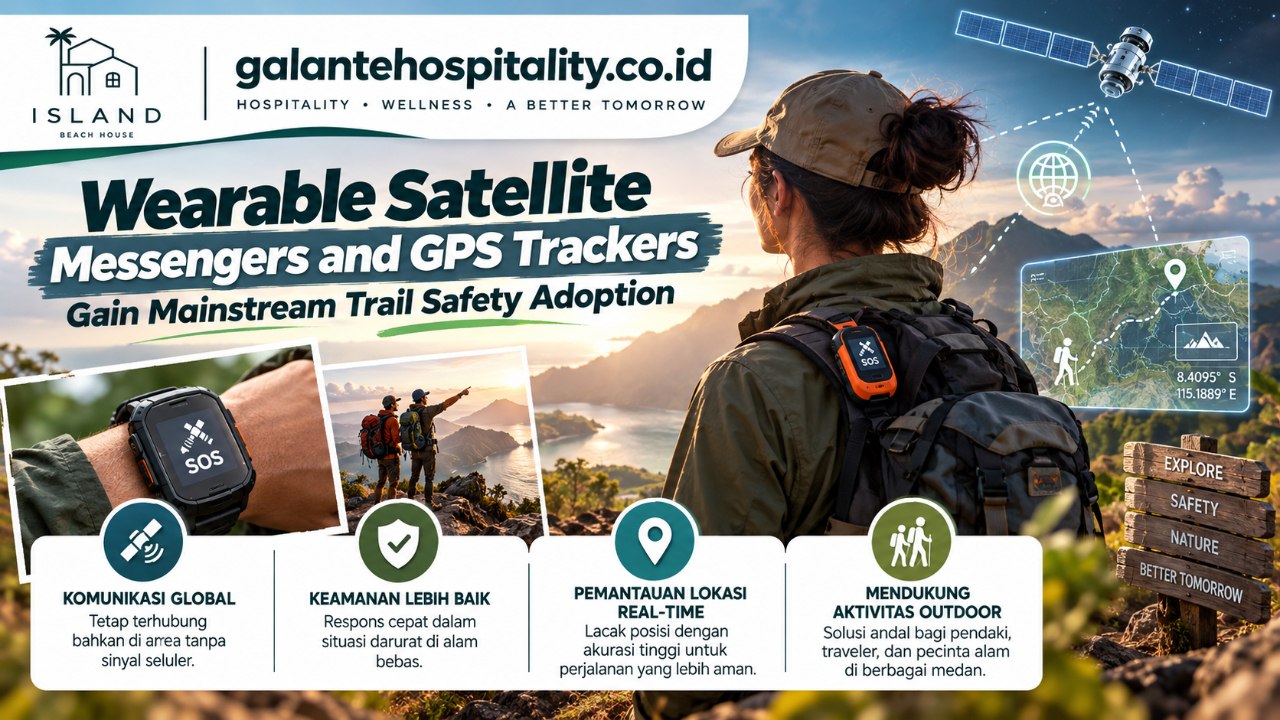

Outdoor adventure is becoming more accessible as hikers, climbers, and backpackers increasingly adopt wearable satellite messengers and GPS tracking devices to improve safety in remote environments. These technologies are gaining attention because they allow outdoor enthusiasts to communicate, share their locations, and request emergency assistance in areas where traditional mobile networks are unavailable.
As more people explore mountains, forests, deserts, and isolated hiking trails, reliable communication has become an important part of outdoor preparation. Mobile phones remain useful for navigation and photography, but their dependence on cellular coverage creates limitations in locations far from populated areas. Satellite-connected devices offer an additional layer of protection when conventional communication methods fail.
One of the main advantages of wearable satellite messengers is their ability to transmit messages beyond the reach of standard cellular networks. Depending on the device and service plan, users can send preset updates, exchange text messages, share their coordinates, and contact emergency response services. Some models also provide tracking features that allow friends or family members to follow a person’s progress during an extended outdoor trip.
These capabilities are particularly valuable for solo hikers and people participating in activities that involve unpredictable terrain or changing weather conditions. When a trail becomes difficult to navigate or an unexpected injury occurs, the ability to communicate from a remote location can significantly improve the chances of receiving timely assistance.
GPS trackers are also becoming more sophisticated. Modern devices can record routes, display geographic coordinates, and help users identify their position relative to planned destinations. Some products combine GPS navigation with satellite messaging, reducing the need to carry several separate devices. Wearable designs make these tools easier to access while walking, climbing, or traveling through challenging landscapes.
The growing popularity of these products reflects a broader shift in outdoor recreation. Safety technology is no longer viewed exclusively as equipment for professional mountaineers or experienced wilderness guides. Recreational hikers, campers, cyclists, and travelers are increasingly considering communication devices as part of their essential gear.
However, adopting satellite technology requires more than purchasing a device. Users need to understand coverage limitations, subscription requirements, battery performance, and the differences between emergency communication and routine messaging. Satellite connections can be affected by surrounding terrain, dense vegetation, buildings, and the availability of a clear view of the sky.
Battery management is another important consideration. Extended trips may require users to carry power banks, reduce unnecessary tracking frequency, or activate energy-saving settings. Learning how to send an emergency message before entering a remote area can also prevent confusion during a stressful situation.
Cost remains a potential barrier for some outdoor enthusiasts. Device prices and recurring service fees vary, meaning consumers should compare features with their actual travel needs. A short hike near populated areas may not require the same equipment as a multi-day expedition through isolated mountain ranges.
Outdoor safety experts generally emphasize that technology should complement, rather than replace, careful planning. Hikers still need appropriate clothing, sufficient water, reliable maps, first-aid supplies, and knowledge of local conditions. A satellite messenger cannot eliminate every risk, particularly when weather, terrain, or physical injuries make evacuation difficult.
As wearable technology continues to develop, satellite messaging and GPS tracking could become increasingly integrated into outdoor equipment. Improvements in battery efficiency, compact designs, location accuracy, and communication services may make these devices more practical for a wider range of users.
The broader objective is not simply to introduce more technology into outdoor recreation. It is to help people make better decisions, maintain communication when possible, and respond more effectively when unexpected situations occur.
For anyone planning to explore remote destinations, wearable satellite messengers and GPS trackers offer an additional safety resource. Their growing adoption demonstrates how modern communication technology can support outdoor adventures while encouraging more responsible preparation.


