







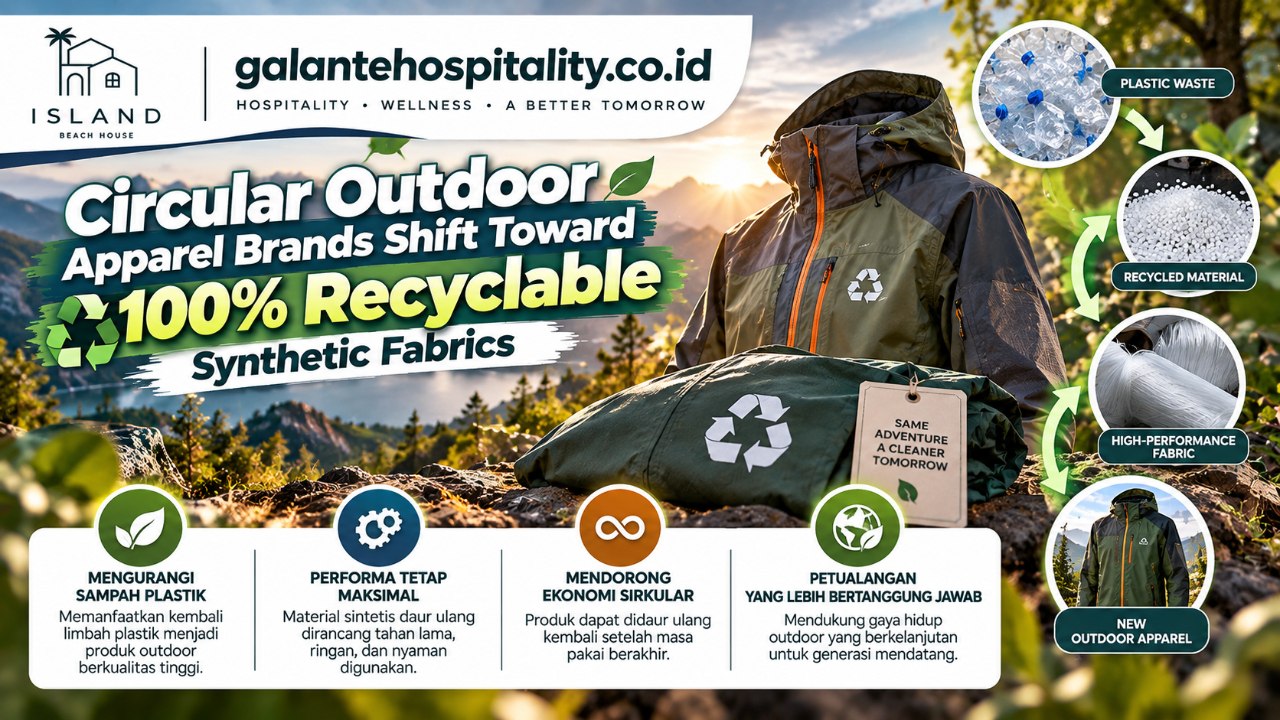

Outdoor apparel brands are increasingly exploring circular production models as sustainability becomes a more important consideration for consumers, manufacturers, and retailers. One area receiving growing attention is the development of recyclable synthetic fabrics designed to reduce textile waste and improve the long-term use of materials in hiking jackets, outdoor trousers, backpacks, and other performance equipment.
Synthetic fabrics such as polyester and nylon are widely used in outdoor clothing because they can provide durability, lightweight construction, moisture management, and weather resistance. These characteristics make them suitable for demanding environments, where garments must perform under changing temperatures, rain, wind, and repeated physical stress.
However, traditional outdoor apparel can be difficult to recycle. Many products combine different fibers, membranes, coatings, zippers, adhesives, and other components that require separate processing methods. Even when individual materials are technically recyclable, mixed construction can make the recovery process expensive or impractical.
Circular apparel design attempts to address these challenges by considering a product’s entire life cycle, from material selection and manufacturing to repair, reuse, collection, and recycling. Instead of treating clothing as disposable merchandise, the approach aims to preserve material value for as long as possible.
A central strategy involves developing garments made from a single polymer or a more compatible combination of materials. For example, using polyester across several garment components may simplify certain recycling processes compared with combining unrelated fibers and coatings. Similar approaches are being explored for nylon-based products.
Nevertheless, creating clothing that is genuinely recyclable remains technically challenging. Waterproof membranes, durable water-repellent finishes, elastic components, and other performance features may complicate material recovery. Brands must balance environmental objectives with the durability and functionality consumers expect from outdoor equipment.
The movement toward recyclable synthetic fabrics also reflects growing interest in recycled raw materials. Recycled polyester can be manufactured from suitable recovered plastic or textile feedstocks, while recycled nylon can be produced from selected industrial waste and discarded materials. These approaches can reduce dependence on virgin resources, although their overall environmental benefits depend on production methods, energy consumption, transportation, and the availability of effective recycling infrastructure.
Another important development is the expansion of repair and take-back programs. Some outdoor brands encourage customers to repair damaged products, purchase used equipment, or return unwanted garments through collection initiatives. Such programs can extend product lifespans and provide manufacturers with more opportunities to recover valuable materials.
Repairability is especially important for outdoor clothing because consumers often invest in products intended to withstand years of use. Replacing a broken zipper, repairing a torn seam, or restoring a damaged waterproof layer may keep a garment functional without requiring the purchase of an entirely new item.
Brands are also examining how product design affects recyclability. Removable components, accessible seams, clearer material labeling, and fewer unnecessary material combinations can help make future recycling more practical. However, these improvements require cooperation between designers, textile suppliers, manufacturers, retailers, and waste-management companies.
Consumers have an important role in this transition. Choosing durable garments, following care instructions, repairing minor damage, and using available collection programs can help reduce unnecessary waste. Buyers should also examine sustainability claims carefully, because recycled content, recyclability, and verified circular recovery are different concepts.
A product containing recycled material is not automatically recyclable at the end of its useful life. Likewise, a garment described as recyclable may not have access to a collection system or industrial facility capable of processing it. The distinction between technical recyclability and actual recycling is essential when evaluating environmental claims.
The financial side of circular apparel presents additional challenges. Developing new fabrics, redesigning manufacturing processes, and establishing collection networks can require substantial investment. Recycled materials may also face supply limitations, while some recycling technologies remain expensive or difficult to scale.
Despite these obstacles, circular design could create new opportunities for outdoor brands. More efficient material use, repair services, secondhand sales, and material recovery may support new business models while responding to consumers who want longer-lasting products.
The shift toward fully recyclable synthetic fabrics should therefore be understood as an ongoing industry transition rather than an achievement that every brand has already reached. Progress will depend on measurable product standards, reliable recycling systems, transparent reporting, and continued improvements in textile engineering.
Ultimately, sustainable outdoor apparel must do more than reduce environmental impact during manufacturing. It should combine performance, durability, repairability, and realistic end-of-life solutions. By designing products with these priorities in mind, outdoor brands can move closer to a circular system in which fewer valuable materials are discarded after a garment reaches the end of its original purpose.


