







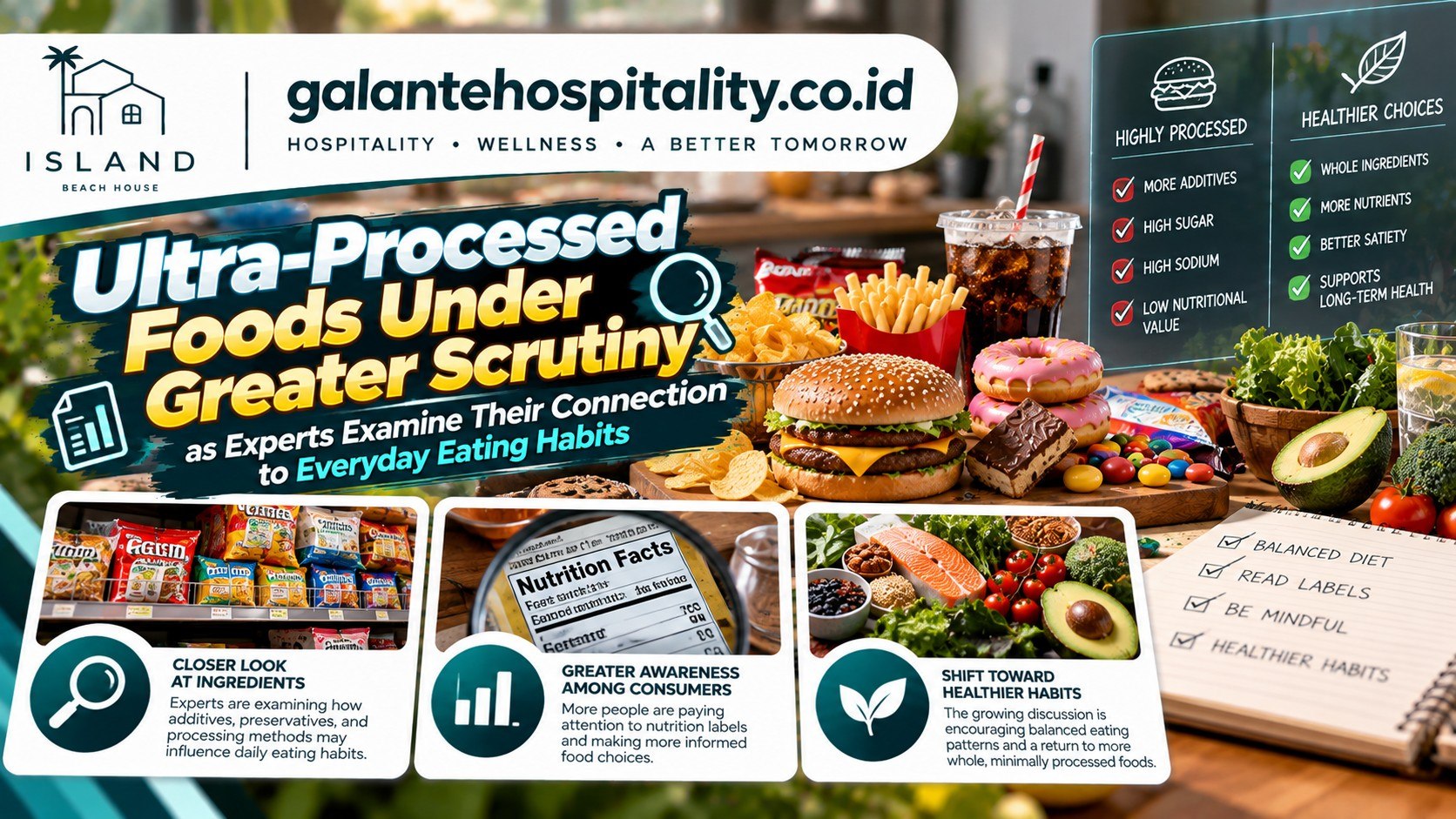

Ultra-processed foods have become an important topic in discussions about nutrition and public health. These products are widely available in supermarkets, convenience stores, vending machines, and online grocery platforms, making them part of everyday eating patterns for many people.
Examples can include packaged snacks, sugary soft drinks, instant meals, and certain ready-to-eat products. However, the category is broad, and not every packaged food has the same nutritional profile. Understanding the differences is important when making practical decisions about diet.
Researchers continue to examine how diets high in ultra-processed foods may be associated with health outcomes. At the same time, nutrition professionals emphasize the importance of considering the overall diet, portion sizes, food quality, and individual circumstances rather than judging foods solely by their packaging.
What Are Ultra-Processed Foods?
The term ultra-processed foods is commonly used in food classification systems to describe products made through industrial processes and often containing ingredients or additives used to improve taste, texture, shelf life, or convenience.
Some products are formulated to be especially appealing and easy to consume. They may combine refined starches, added sugars, fats, salt, flavorings, or other ingredients.
Common examples include many packaged confectionery products, sweetened drinks, and certain instant or ready-to-eat foods. However, classifications can vary, and consumers should not assume that every processed product is automatically unhealthy.
Frozen vegetables, pasteurized milk, canned beans, and other minimally processed or conventionally processed foods can be practical parts of a balanced diet. Processing itself is not a complete measure of nutritional quality.
Why Researchers Are Studying Their Health Effects
Research has reported associations between diets containing high amounts of ultra-processed foods and several unfavorable health outcomes. These findings have increased interest in how food processing may interact with nutrition, eating behavior, and long-term health.
One challenge is separating the effects of processing from other factors. People who consume more ultra-processed foods may also differ in physical activity, income, sleep patterns, access to fresh food, or other health-related behaviors.
Some controlled studies have examined whether diets dominated by ultra-processed foods affect how much people eat. Other research uses long-term observational data to investigate associations with conditions such as obesity, cardiovascular disease, and type 2 diabetes.
These approaches provide different types of evidence. Observational associations do not automatically prove that a particular food category directly causes a disease, and findings should be interpreted in the context of the broader scientific literature.
Researchers are also investigating possible mechanisms, including energy density, eating speed, fiber content, nutrient composition, and how food texture influences satiety.
Reading Food Labels Can Help Consumers Make Informed Choices
Food labels provide practical information that can help shoppers compare products. Important details include serving size, calories, added sugars where listed, sodium, saturated fat, protein, and dietary fiber.
The ingredient list can also offer useful clues. Ingredients are generally listed in descending order by weight in many labeling systems, although the exact rules depend on the country.
A product with a long ingredient list is not necessarily unhealthy, and a short list does not guarantee that it is nutritionally balanced. Consumers should consider the whole nutritional profile rather than relying on a single feature.
For example, when comparing breakfast products, shoppers might examine sugar content, fiber, protein, and serving size. When choosing packaged meals, sodium and the amount of vegetables or other nutrient-rich ingredients may also be relevant.
Understanding labels becomes easier with practice, allowing people to make decisions that fit their dietary needs and budgets.
Practical Ways to Improve Everyday Eating Habits
Changing eating habits does not require eliminating every convenient food. A more realistic approach is to improve the overall balance of meals and gradually increase the variety of nutrient-rich foods.
Fresh or frozen vegetables, fruits, whole grains, beans, nuts, and suitable sources of protein can help provide important nutrients. The most appropriate choices depend on personal preferences, health needs, cultural eating patterns, and food availability.
Preparing some meals at home may also help people control ingredients and portion sizes. Simple options include adding vegetables to a familiar meal, choosing water more often instead of sugary drinks, or keeping fruit available for snacks.
Convenience remains important for people with demanding work schedules, limited cooking facilities, or restricted budgets. Canned legumes, frozen produce, and other convenient ingredients can support balanced eating without requiring every meal to be prepared from scratch.
Small changes that can be maintained over time are often more practical than strict rules that are difficult to follow.
Food Choices Are Also Shaped by Access and Affordability
Nutrition advice sometimes assumes that everyone has the same access to fresh ingredients, cooking equipment, storage facilities, and time. In reality, these resources differ considerably between households.
Food prices, working hours, transportation, and the availability of grocery stores can influence what people eat. For some families, packaged products are affordable and easy to store, making them an important part of daily food planning.
Public health strategies can therefore extend beyond individual choices. Improving access to affordable nutritious foods, providing clear food-label information, and supporting practical nutrition education can help people make informed decisions.
Food manufacturers and retailers also influence the choices available to consumers through product formulation, pricing, marketing, and the placement of foods in stores.
Finding a Balanced Approach to Nutrition
The growing discussion around ultra-processed foods highlights the importance of understanding how everyday eating patterns affect health. Yet the topic should not become a reason to fear every packaged product or adopt an unnecessarily restrictive diet.
A balanced approach focuses on the overall pattern of eating, including food variety, nutrient intake, portion sizes, and consistency over time. It also recognizes that individual health needs differ.
For people managing medical conditions or specific dietary requirements, advice from a qualified healthcare professional or registered dietitian can help translate general nutrition guidance into an appropriate plan.
Ultimately, making informed food choices is more useful than relying on broad labels alone. By understanding ingredients, comparing nutritional information, and gradually including more nutrient-rich foods, consumers can develop eating habits that are practical, sustainable, and supportive of long-term well-being.
Convert to PDF


