







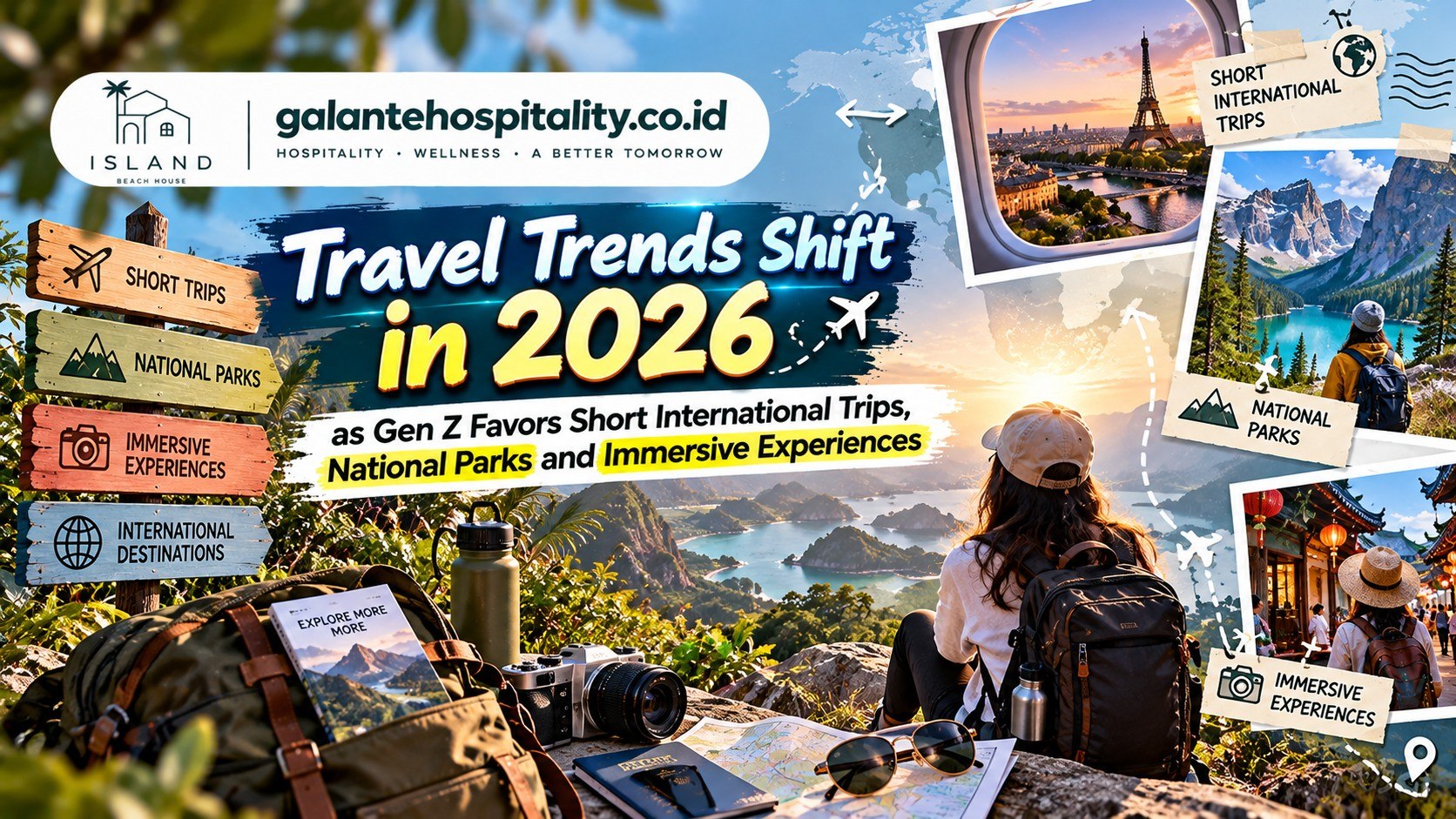

Travel behavior is changing rapidly in 2026 as younger travelers place greater emphasis on short international trips, nature-based experiences and activities that create meaningful memories.
Gen Z is playing an important role in this transformation.
Rather than relying exclusively on long traditional vacations, younger travelers are increasingly exploring shorter trips that allow them to experience new cultures without making a major long-term commitment.
Airbnb’s 2026 travel predictions identified several major trends, including short international city breaks, growing interest in national parks, event-driven travel and immersive experiences. Airbnb Newsroom
Gen Z Embraces Short International Getaways
One of the most notable trends is the growth of one- and two-day international trips.
Airbnb’s internal data indicates that Gen Z travelers are increasingly interested in short international getaways.
These trips can combine sightseeing, food, entertainment and cultural activities within a limited period.
The trend reflects how younger travelers are trying to maximize their available vacation time.
Instead of waiting for a long holiday period, travelers can take shorter trips throughout the year.
This approach also gives tourists more opportunities to visit multiple destinations.
City Travel Remains Popular
Urban destinations are benefiting from this trend.
Large cities can provide many experiences within a relatively compact area.
Travelers can visit museums, restaurants, historical sites, entertainment venues and cultural attractions without spending long periods traveling between locations.
Airbnb highlighted destinations such as Buenos Aires among cities attracting Gen Z travelers looking for vibrant culture, food and entertainment. Airbnb Newsroom
The attraction is not necessarily luxury.
For many younger travelers, the priority is the quality and uniqueness of the experience.
Nature Tourism Is Also Growing
At the same time, travelers are showing greater interest in escaping busy urban environments.
Airbnb reported that searches for stays near national parks in the United States increased by 35% in 2026.
Nature and outdoor experiences also became the platform’s leading booked experience category. Airbnb Newsroom
This suggests that modern travel is developing in two seemingly different directions.
Some travelers want fast-paced city experiences.
Others want quiet outdoor environments.
Both trends share a common element: travelers want experiences that feel meaningful rather than simply spending time in a destination.
The Rise of Immersive Travel
Immersive travel is becoming another major part of the 2026 tourism landscape.
Travelers increasingly want to participate rather than simply observe.
Food classes, cultural workshops, outdoor activities and local experiences can provide deeper connections with destinations.
This creates opportunities for local businesses.
A traveler who joins a cooking class, visits a local farm or learns a traditional craft is not simply purchasing a sightseeing activity.
They are participating in the local culture.
Major Events Are Influencing Travel Decisions
Large sporting, music and cultural events are also influencing tourism demand.
Airbnb reported that 65% of its top-searched travel dates and cities for 2026 were connected with major global events such as the Winter Olympics, Coachella and the FIFA World Cup. Airbnb Newsroom
This demonstrates how event tourism can influence destination selection.
People may choose to travel because of a specific event and then extend the trip to explore the surrounding region.
This creates additional economic opportunities for hotels, restaurants, transportation companies and local attractions.
Solo Travel Continues to Expand
Another trend highlighted in the 2026 travel outlook is growing interest in solo travel.
Travelers are increasingly using trips as opportunities for personal discovery.
Solo travel can provide greater flexibility because individuals do not need to coordinate schedules with a larger group.
It can also encourage travelers to explore destinations according to their own interests.
Emerging destinations may benefit from this trend because solo travelers can be more willing to explore less traditional tourism markets.
Technology Helps Travelers Plan Faster
Digital technology is supporting many of these changes.
Travelers can use mobile applications to discover destinations, compare accommodation, build itineraries and find local experiences.
Social media also plays a significant role in destination discovery.
A location can become popular rapidly after appearing in viral videos or social media posts.
This creates opportunities for lesser-known destinations but also presents challenges when visitor numbers suddenly increase.
What These Trends Mean for the Travel Industry
The travel industry needs to adapt to travelers who value flexibility, personalization and experiences.
Hotels may need to offer more flexible services.
Tour operators can create shorter and more specialized packages.
Local communities can develop cultural and outdoor experiences.
Destinations can promote lesser-known attractions to distribute visitors more evenly.
The most successful tourism businesses will likely be those that understand why travelers choose experiences rather than simply where they travel.
The Future of Travel in 2026
The travel landscape is becoming more diverse.
Some travelers want short international adventures, while others are searching for peaceful nature experiences.
Some plan trips around major global events, while others travel alone for personal discovery.
What connects these trends is the desire for memorable and meaningful experiences.
As technology makes travel planning easier, travelers may have more freedom to create highly personalized journeys.
The result could be a tourism industry that is less focused on traditional vacation patterns and more focused on individual experiences.


