







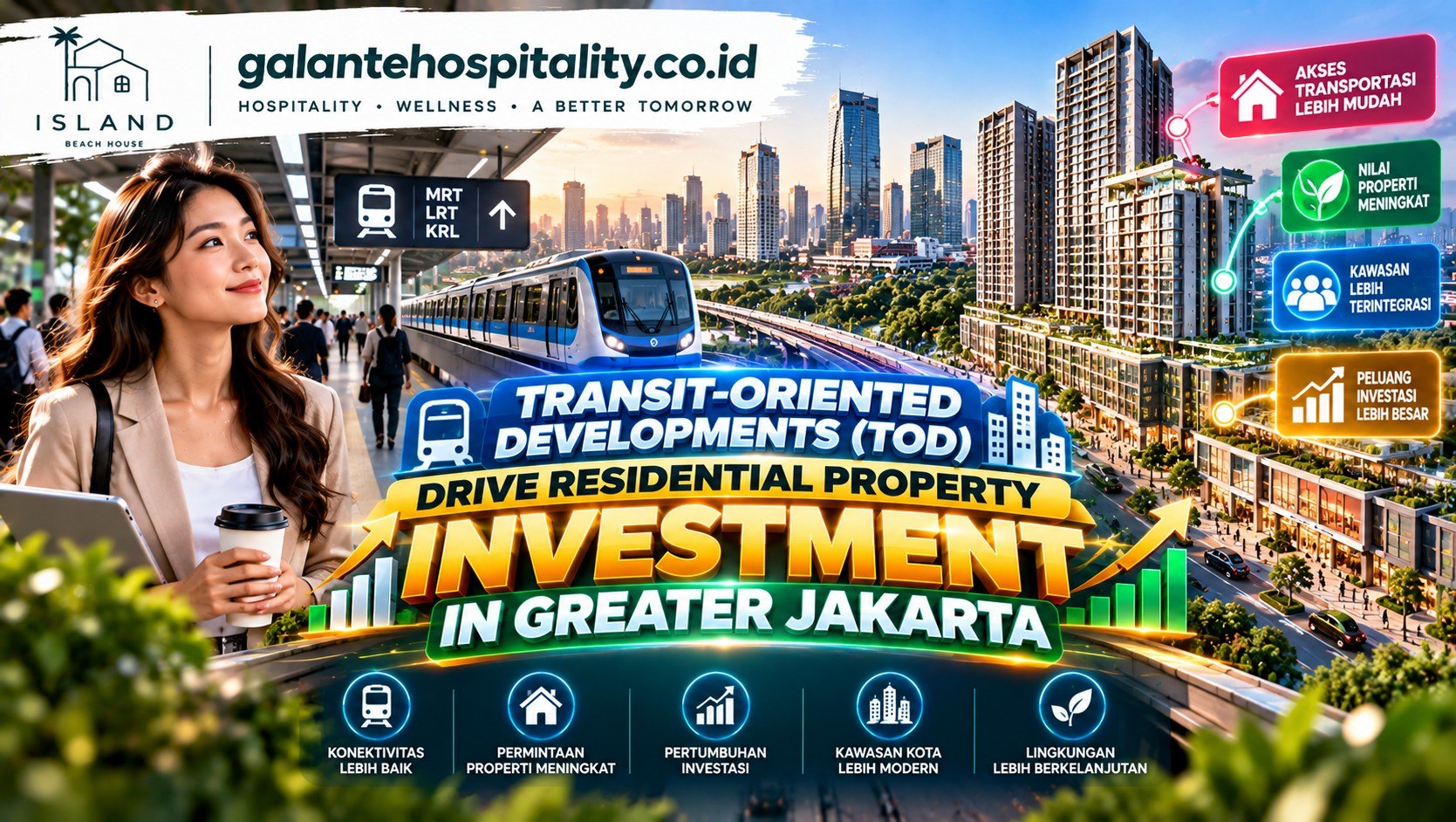

Transit-Oriented Developments (TOD) have emerged as the primary catalyst for residential property investment across the Greater Jakarta region (Jabodetabek). As urban congestion and commuting costs rise, property developers and individual real estate investors are increasingly prioritizing high-density residential projects directly connected to public transportation nodes.
By integrating apartment towers and commercial hubs with Mass Rapid Transit (MRT), Light Rail Transit (LRT), and Commuter Line (KRL) networks, developers are capturing strong demand from urban professionals seeking reduced commute times and sustainable city living.
1. The Strategic Appeal of Transit-Oriented Living
The shift toward Transit-Oriented Developments marks a fundamental evolution in consumer preferences across Greater Jakarta’s housing market. Historically, homebuyers favored suburban landed houses; however, lengthy daily commutes have shifted demand toward vertically integrated urban communities.
+-------------------------------------------------------------------+
|               KEY DRIVERS OF TOD PROPERTY DEMAND                  |
+-------------------------------------------------------------------+
| Growth Factor                     | Impact on Homebuyers          |
+-----------------------------------+-------------------------------+
| Direct Transit Access             | Eliminates peak-hour congestion|
| Lower Transportation Costs        | Reduces fuel and toll expenses |
| Higher Rental Yields              | Attracts urban tenant demand  |
+-----------------------------------+-------------------------------+
Core Benefits Driving Investor Interest:
- Reduced Commute Times: Direct access to MRT and LRT stations cuts transit times to Jakarta’s central business districts (CBD) to under 30 minutes.
- Higher Capital Appreciation: Properties within a 500-meter radius of active transit stations consistently outperform non-connected suburban housing developments in resale value.
- Resilient Rental Demand: Young working professionals and small families prefer renting units in transit hubs, providing property investors with reliable yield streams.
External Reference: Learn more about urban infrastructure projects on theMinistry of Transportation Republic of Indonesia Portal(Outbound Link Suggestion).
2. Public Transport Expansion Accelerating Property Growth
The continuous expansion of urban rail systems across Greater Jakarta has unlocked new real estate corridors in previously underserved suburban markets.
                     Greater Jakarta Transit Infrastructure
                                       |
     +---------------------------------+--------------------------------+
     |                                                                  |
     v                                                                  v
[LRT Jabodebek Network]                                [MRT Jakarta Extensions]
Connecting Bekasi & Cibubur hubs                       Expanding northern & southern
directly to central business zones                     commercial transit corridors
1. Suburban Corridor Integration
Districts such as Bekasi, Depok, and South Tangerang are seeing a surge in high-rise residential construction along LRT and commuter rail corridors. These transport links allow residents to enjoy lower suburban housing costs without sacrificing access to central Jakarta employment centers.
2. Integrated Retail and Lifestyle Hubs
Modern TOD models combine residential apartments with ground-floor retail spaces, co-working facilities, and pedestrian-friendly public parks, creating self-contained micro-communities that appeal to millennial and Gen-Z homebuyers.
3. Policy Support and Fiscal Incentives Fueling Market Momentum
The growth of TOD projects is further supported by government urban planning frameworks and fiscal incentives aimed at reducing carbon emissions and encouraging public transit adoption.
                 +---------------------------------+
                 |  FISCAL & POLICY MULTIPLIER     |
                 +---------------------------------+
                                   |
   +-------------------------------+-------------------------------+
   |                               |                               |
   v                               v                               v
[PPN DTP Tax Incentives]  [Zoning Adjustments]     [Carbon Reduction Goals]
Government VAT relief     Higher floor-area ratios  Promoting green transit
lowers purchasing costs   around major transit hubs to lower city emissions
Government programs, such as the Government-Borne Value-Added Tax (PPN DTP) incentive, apply to eligible primary apartments within TOD corridors, providing crucial cost savings for end-user homebuyers navigating current mortgage rates.
Internal Link Suggestion:Read our detailed report on how the Government-Borne VAT Incentive cushions the real estate sector
4. Outlook for TOD Property Investments in Indonesia
As urban transit networks expand across major Indonesian cities, Transit-Oriented Developments will remain at the forefront of national real estate growth. Property analysts project that TOD projects will continue to record above-average occupancy rates, making them a cornerstone strategy for both private developers and long-term property investors seeking sustainable returns in Southeast Asia’s largest urban economy.


