







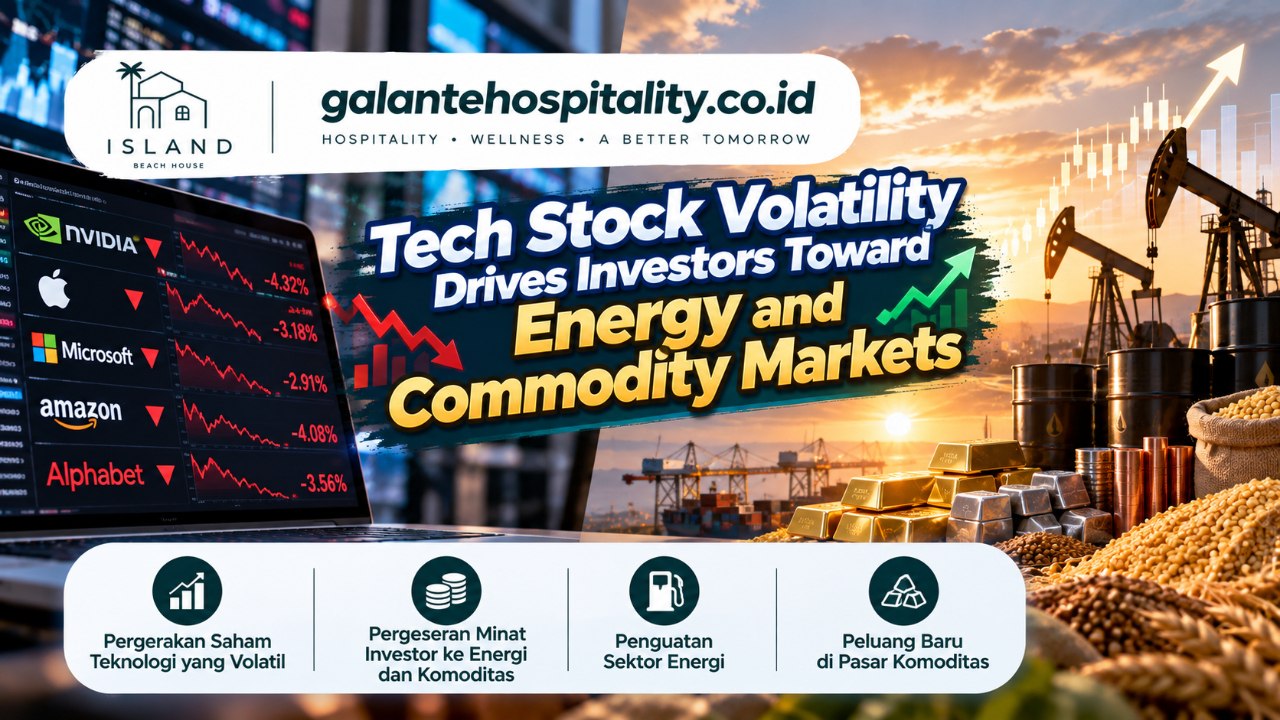

Volatility in technology stocks is encouraging investors to reassess portfolio diversification and examine opportunities beyond the technology sector. Energy companies and commodity markets can attract attention when investors become concerned about high valuations, changing interest-rate expectations, or uncertainty surrounding corporate earnings.
Technology shares can experience sharp price movements when market expectations change rapidly. Developments involving artificial intelligence, semiconductor demand, advertising revenue, cloud computing, and corporate spending can influence how investors value major technology businesses.
At the same time, energy producers and commodity-linked investments respond to different economic forces, including oil and gas demand, industrial activity, supply disruptions, and geopolitical developments. These differences can make them useful components of a diversified investment strategy, although they do not eliminate market risk.
Why Technology Stocks Can Experience Sharp Swings
Technology companies often attract significant investor interest because of their potential for rapid revenue growth and innovation. However, valuations can become sensitive to changes in expectations.
When investors anticipate strong future earnings, they may be willing to pay higher prices for technology shares. If revenue growth slows, competition increases, or expected returns fail to materialize, valuations can adjust quickly.
Interest rates also matter. Higher rates can reduce the present value of expected future earnings, placing pressure on companies whose valuations depend heavily on long-term growth.
Artificial intelligence has added another layer of uncertainty. While demand for computing infrastructure and AI-related services creates opportunities, investors must evaluate whether companies can convert large capital expenditures into sustainable profits.
Market concentration can increase the impact of these movements when a relatively small number of large technology companies account for a substantial share of major stock indexes.
Energy Markets Attract Attention
Energy investments can provide exposure to economic forces that differ from those affecting technology shares. Oil and gas producers, electricity providers, pipeline operators, and renewable energy businesses each have distinct revenue models and risk factors.
Oil prices, for example, can respond to global demand, production decisions, transportation disruptions, and geopolitical developments. Higher energy prices may benefit some producers while increasing operating costs for airlines, manufacturers, and other energy-intensive businesses.
Electricity demand is also attracting attention as data centers, industrial facilities, and electrification projects require additional power infrastructure. However, the financial benefits are not distributed equally across the energy sector.
Renewable energy companies may benefit from investment in cleaner electricity generation and grid modernization, but they can also face challenges related to financing costs, project delays, regulation, and equipment prices.
Investors therefore need to examine individual businesses rather than treating the entire energy sector as a single investment opportunity.
Commodity Markets Offer Different Sources of Exposure
Commodities such as gold, copper, oil, and agricultural products are influenced by supply-and-demand conditions. Their prices can move differently from stock markets, depending on the economic environment.
Gold is often considered a potential defensive asset during periods of uncertainty. Nevertheless, its price can fluctuate substantially and may be affected by real interest rates, currency movements, central bank purchases, and investor sentiment.
Copper is closely associated with industrial activity, construction, power networks, and electrification. Demand expectations can support prices, but economic slowdowns and increased supply can create downward pressure.
Agricultural commodities respond to weather conditions, harvest yields, transportation costs, and trade policies. These factors can create opportunities as well as significant uncertainty.
Investors can access commodity exposure through different instruments, including exchange-traded products, futures contracts, and shares of companies involved in production. These instruments have different structures, fees, and risks.
Diversification Becomes More Important
Diversification involves spreading investments across assets and sectors so that a portfolio does not depend entirely on one source of returns. Investors who hold large technology positions may review their allocations when market volatility increases.
However, adding energy stocks or commodities does not automatically improve a portfolio. Asset prices can become correlated during periods of market stress, and commodity markets can be especially volatile.
The appropriate allocation depends on an investor’s financial goals, time horizon, liquidity needs, and tolerance for losses. A short-term trader may approach market volatility differently from someone saving for retirement over several decades.
Investors should also consider the difference between owning shares in an energy company and holding the underlying commodity. A producer’s share price reflects management decisions, operating costs, debt, and company-specific risks in addition to commodity prices.
Likewise, commodity-linked funds may use futures contracts or other structures that produce returns different from movements in spot prices.
Risks Behind the Shift to Energy and Commodities
Moving money away from technology stocks can introduce new risks if investors act primarily on recent price movements. Energy companies may face regulatory changes, production costs, environmental obligations, and unexpected shifts in demand.
Commodity markets can be affected by severe weather, geopolitical conflict, inventory changes, and sudden supply disruptions. Prices may rise quickly and then reverse when market conditions change.
Another risk is paying too much for assets that have already experienced substantial gains. A sector that performs well over a short period may not continue outperforming, especially if investors have already priced in optimistic expectations.
Investors should examine valuations, cash flow, balance sheets, and the economic assumptions behind each investment rather than relying solely on headlines.
What Investors Should Watch Next
The outlook for technology stocks, energy companies, and commodities will depend on several interconnected developments. Corporate earnings, interest-rate expectations, global economic growth, and geopolitical conditions can all influence market performance.
Technology investors will continue to assess whether spending on artificial intelligence and digital infrastructure generates sufficient returns. Energy investors will monitor supply, demand, power consumption, and infrastructure investment. Commodity investors will pay attention to inventories, production forecasts, and changes in industrial activity.
The recent interest in alternative sectors highlights the importance of portfolio discipline rather than the need to abandon technology investments entirely.
A balanced strategy begins with clear financial objectives, appropriate risk management, and an understanding of how different assets behave. Diversification can help manage concentration risk, but it cannot guarantee profits or prevent losses during market downturns.


