







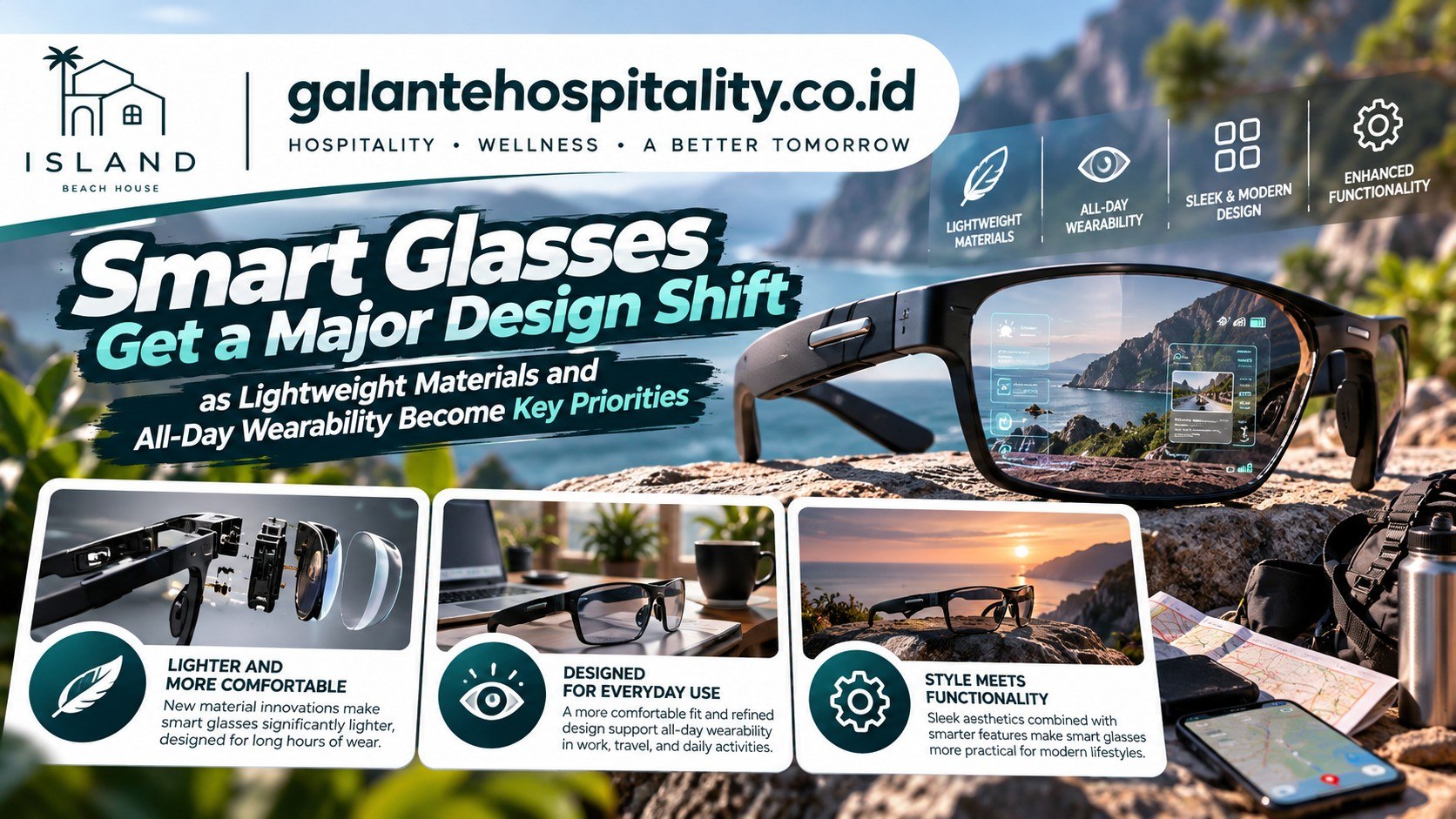

Smart glasses are evolving as technology companies look for ways to make wearable devices more practical for everyday use. Instead of focusing exclusively on advanced features, manufacturers are increasingly challenged to balance functionality, comfort, appearance, and battery performance. The goal is to create glasses that people can wear throughout the day without feeling that they are carrying a bulky electronic device.
This shift reflects a broader change in consumer technology. People want digital tools that fit naturally into their routines rather than devices that require constant attention. Smart glasses could support that expectation by placing selected digital features directly within a familiar form of eyewear.
Lightweight Materials Become a Design Priority
Weight is one of the most important considerations in wearable technology. Traditional glasses are designed to sit comfortably on the face, but adding cameras, microphones, batteries, speakers, and electronic components creates additional engineering challenges.
Even a small increase in weight can affect comfort when a device is worn for several hours. Pressure around the nose, discomfort behind the ears, and an uneven frame balance may discourage users from wearing smart glasses regularly.
To address these concerns, manufacturers can explore lightweight metals, durable polymers, compact electronic components, and improved frame designs. The challenge is to reduce weight without sacrificing strength, reliability, or visual appeal.
Material selection also influences how a product performs in different environments. Smart glasses need to withstand everyday handling, temperature changes, and occasional exposure to moisture, depending on their intended use. A successful design must balance durability with comfort rather than prioritize one at the expense of the other.
Everyday Features Could Make Smart Glasses More Useful
Smart glasses can offer a range of features, depending on the model. Some devices focus on hands-free audio, voice commands, and photography, while others incorporate small displays that provide notifications or navigation information.
These functions may be useful for people who want quick access to information without repeatedly reaching for a smartphone. A user could listen to directions while walking, answer a call through built-in audio, or capture a moment using a hands-free camera.
For professionals, wearable devices may also support specific tasks. Field technicians could access instructions while working, while logistics employees might use compatible systems to retrieve information without constantly handling another device.
However, usefulness depends on the quality of implementation. Controls need to be intuitive, audio must remain clear in suitable environments, and displays should not overwhelm the user’s natural field of view.
The most successful products may be those that perform a small number of everyday tasks reliably instead of attempting to replace every function of a smartphone.
Battery Life Remains a Major Challenge
Compact designs leave limited room for batteries. At the same time, cameras, wireless connections, microphones, and displays all consume energy.
Manufacturers therefore need to improve power efficiency at both the hardware and software levels. Low-power processors, optimized wireless connections, and intelligent standby modes can help extend battery life without requiring a larger frame.
Charging also affects convenience. A device that needs frequent charging may be less attractive to people who expect to wear it throughout a busy day. Portable charging cases can help, although they add another item that users must carry.
Battery performance should be evaluated according to actual usage rather than a single headline figure. Recording video continuously, making calls, and using navigation may consume substantially more power than occasional voice commands.
Privacy and Security Cannot Be Overlooked
Smart glasses introduce privacy questions because cameras and microphones can operate in public spaces. People nearby may not always know when a device is recording, creating concerns about consent and personal information.
Manufacturers can address some of these issues through visible recording indicators, clear controls, privacy-focused default settings, and straightforward explanations of how data is stored or processed.
Users also need to understand the responsibilities that come with wearable recording devices. Taking photographs or recording conversations may be inappropriate in certain workplaces, private spaces, or sensitive situations.
Security is equally important when smart glasses connect to smartphones, cloud services, or personal accounts. Strong authentication, regular software updates, and transparent data policies can help protect users.
The Future of Smart Glasses Depends on Practical Design
Smart glasses have the potential to become more useful as manufacturers improve comfort, battery efficiency, and everyday functionality. Yet technical innovation alone will not guarantee widespread adoption.
Consumers must feel comfortable wearing the devices, understand their benefits, and trust that their privacy is respected. Price, repairability, compatibility, and long-term software support will also influence purchasing decisions.
The next phase of smart glasses development may therefore be defined by refinement rather than simply adding more features. Lightweight materials, balanced frames, efficient electronics, and responsible privacy controls could help turn wearable technology into a more natural part of everyday life.


