







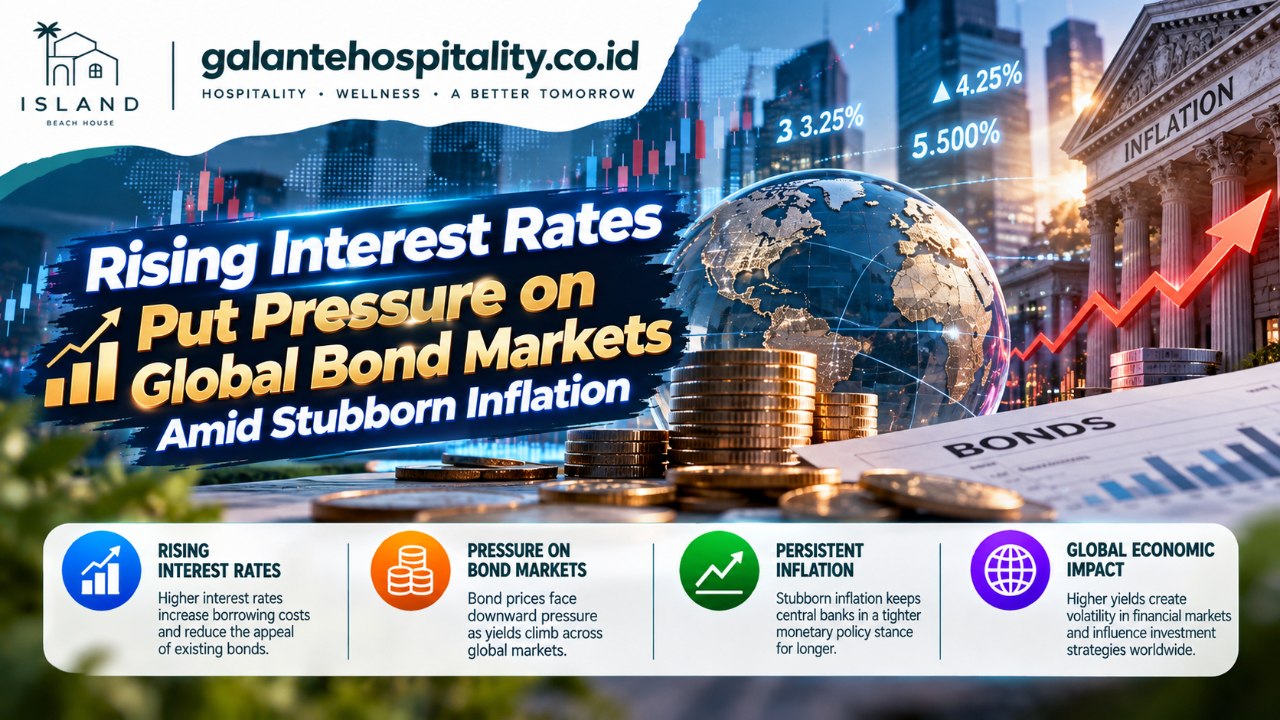

Global bond markets remain sensitive to interest-rate expectations as investors assess persistent inflation, economic growth, and the direction of monetary policy. When inflation remains above central-bank targets, policymakers may keep borrowing costs elevated for longer than financial markets initially anticipate, creating challenges for governments, businesses, and investors.
Bond prices and market interest rates generally move in opposite directions. When yields on newly issued bonds rise, existing bonds with lower fixed coupon payments often become less attractive. Their market prices may therefore decline until their returns become more competitive with those available on newer securities.
This relationship is especially important for investors holding longer-dated government and corporate bonds. These securities generally have greater sensitivity to changes in interest rates than comparable short-term bonds. As a result, an unexpected increase in yields can produce larger price movements in longer-duration portfolios.
Inflation is a central factor influencing these developments. When prices for goods and services rise persistently, investors may demand higher yields to compensate for the potential erosion of future purchasing power. Central banks may also maintain restrictive monetary policies if they believe inflation risks remain significant.
However, interest-rate decisions depend on more than inflation alone. Policymakers also consider employment conditions, economic activity, credit availability, and financial stability. If growth weakens substantially, markets may begin anticipating future rate reductions, although the timing and scale of any policy change remain uncertain.
Government bond yields also reflect expectations about public borrowing. Countries issuing substantial amounts of debt may need to attract investors with competitive returns, particularly when market demand is limited. Fiscal outlooks, political developments, and expectations about future government spending can therefore influence bond prices.
Corporate bonds face additional pressures because their performance depends partly on the financial health of the issuing company. If borrowing costs rise and economic growth slows, businesses with weaker balance sheets may experience greater difficulty refinancing debt. Investors may respond by demanding higher credit spreads, increasing financing costs for affected companies.
For individual investors, a changing rate environment requires careful attention to portfolio structure. Bond funds can experience price declines when yields rise, and their market values may fluctuate even when the underlying securities make scheduled interest payments. Investors who hold individual bonds to maturity may receive the promised principal if the issuer remains able to meet its obligations, but inflation, default risk, and opportunity costs still matter.
Higher yields can also create opportunities. New bonds may offer more attractive income than securities issued during periods of very low interest rates. Investors with available cash may gradually gain access to better returns, depending on the quality, maturity, and terms of the securities they select.
Diversification across maturities, issuers, and asset classes can help manage concentration risk, although it cannot eliminate losses. Investment decisions should also account for liquidity needs, time horizons, and tolerance for fluctuations.
As inflation and monetary-policy expectations continue to influence global markets, bond investors will need to distinguish between short-term price movements and longer-term financial objectives. Monitoring economic data, central-bank communications, and credit conditions can help investors understand the forces shaping fixed-income markets without assuming that interest rates will move in a single direction.


