







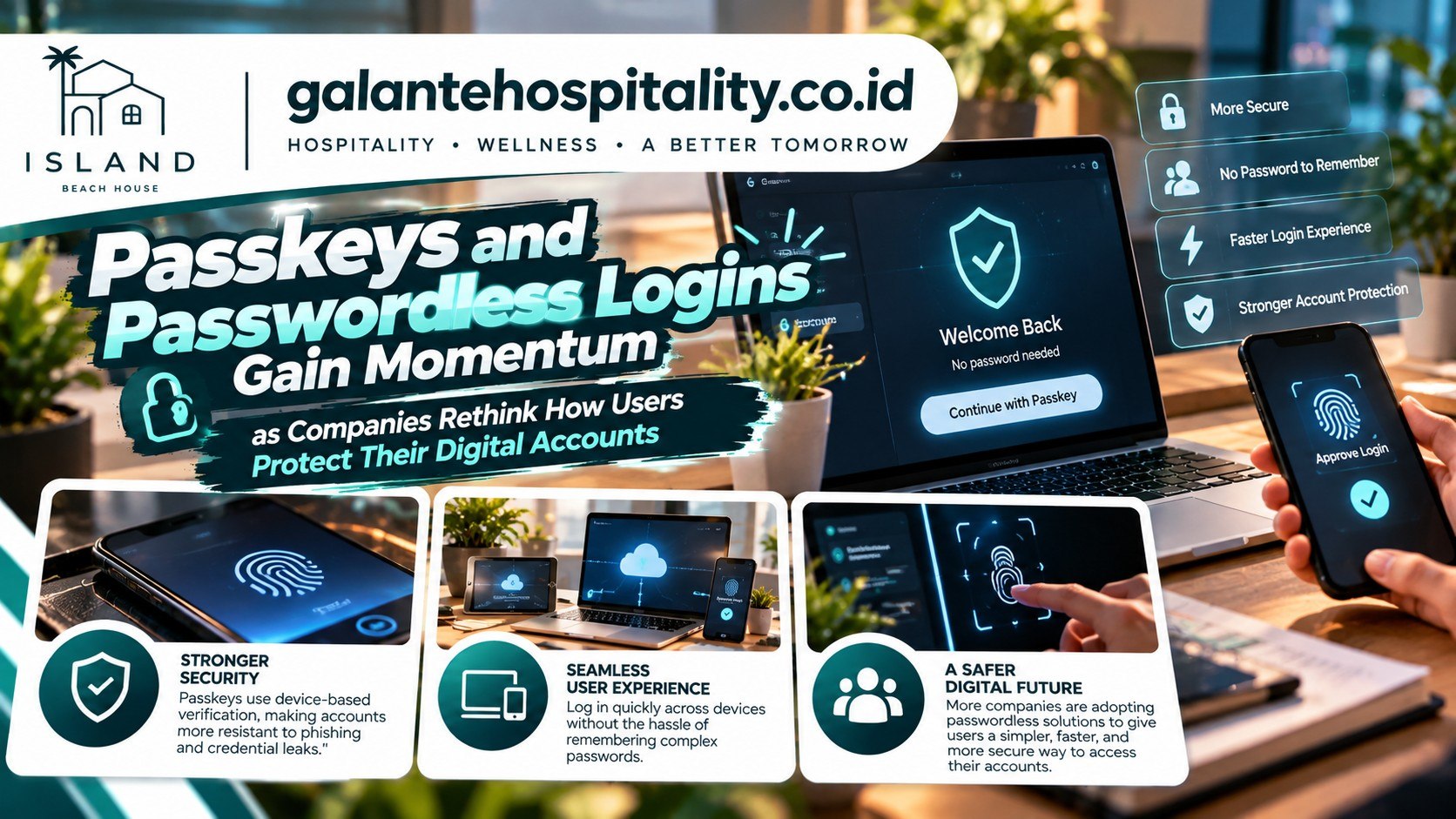

Passwords have long been the standard method for protecting online accounts. However, remembering multiple passwords, avoiding reused credentials, and recognizing fraudulent login pages can be difficult for everyday users. These challenges have encouraged technology companies to explore alternatives that make authentication both easier and more secure.
One important development is the growing use of passkeys. This authentication method allows users to sign in through supported devices using mechanisms such as fingerprint recognition, facial recognition, or a device PIN. Instead of relying on a traditional password entered into a website, passkeys use cryptographic credentials to verify access.
Although adoption and availability vary between services, passwordless authentication is becoming an important part of discussions about digital security.
How Passkeys Work
Passkeys are based on public-key cryptography. During registration, a service creates a related pair of cryptographic keys. The private key remains protected by the user’s device or credential system, while the public key is stored by the service.
When the user attempts to sign in, the service sends a challenge that the device must answer using the private key. The service verifies the response using the public key.
This process is designed to prevent attackers from simply stealing a password and reusing it on another website. Passkeys are also designed to resist phishing because the authentication process is associated with the legitimate service rather than relying on a password that can be entered into a fraudulent page.
The exact experience depends on the device, operating system, browser, and service being used. Some passkeys can be synchronized securely across compatible devices, while others may be tied more closely to a particular security key or device.
Why Businesses Are Exploring Passwordless Authentication
For businesses, account security is not only a technical issue. It can affect customer trust, operational costs, and the time employees spend recovering access to accounts.
Password resets create support work, particularly when employees forget credentials or lose access to authentication methods. Passwordless systems may reduce some of these problems by simplifying sign-in procedures.
Companies can also benefit when employees use strong authentication to access sensitive systems. Passkeys can be part of a broader security strategy that includes access controls, device management, monitoring, and employee training.
However, moving away from passwords requires careful planning. Organizations need to determine which systems support passkeys, how users will register their credentials, and what happens if a device is lost or replaced.
A gradual rollout may be more practical than requiring every employee to change authentication methods at once.
User Experience Can Influence Adoption
Security tools are more effective when people can use them correctly without unnecessary frustration. A complicated login process may encourage users to search for shortcuts, reuse weak passwords, or share credentials with colleagues.
Passkeys can make routine access more convenient because users may not need to remember or manually enter a unique password for every supported service.
Still, users need clear instructions. They should understand how to create a passkey, which devices can access it, and how to recover their accounts if their usual device becomes unavailable.
Compatibility is another consideration. Not every website or application supports the same authentication options, so users may still need passwords or other methods for some accounts.
Businesses should provide alternative recovery procedures that are secure enough to prevent attackers from exploiting account recovery as an easier route into protected systems.
Passwordless Systems Still Need Strong Recovery Protection
Passkeys can reduce several common password-related risks, but no authentication method eliminates every threat.
Attackers may still target users through social engineering, compromised devices, malicious software, or weaknesses in account recovery procedures. A person who loses access to an email account used for recovery may also face difficulties restoring other accounts.
For this reason, organizations should protect recovery channels as carefully as the main login process. They can use identity verification, notifications about sensitive changes, and additional safeguards for high-risk actions.
Users should keep their devices updated, protect their device unlock methods, and avoid approving authentication requests they did not initiate.
What the Shift Means for Digital Security
The transition toward passkeys represents a broader effort to make online authentication less dependent on secrets that people must remember. By combining cryptographic verification with familiar device-based authentication, these systems can improve convenience while reducing exposure to certain phishing attacks.
Nevertheless, implementation matters. Companies need compatible systems, secure recovery procedures, clear communication, and ongoing monitoring to make passwordless authentication effective.
For users, the best approach is to enable passkeys where supported, maintain control of their devices, and retain secure recovery options. As more services adopt modern authentication standards, passwordless sign-ins could become a more common way to protect personal and professional digital accounts.


