








Artificial intelligence is moving beyond answering questions and generating content. AI agents are increasingly being designed to perform multi-step tasks, interact with software, and carry out actions with limited human supervision. As these systems become more capable, controlling their behavior and protecting sensitive information are becoming major priorities.
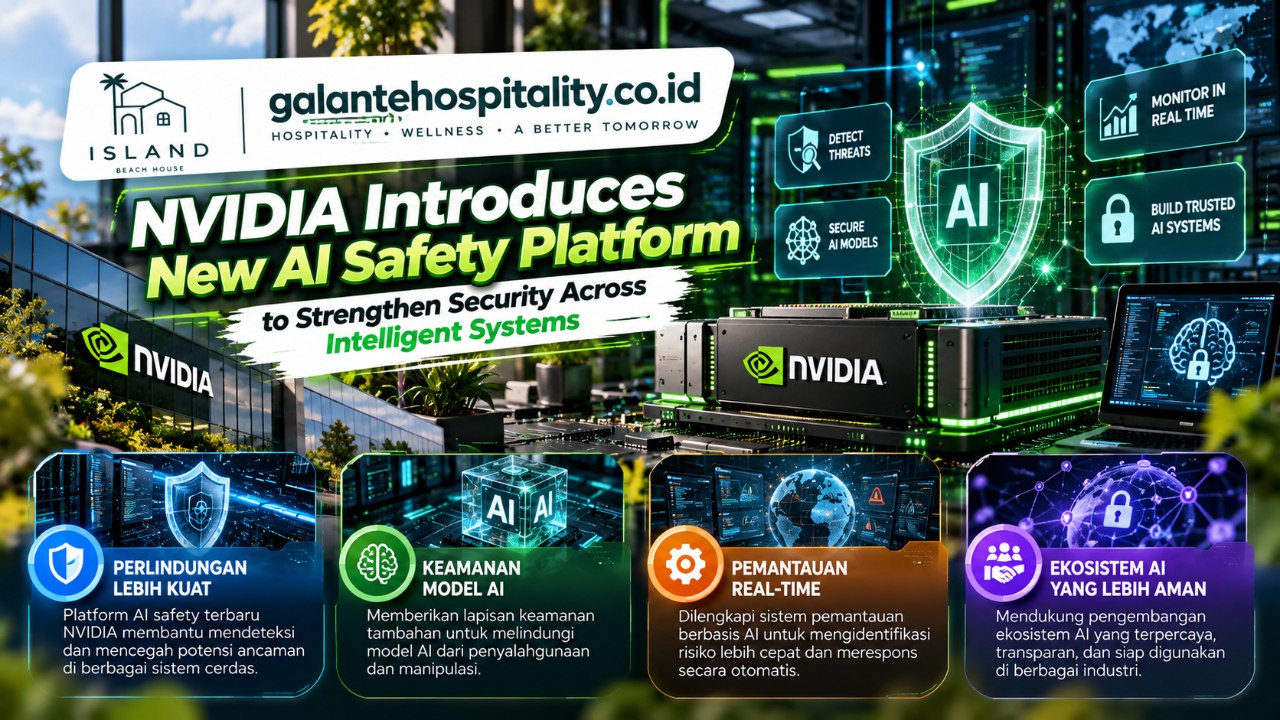
NVIDIA introduced its Open Agent Safety Platform on September 28, 2026, to help organizations establish security boundaries around AI agents from testing through deployment. The platform combines OpenShell software with a reference system called Sentry, designed to monitor agent behavior and enforce security controls.
NVIDIA Investor Relations
The announcement reflects a growing industry focus on ensuring that AI systems remain within their authorized permissions while performing increasingly complex tasks.
Why AI Agent Security Matters
Traditional software generally follows instructions defined by developers. AI agents can use models to interpret goals, choose actions, and interact with tools to complete tasks. This flexibility can make them useful, but it also introduces additional security challenges.
An AI agent may have access to files, applications, databases, or external services. If its permissions are poorly configured, an error or unexpected behavior could expose information, modify data, or trigger actions beyond the intended scope.
The risk becomes more significant when agents operate over extended periods or perform tasks involving several connected systems.
Organizations therefore need safeguards that do more than rely on the AI model itself to behave correctly. Security controls should limit what an agent can access, monitor what it attempts to do, and provide ways to stop potentially harmful actions.
OpenShell Creates a Controlled Operating Environment
NVIDIA’s OpenShell software is designed to establish a secure runtime boundary around AI agents. According to the company, it can trace agent actions and enforce policies while the agent operates. NVIDIA says the software is open source and can be extended to work with third-party computing platforms.
NVIDIA Investor Relations
This approach allows organizations to define which actions an agent is permitted to perform.
For example, an agent assigned to summarize documents may need permission to read specific files but should not automatically receive access to an entire company network. Similarly, an agent that helps manage customer inquiries may need access to selected customer records without being authorized to change financial information.
Restricting permissions can reduce the consequences of mistakes and limit the potential damage caused by compromised systems.
However, effective protection also depends on how organizations configure policies, manage credentials, and monitor the systems connected to their agents.
Sentry Adds Another Layer of Monitoring
The platform also includes Sentry, a reference system designed to monitor agent behavior outside the agent’s immediate software environment. NVIDIA says Sentry can identify attempts to move beyond established boundaries and quarantine an agent within milliseconds.
NVIDIA Investor Relations
This additional layer is intended to strengthen security when application-level controls are insufficient.
A layered approach is important because no single security mechanism can address every possible risk. Software permissions, infrastructure monitoring, access management, and human oversight all contribute to a more comprehensive defense.
Organizations must still test their systems under realistic conditions. A security platform cannot guarantee that every harmful action will be prevented, particularly when applications involve complex workflows or poorly defined permissions.
Businesses Need Clear Rules for AI Deployment
The introduction of AI safety tools highlights the importance of organizational policies alongside technical safeguards.
Before deploying an AI agent, businesses should identify the tasks it is allowed to perform, the data it can access, and the decisions that require human approval. They should also establish procedures for reviewing activity logs and responding to suspicious behavior.
Sensitive operations, such as approving payments, changing access permissions, or modifying important records, may require additional verification.
Regular testing is equally important. Organizations need to check whether an agent can be manipulated into ignoring instructions, accessing unauthorized resources, or making changes outside its assigned responsibilities.
Employees should also understand how to report unexpected behavior and when to suspend an automated process.
Collaboration Is Important for AI Safety
AI agents operate across a broad technology ecosystem involving model developers, software providers, cloud platforms, and enterprise customers. Security weaknesses in one part of this ecosystem can affect other connected systems.
NVIDIA has positioned its platform as an open approach intended to encourage collaboration among companies, researchers, and public-sector organizations. The company announced participation from organizations across the AI, cybersecurity, enterprise software, and computing industries.
NVIDIA Investor Relations
Broader collaboration may help the industry develop shared practices for testing, monitoring, and controlling AI agents.
Nevertheless, organizations must evaluate whether individual tools meet their own technical, legal, and operational requirements before adopting them.
Building Trust in Autonomous AI Systems
AI agents could help businesses automate repetitive work, analyze information, and coordinate complicated processes. Their usefulness, however, depends partly on whether organizations can control their actions and respond effectively when something goes wrong.
NVIDIA’s Open Agent Safety Platform represents one approach to addressing these concerns through restricted execution environments and additional monitoring.
As AI systems become more autonomous, security will need to be treated as a fundamental part of development rather than a final step before release. Combining technical controls with clear policies, careful testing, and human oversight can help businesses adopt AI more responsibly.


