







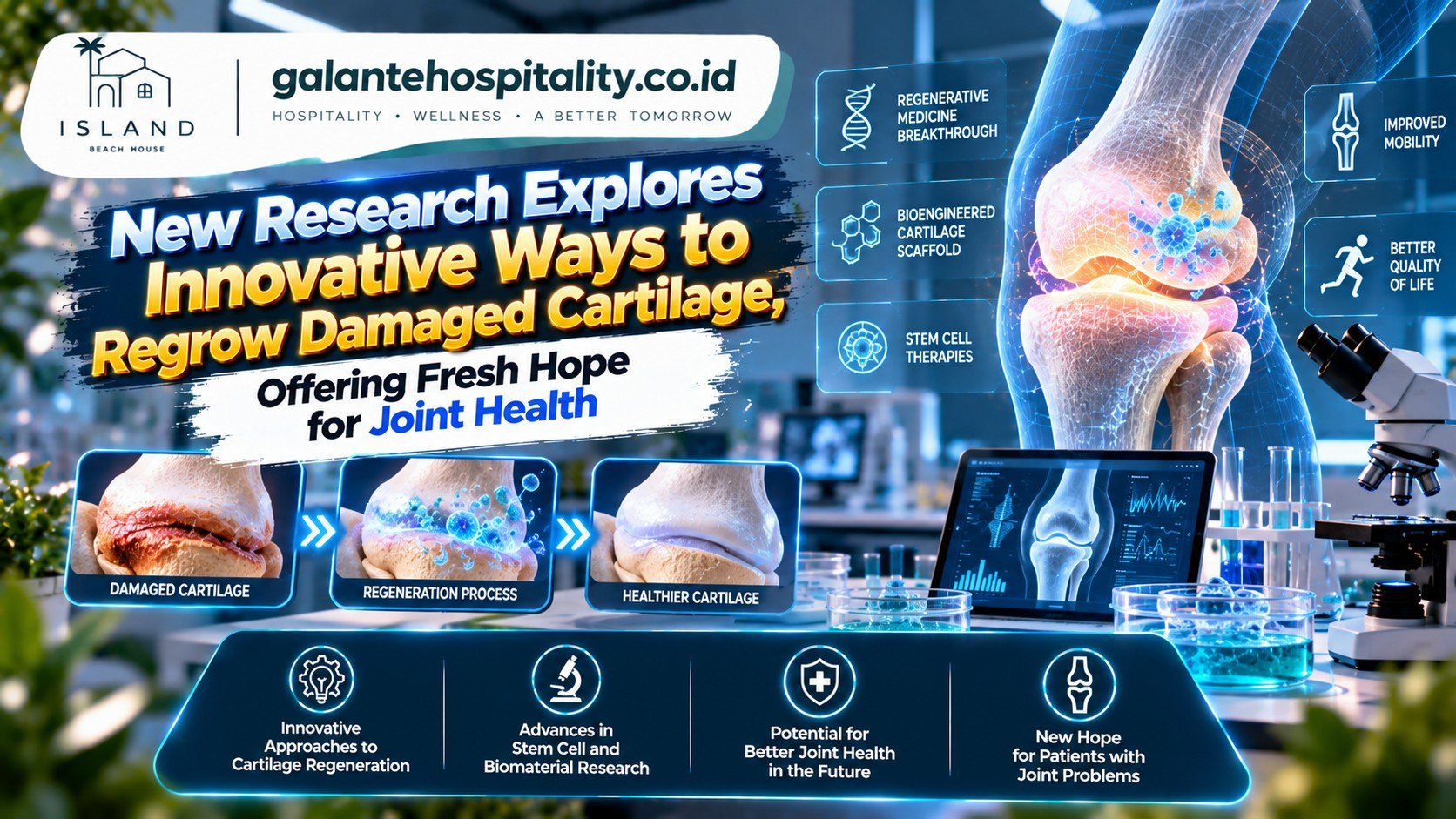

New research into cartilage regeneration is creating renewed interest in potential treatments for osteoarthritis and other forms of joint damage.
Scientists at Stanford Medicine have reported findings suggesting that blocking an aging-related protein called 15-PGDH can stimulate cartilage regeneration. Experiments in older mice showed restoration of naturally lost cartilage, while cartilage samples from human knee-replacement patients also responded to the treatment by producing new functional cartilage. ScienceDaily
The findings are promising, but they should not yet be interpreted as an approved treatment for people with arthritis.
Why Cartilage Damage Is Difficult to Treat
Cartilage plays an essential role in healthy joints.
It provides a smooth surface between bones and helps joints move with less friction. When cartilage becomes damaged or deteriorates, movement can become painful and difficult.
Osteoarthritis is one of the most common causes of cartilage loss.
Unlike many other tissues, cartilage has limited natural healing capacity. Once significant damage occurs, the body may struggle to restore the original structure and function.
This is why researchers have spent years searching for methods that can encourage damaged cartilage to regenerate.
Researchers Focus on the Biology of Aging
The Stanford research focuses on 15-PGDH, a protein that becomes more abundant with age.
Researchers found that inhibiting this protein could reactivate regenerative processes in existing cartilage cells.
In experiments involving older mice, blocking 15-PGDH helped restore cartilage that had been lost naturally with aging. The approach also showed potential for preventing osteoarthritis following injuries resembling ACL damage. ScienceDaily
The research is significant because it suggests that some cells in aging joints may retain regenerative potential.
Instead of simply replacing damaged cartilage, future therapies could potentially encourage the body’s own cells to rebuild it.
Human Cartilage Samples Also Responded
The researchers also examined human cartilage obtained from patients undergoing knee replacement procedures.
According to the research summary, exposure to the inhibitor stimulated the tissue to produce new, functional joint cartilage. ScienceDaily
This is an important finding because results observed in animals do not always translate into successful human treatments.
However, laboratory responses from human tissue are still different from proving that a therapy can safely and effectively treat patients.
Clinical research will be necessary before the approach can be considered a routine treatment.
What This Could Mean for Osteoarthritis
Osteoarthritis can have a major impact on mobility and quality of life.
Current treatment approaches vary depending on the severity of symptoms. They can include physical therapy, exercise, weight management, medications, injections and surgical procedures.
For advanced joint damage, joint replacement may become an option.
A therapy capable of regenerating damaged cartilage could potentially change how certain forms of osteoarthritis are treated in the future.
Rather than focusing primarily on managing symptoms or replacing damaged joints, regenerative medicine aims to repair biological tissue itself.
Researchers Are Exploring Multiple Regenerative Approaches
The Stanford findings are part of a broader scientific effort to understand cartilage regeneration.
Other research has investigated tissue engineering, biological scaffolds, cell-based therapies and injectable treatments.
For example, a 2026 clinical study examining autologous collagen-induced chondrogenesis found structural improvements in knee cartilage over a five-year follow-up, although those imaging improvements did not translate into significantly better patient-reported outcomes compared with microfracture alone. Wiley Online Library
This distinction is important.
A treatment can produce changes that appear positive on medical imaging while patients do not necessarily experience the same level of improvement in pain or mobility.
Why More Research Is Still Needed
Promising laboratory results do not automatically become medical treatments.
Researchers must determine whether a therapy is safe, how it should be administered, how long its effects last and whether it improves meaningful outcomes for patients.
Clinical trials involving larger groups of people are particularly important.
Scientists also need to understand whether stimulating cartilage regeneration could have unintended effects elsewhere in the body.
For these reasons, patients should not attempt to obtain experimental treatments based solely on early research findings.
A Potential New Direction for Joint Health
The possibility of regenerating damaged cartilage represents an important direction in modern regenerative medicine.
The Stanford research suggests that aging cartilage may retain more regenerative capacity than previously believed and that targeting biological mechanisms associated with aging could help unlock that potential. ScienceDaily
If future clinical trials confirm the safety and effectiveness of this approach, it could eventually contribute to a new generation of treatments for osteoarthritis and joint injuries.
For now, the research remains an encouraging scientific development rather than an established replacement for current medical care.
The Future of Cartilage Regeneration
The long-term goal of cartilage research is not simply to reduce pain but to restore the structure and function of damaged joints.
Advances in regenerative medicine could eventually give doctors more options for treating patients before severe joint deterioration occurs.
The latest findings add to growing evidence that the body’s own cells may be capable of participating in tissue repair when the right biological mechanisms are activated.
For millions of people affected by joint problems, continued research into cartilage regeneration could therefore represent an important step toward more restorative approaches to joint health.


