







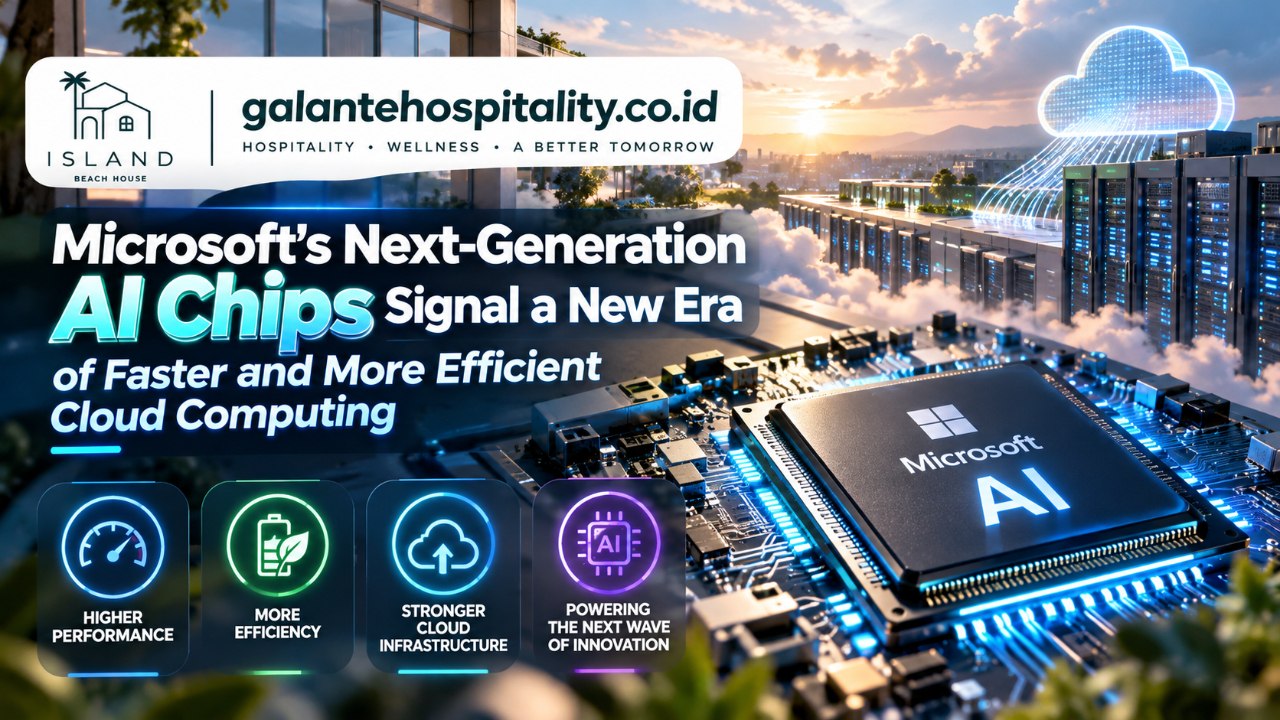

Microsoft is expanding its investment in custom artificial intelligence hardware as demand for AI-powered services continues to grow. The company’s latest developments in its Azure Maia chip family highlight a broader shift in cloud computing, where technology providers are designing their own processors to improve performance, manage costs, and support increasingly complex AI applications.
On October 12, 2026, Microsoft announced plans to expand its Azure Maia infrastructure to multi-gigawatt deployments beginning in 2027. The company also confirmed that Maia 200 is already running production workloads, while its next-generation Maia 300 chip is expected to enter deployment in 2027
Why Custom AI Chips Are Becoming More Important
Artificial intelligence requires substantial computing resources, particularly when systems generate responses, analyze large datasets, or handle complex reasoning tasks.
Traditional processors remain important for general computing, but specialized AI accelerators can be designed to handle particular workloads more efficiently. By developing its own chips, Microsoft can coordinate hardware architecture with the software and cloud services running on top of it.
This approach gives cloud providers greater control over infrastructure design. Instead of relying entirely on externally supplied processors, companies can optimize their systems around specific performance, power consumption, and deployment requirements.
The strategy is becoming increasingly relevant as businesses integrate AI into customer service, software development, data analysis, and other everyday operations.
Maia 300 Targets Higher AI Inference Efficiency
Microsoft describes Maia 300 as its next-generation AI inference system. Inference refers to the process of using a trained AI model to generate predictions, responses, or other outputs.
According to the company’s announcement, Maia 300 is designed to deliver 40% more tokens per megawatt than leading GPU-based systems. Microsoft also expects a rack-scale configuration to provide up to seven times the token throughput of its predecessor, Maia 200. These are company-reported performance targets rather than independently verified results across every workload.
Efficiency matters because AI services operate at significant scale. A small improvement in the amount of computing output generated from a given level of electricity can have meaningful implications when multiplied across large data centers.
However, real-world performance depends on factors such as model architecture, memory requirements, software optimization, and the type of task being processed.
How the Technology Could Affect Cloud Services
Custom AI chips could help Microsoft improve the infrastructure supporting services such as Copilot and other AI-powered enterprise tools.
For businesses, infrastructure improvements may eventually translate into faster responses, more predictable service capacity, and better economics for certain AI workloads.
Developers could also benefit from computing platforms optimized for AI applications, including systems that process longer conversations, perform multi-step reasoning, and coordinate AI agents.
Nevertheless, users should not assume that every application will immediately become faster or cheaper. Improvements at the hardware level must be supported by software changes, deployment decisions, and effective resource management.
Energy Consumption Remains a Major Challenge
The rapid expansion of AI computing has increased attention on data center electricity demand. More capable hardware can improve efficiency per unit of output, but overall energy consumption may still rise if the volume of AI activity grows even faster.
This creates a challenge for cloud providers: they must balance computing capacity with electricity availability, cooling requirements, and environmental considerations.
Custom chips are one part of the solution, but efficient data center design, responsible workload scheduling, and investment in suitable energy infrastructure remain important.
Companies also need to consider the full lifecycle of their hardware, including manufacturing, maintenance, and eventual replacement.
Competition in the AI Infrastructure Market
Microsoft’s investment reflects broader competition among technology companies to control more of the infrastructure behind AI services.
Custom silicon can help companies differentiate their cloud platforms, optimize their own applications, and reduce dependence on a limited number of hardware suppliers.
At the same time, external chipmakers continue to play a significant role in the industry. Cloud providers must weigh the benefits of custom hardware against development costs, manufacturing complexity, and the pace of technological change.
The most successful platforms will likely combine specialized processors, conventional computing hardware, efficient software, and reliable cloud infrastructure.
What Businesses Should Watch Next
The next important milestone will be the planned rollout of Maia 300 in 2027. Businesses should pay attention to independently measured performance, service availability, pricing, and compatibility with their existing applications.
Organizations considering broader AI adoption should also evaluate whether new infrastructure improvements address their actual needs. Faster processing alone does not guarantee better business outcomes without reliable data, clear workflows, and appropriate security controls.
Microsoft’s custom chip strategy demonstrates that the future of AI will depend on more than increasingly capable models. The underlying computing infrastructure will also shape how widely AI can be deployed, how efficiently it operates, and how accessible advanced tools become for businesses and developers.


