







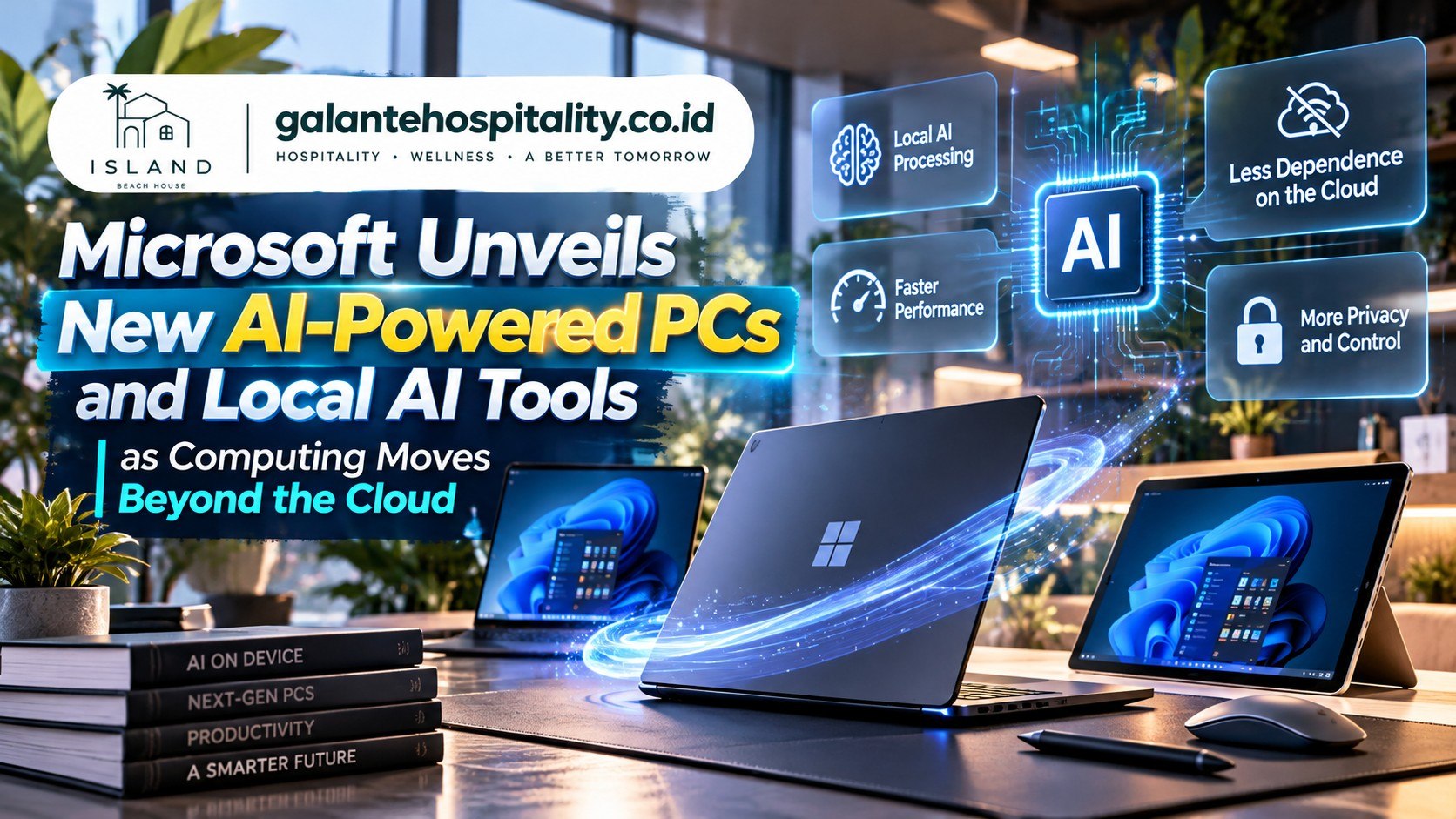

Microsoft has unveiled a new generation of AI-focused personal computers as the company seeks to bring more artificial intelligence capabilities directly onto Windows devices.
At an October 7 event in San Francisco, Microsoft and Nvidia introduced new hardware and software designed to handle demanding AI workloads locally rather than relying entirely on cloud computing.
The announcement represents another step toward a future in which powerful AI systems can operate directly on personal computers. Reuters
Microsoft Introduces the Surface Laptop Ultra
One of the biggest announcements was the new Surface Laptop Ultra.
The high-end Windows computer is powered by Nvidia’s RTX Spark platform and is designed for users who require significant local computing performance.
The device is aimed particularly at developers, creators and professionals who work with demanding AI applications.
According to reports, the Surface Laptop Ultra starts at approximately $2,599, while higher configurations can cost considerably more. The Verge
The high price reflects the computing power required to run advanced AI models locally.
Why Local AI Matters
Most advanced AI applications have traditionally relied heavily on cloud computing.
When a user interacts with an AI service, much of the processing can take place in remote data centers.
This approach provides access to powerful hardware without requiring consumers to own expensive machines.
However, cloud-based AI also creates potential concerns related to cost, privacy, latency and internet connectivity.
Local AI offers another option.
Instead of sending every request to a remote server, a powerful computer can perform certain AI tasks directly on the device.
This could reduce dependence on cloud infrastructure for specific workloads.
Privacy Becomes a Major Advantage
Local AI can also provide potential privacy benefits.
Sensitive business documents, personal information or proprietary data may not need to leave a user’s computer for certain AI tasks.
Microsoft is emphasizing this aspect as it expands its AI PC strategy.
The company also introduced Microsoft Execution Containers, designed to provide a controlled environment for AI agents and prevent them from accessing data without appropriate authorization. Reuters
Security is becoming increasingly important as AI agents gain the ability to perform actions on behalf of users.
AI Agents Need Stronger Security
AI agents are different from traditional software because they can potentially perform multiple actions based on instructions.
An agent might analyze files, write code, organize information or interact with applications.
However, greater autonomy also creates new security risks.
If an AI agent receives excessive permissions, it could potentially access information that it does not need.
Microsoft’s execution-container approach is intended to create additional boundaries around these systems.
Nvidia, OpenAI and Anthropic are among the companies reported to be adopting the security tools. Reuters
AI Development Moves Closer to the User
The new hardware also reflects a broader shift in computing.
For years, the technology industry increasingly moved processing workloads toward cloud data centers.
AI is now creating a more complicated model in which computing can be divided between the cloud and local devices.
This hybrid approach allows demanding tasks to use cloud infrastructure when necessary while handling certain workloads locally.
Microsoft calls this approach Hybrid Intelligence in its Copilot ecosystem. MarketWatch
Developers Are a Key Target
The new generation of AI PCs is particularly relevant to developers.
Software engineers increasingly use AI tools to write, test and analyze code.
Running certain coding models locally can provide developers with greater control over their data and reduce reliance on cloud-based services.
Microsoft’s new platform supports local AI models, including models designed for coding workloads. Reuters
For professional developers and AI researchers, local processing could become an important part of their daily workflows.
High Costs Could Slow Adoption
Despite the technological advances, price remains a major obstacle.
High-performance AI hardware requires advanced processors, large amounts of memory and efficient thermal management.
The most powerful configurations of the new systems can cost several thousand dollars.
That makes them considerably more expensive than conventional laptops.
As a result, local AI computing may initially remain concentrated among developers, professional creators, businesses and other users who can justify the investment.
Microsoft Takes Aim at Apple
The new hardware also places Microsoft in direct competition with Apple’s high-end Mac computers.
Microsoft and Nvidia are positioning the new Windows machines as powerful alternatives for users who need advanced computing capabilities.
The competition is no longer based purely on processor speed or battery life.
AI performance is becoming another important measurement for personal computers.
As AI applications become more common, the ability to run models efficiently could become a major factor in future computer purchases.
The Future of Personal Computing
The latest Microsoft and Nvidia announcements indicate that personal computers are entering another significant transition.
The PC is no longer simply a device for running conventional applications.
Increasingly, it is becoming a platform for AI assistants, coding models, creative tools and autonomous software agents.
Cloud computing will remain important, but local AI could provide an additional layer of performance, privacy and flexibility.
The long-term direction of the PC industry may therefore involve a balance between local and cloud intelligence.


