







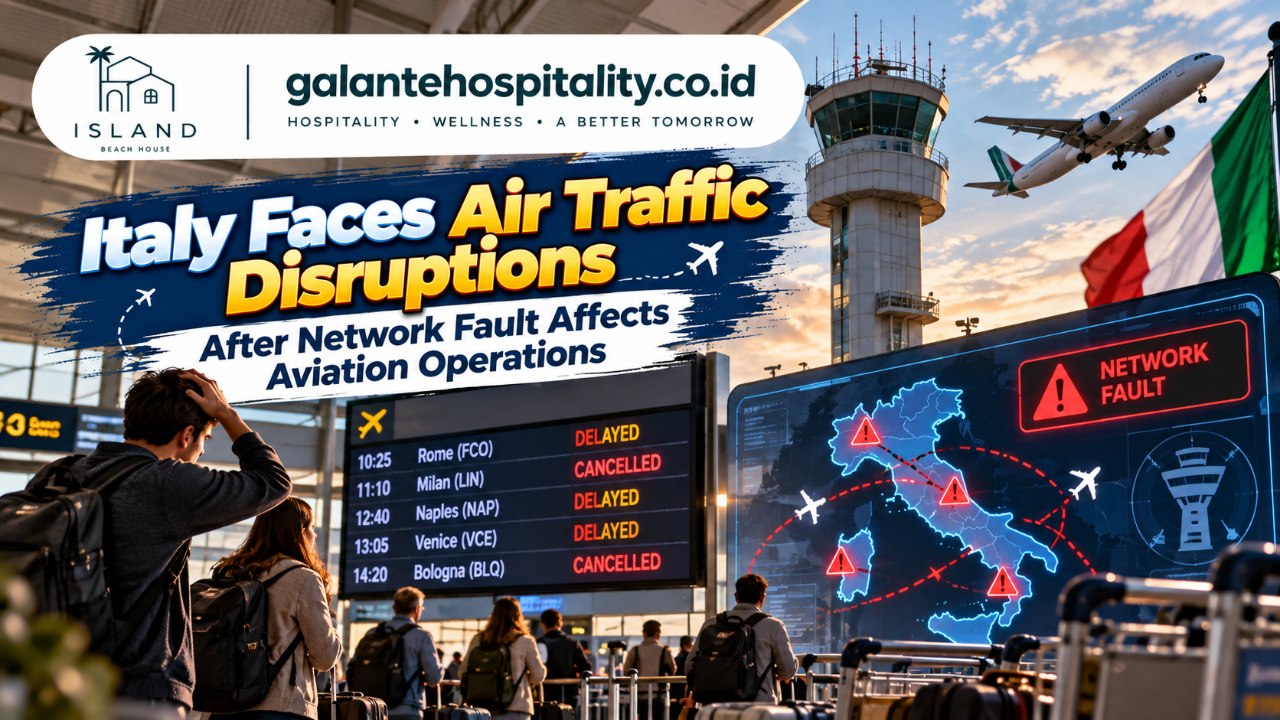

Air travel across Italy experienced significant disruption on October 16, 2026, after a technical fault affected the data transmission network supporting air traffic control services. The problem caused delays and cancellations at several airports, affecting passengers traveling between Italian cities and international destinations. Authorities said the disruption was caused by a technical issue rather than malicious activity.
The incident highlighted how modern aviation depends on reliable digital infrastructure. Even when aircraft, airport facilities, and airline operations are functioning normally, a problem with air traffic control systems can affect flight schedules across an entire country.
Technical Problems Affect Flight Operations
Air traffic control systems help coordinate aircraft movements, maintain safe separation between planes, and manage arrivals and departures. These systems rely on communication networks that allow controllers and aviation facilities to exchange operational information.
When a network experiences technical problems, authorities may need to reduce the number of aircraft permitted to operate within affected airspace. This precaution helps maintain safety while engineers investigate and resolve the issue.
Italy’s air traffic authority, ENAV, introduced temporary restrictions after identifying anomalies in the data transmission network. A secondary satellite network helped restore part of the system’s operating capacity while technical teams worked to recover normal functionality.
The incident demonstrates why backup systems are essential in aviation. Alternative communication infrastructure can help maintain limited operations while primary systems are being repaired.
Passengers Face Delays and Cancellations
Flight disruptions can affect travelers far beyond the airport where a technical problem begins. A delayed departure may cause passengers to miss connecting flights, arrive late at their destinations, or spend additional hours waiting for updated travel information.
Airlines may also need to adjust aircraft rotations and crew schedules. When one flight arrives late, the same aircraft may be unable to depart on time for its next scheduled journey.
For international passengers, the consequences can be particularly complicated when connections involve different airlines or separate reservations.
Travelers affected by disruptions should monitor airline notifications, check their booking details, and confirm departure information before traveling to the airport. Passengers should also retain receipts and relevant booking documents if they need to request assistance or compensation under applicable rules.
Airports and Airlines Must Coordinate
Managing a widespread disruption requires cooperation between air traffic authorities, airport operators, airlines, and technical service providers.
Air traffic controllers must maintain safe operations while capacity is reduced. Airlines need to communicate changes to passengers and reorganize their schedules, while airports must manage crowded terminals and provide updated information.
Clear communication can reduce uncertainty during a disruption. Passengers benefit when airlines explain whether a flight is delayed, cancelled, or scheduled to depart at a revised time.
However, recovery may take longer than the initial repair because aircraft and crew can be positioned in the wrong locations after hours of delays.
Digital Infrastructure Is Essential to Aviation
The incident in Italy illustrates the importance of investing in reliable communication systems and contingency planning. Aviation technology must be maintained regularly, tested under different conditions, and supported by procedures for responding to unexpected failures.
Backup systems are particularly important because air traffic control is a safety-critical service. Alternative infrastructure must be capable of supporting essential operations when primary systems become unavailable.
Airports and airlines also need effective procedures for informing passengers and managing disruptions that extend across several destinations.
What Travelers Can Learn From the Incident
Although technical problems cannot always be predicted, travelers can reduce some of the inconvenience by allowing additional time for important connections and checking flight information before departure.
Passengers with time-sensitive commitments may also benefit from understanding their airline’s rebooking policies and keeping essential travel documents accessible.
Italy’s air traffic disruption serves as a reminder that reliable aviation depends on more than aircraft and airport facilities. Digital networks, technical maintenance, operational coordination, and clear passenger communication are all essential to keeping international travel moving safely.


