







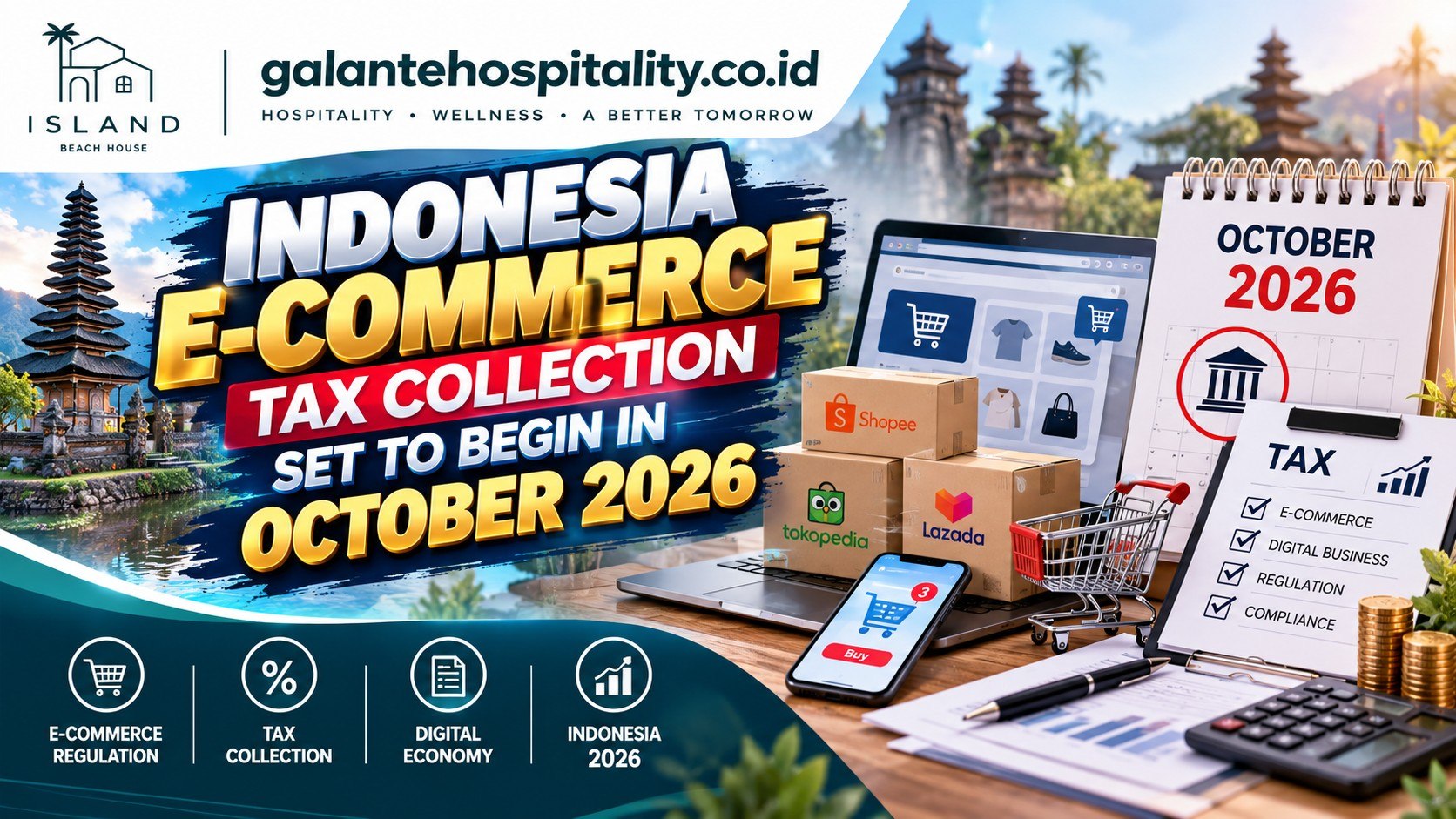

Indonesia Sets October Start for E-Commerce Tax Collection
Indonesia is set to begin collecting income tax from sellers operating through major e-commerce platforms on October 1, 2026, bringing a new phase of tax administration to the country’s rapidly expanding digital economy.
The implementation comes after several changes to the original schedule. The tax collection had initially been planned for August, before being delayed. It was subsequently expected to begin in November, but the government later moved the start date forward to October 1.
The policy requires designated e-commerce platforms to facilitate income-tax collection from sellers using their services.
Major E-Commerce Platforms Involved
Several major platforms operating in Indonesia have previously been designated to participate in the tax collection system.
They include Tokopedia, Shopee, Lazada and Blibli. These platforms are among the country’s largest digital marketplaces and serve millions of consumers and sellers.
The new system is expected to make tax administration more integrated with digital transactions, particularly as more businesses use online marketplaces to reach customers.
For sellers, the change means tax obligations will increasingly become part of the normal e-commerce transaction process.
Growing Digital Commerce Creates New Tax Challenges
Indonesia’s e-commerce sector has expanded rapidly in recent years.
According to a report from Google, Temasek and Bain & Company cited by Reuters, Indonesia’s e-commerce gross merchandise value was estimated at around $71 billion in 2025 and is projected to reach $140 billion by 2030.
The growth creates opportunities for businesses, but it also presents challenges for governments seeking to ensure that digital economic activity is properly recorded and taxed.
As online transactions become increasingly important to the wider economy, authorities are looking for ways to bring digital sellers into a more structured tax framework.
What the Policy Means for Online Sellers
For online sellers, the new system could change how income-tax obligations are handled when transactions take place through participating marketplaces.
The tax authorities have indicated that the designated platforms are prepared to implement the collection mechanism from October 1.
However, the exact impact can vary depending on a seller’s circumstances, income and applicable tax rules. Sellers therefore need to understand how the new system applies to their individual businesses.
E-Commerce Industry Continues to Expand
Indonesia remains one of Southeast Asia’s largest digital economies, with online shopping becoming increasingly important for consumers and businesses.
The continued growth of e-commerce means tax administration will likely become an increasingly important part of the sector’s development.
With the October implementation approaching, sellers and marketplace operators are now preparing for the next stage of Indonesia’s digital taxation system.
The policy could also provide the government with a more systematic way to monitor economic activity across Indonesia’s rapidly growing online marketplace sector.


