







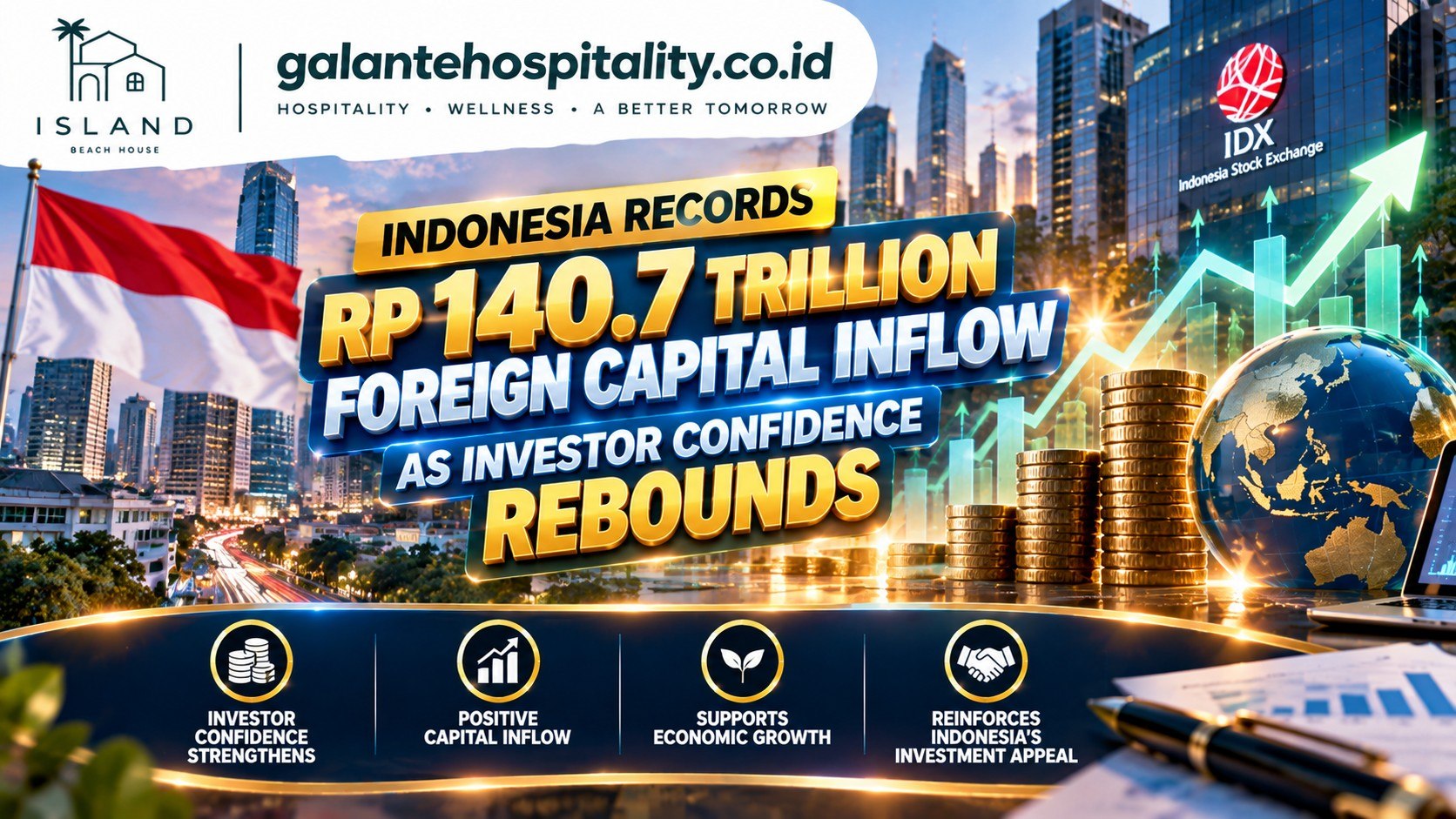

JAKARTA, Indonesia — Indonesia’s capital markets have experienced a major influx of offshore funds, recording a net Rp 140.7 trillion (approx. US$7.9 billion) in foreign capital inflows into state financial instruments.
According to data released by Bank Indonesia and the Ministry of Finance, the substantial inflow was largely directed into Government Securities (SBN) and Bank Indonesia Rupiah Securities (SRBI), signaling a strong rebound in foreign investor confidence toward Southeast Asia’s largest economy.
1. Drivers Behind the Capital Inflow Surge
The rebound in portfolio investment follows a period of portfolio reallocation across global markets. Institutional investors are increasingly turning to Indonesian debt instruments due to attractive real yield spreads, low domestic inflation, and prudent fiscal management.
+-------------------------------------------------------------------+
|               FOREIGN CAPITAL DISTRIBUTION (YTD)                   |
+-------------------------------------------------------------------+
| Financial Instrument              | Inflow Level / Investor Focus |
+-----------------------------------+-------------------------------+
| Government Securities (SBN)       | High long-term yield demand   |
| BI Rupiah Securities (SRBI)       | Strong short-term liquidity   |
| Indonesian Stock Exchange (IDX)   | Targeted banking & energy buy |
+-----------------------------------+-------------------------------+
Key Contributing Factors:
- Competitive Real Yields: Indonesian government bonds offer higher real returns compared to peer emerging markets.
- Fiscal Discipline: Government budget deficits remain strictly within the statutory cap of 3% of GDP.
- Currency Resilience: Bank Indonesia’s proactive intervention strategies have minimized severe Rupiah volatility.
2. Foreign Portfolio Allocation Across Financial Instruments
A closer look at transaction figures reveals balanced foreign allocation across both short-term debt and long-term sovereign securities:
                  Total Foreign Inflows: Rp 140.7 Trillion
                                     |
     +-------------------------------+-------------------------------+
     |                                                               |
     v                                                               v
[State Securities (SBN)]                            [BI Securities (SRBI)]
Long-term institutional funds                       Short-term money market funds
Seeking stable sovereign yields                     Seeking flexible high liquidity
1. State Securities (SBN)
Foreign asset managers bought significant volumes of medium-to-long-term SBN series, lowering sovereign debt yields and reducing the government’s cost of borrowing.
2. Bank Indonesia Rupiah Securities (SRBI)
SRBI instruments continued to serve as an attractive short-term monetary tool, drawing foreign portfolio capital into local currency paper while supporting central bank liquidity operations.
Internal Link Suggestion:Read our detailed update on Bank Indonesia’s latest benchmark rate decision
3. Structural Reforms Strengthening Fiscal Fundamentals
Ministry of Finance officials emphasized that ongoing structural reforms have played a major role in restoring offshore capital confidence. A central pillar of these reforms is the deployment of the national Coretax Administration System, which modernizes tax infrastructure, improves compliance, and broadens the national tax base.
               Modernized Fiscal Infrastructure Framework
                                   |
              +--------------------+--------------------+
              |                                         |
              v                                         v
   [Coretax System Rollout]                  [Public Spending Efficiency]
Automated tax reporting, broader          Reallocating budget toward productive
tax base, and reduced evasion             infrastructure & social cushions
By combining modernized tax collection with disciplined public spending, the government demonstrates strong fiscal sustainability—a key factor assessed by global credit rating agencies like Fitch, Moody’s, and S&P.
4. Economic Implications for National Development
The influx of Rp 140.7 trillion in foreign portfolio capital provides significant benefits for the real economy. Increased foreign liquidity helps lower corporate borrowing costs, stabilizes local currency markets, and provides vital non-bank financing to support national development initiatives.
Economists anticipate that if current macroeconomic conditions persist, foreign direct and portfolio investment will continue to support Indonesia’s fiscal trajectory throughout the remainder of the fiscal year.


