







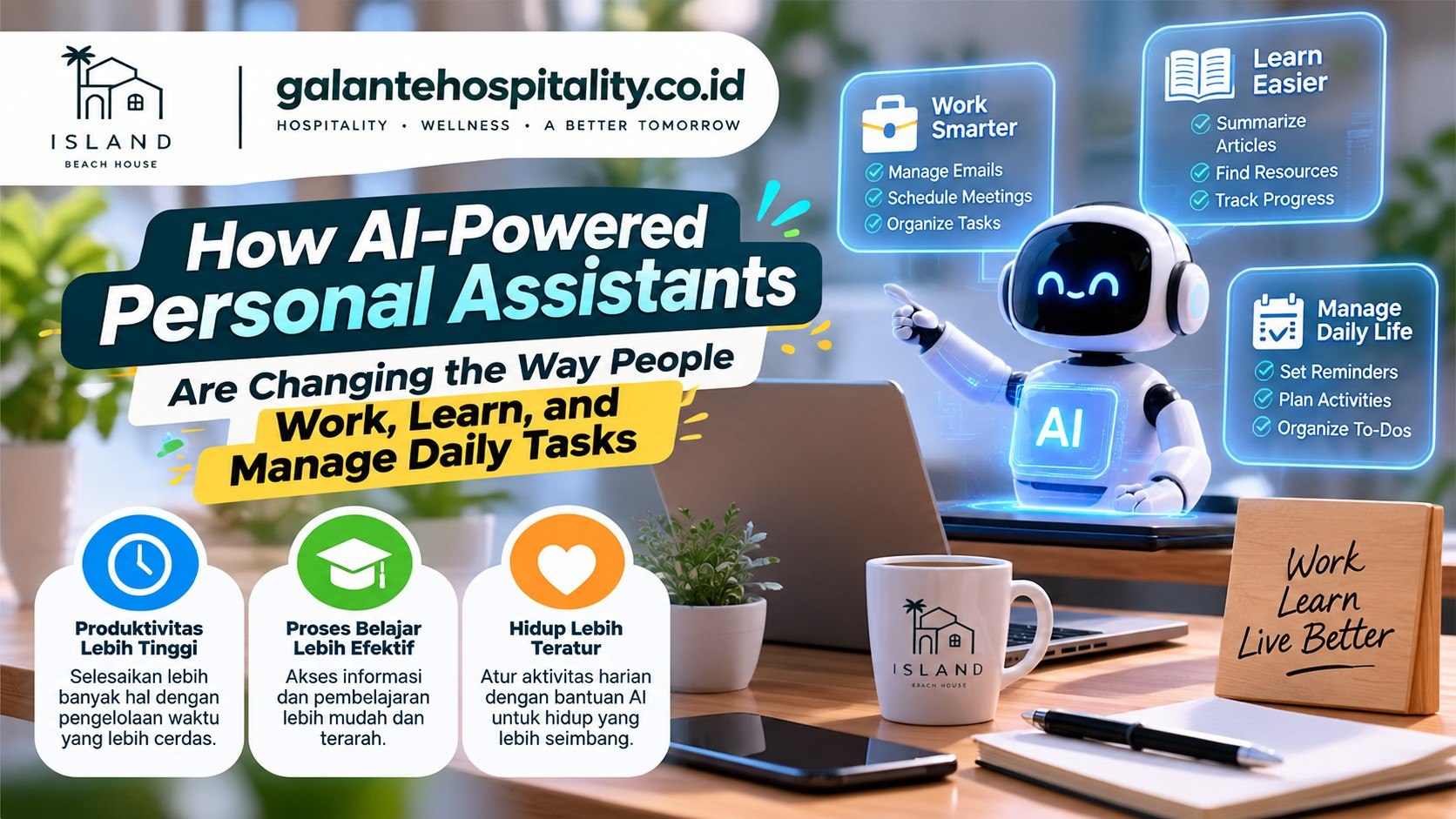

Artificial intelligence is changing how people organize their daily lives, complete professional tasks, and access information. AI-powered personal assistants are becoming increasingly useful tools for individuals who want to manage their time more efficiently, reduce repetitive work, and improve productivity. From scheduling meetings to summarizing documents, these technologies are reshaping the way people interact with digital services.
Unlike traditional digital assistants that primarily respond to simple commands, modern AI assistants can understand natural language, interpret requests in context, and help users complete more complex activities. Their growing capabilities are creating new opportunities for professionals, students, entrepreneurs, and households.
How AI Personal Assistants Improve Everyday Productivity
One of the most practical advantages of AI-powered assistants is their ability to simplify routine tasks. People often spend considerable time organizing calendars, writing emails, searching for information, and preparing documents. AI tools can help streamline many of these activities.
For example, an assistant can help a professional draft an email, summarize a lengthy report, or organize a list of priorities for the day. Some systems can also help users prepare meeting agendas, generate project outlines, and transform unstructured notes into clearer documents.
These capabilities can be particularly valuable for small businesses and independent professionals who have limited resources. Rather than spending hours on administrative tasks, they can use AI tools to prepare initial drafts and organize information before reviewing the final results.
However, the benefits depend on how the technology is used. AI-generated content may contain errors, omit important details, or misunderstand a request. Human review remains essential, especially when decisions involve finances, legal obligations, or confidential business information.
AI Is Changing the Way People Learn
Education is another area where AI-powered assistants are making a difference. Students can use these tools to explore unfamiliar subjects, practice languages, organize revision schedules, and receive explanations tailored to their current level of understanding.
For instance, a student struggling with a difficult concept can ask an AI assistant to explain it using simpler language or provide a practical example. Learners can also request practice questions and use the answers to identify topics that require further study.
This approach can make learning more flexible because assistance is available outside traditional classroom hours. Teachers may also use AI tools to prepare lesson materials, develop exercises, and create alternative explanations for complex subjects.
Nevertheless, AI should support learning rather than replace independent thinking. Students benefit most when they actively evaluate explanations, check information against reliable sources, and attempt to solve problems themselves.
Schools and educational institutions also need clear policies concerning academic integrity, data protection, and appropriate AI use.
Personalization Creates New Opportunities
Modern AI systems can adapt responses to a user’s instructions, preferences, and immediate goals. This can make digital assistance feel more relevant than a conventional search or reminder tool.
A person planning a busy week, for example, may use an AI assistant to create a schedule based on deadlines and available time. Someone preparing for a job interview could practice common questions, while a business owner might use AI to brainstorm marketing ideas.
Some platforms also connect AI capabilities with calendars, document editors, customer service systems, and other software. When these integrations are configured properly, users may be able to complete several related tasks within a single workflow.
However, personalization raises important privacy questions. Depending on the service and its settings, users may share sensitive information when interacting with an assistant. Reviewing privacy policies, controlling permissions, and avoiding unnecessary disclosure of confidential data are therefore important precautions.
Challenges Businesses and Individuals Must Consider
Although AI assistants offer substantial potential, adopting them effectively requires more than choosing a popular application. Users need to understand the technology’s limitations and identify tasks where automation genuinely saves time.
Accuracy is one major concern. AI systems can generate convincing but incorrect answers, so important claims should be verified before they are used in reports, public communications, or business decisions.
Security is another consideration. Organizations should establish rules for handling customer information, internal documents, and proprietary data. Employees also need training to recognize inappropriate uses of AI and understand when human approval is necessary.
There is also the question of accessibility. Some advanced features require paid subscriptions, reliable internet access, or technical knowledge. Organizations should consider these limitations when introducing AI tools to employees or customers.
The Future of AI-Powered Personal Assistance
AI-powered personal assistants are likely to become more deeply integrated into everyday digital experiences. As these systems improve, they may help users coordinate more complicated workflows, interact with multiple applications, and manage information across different aspects of their lives.
Even so, their value will depend on trust, usability, and responsible implementation. The most effective approach is to treat AI as a tool that supports human judgment rather than a substitute for it.
For professionals, students, and businesses, learning how to give clear instructions, evaluate results, and protect sensitive information will become increasingly important. With the right balance of automation and human oversight, AI-powered personal assistants can help make daily tasks more manageable and productive.


