







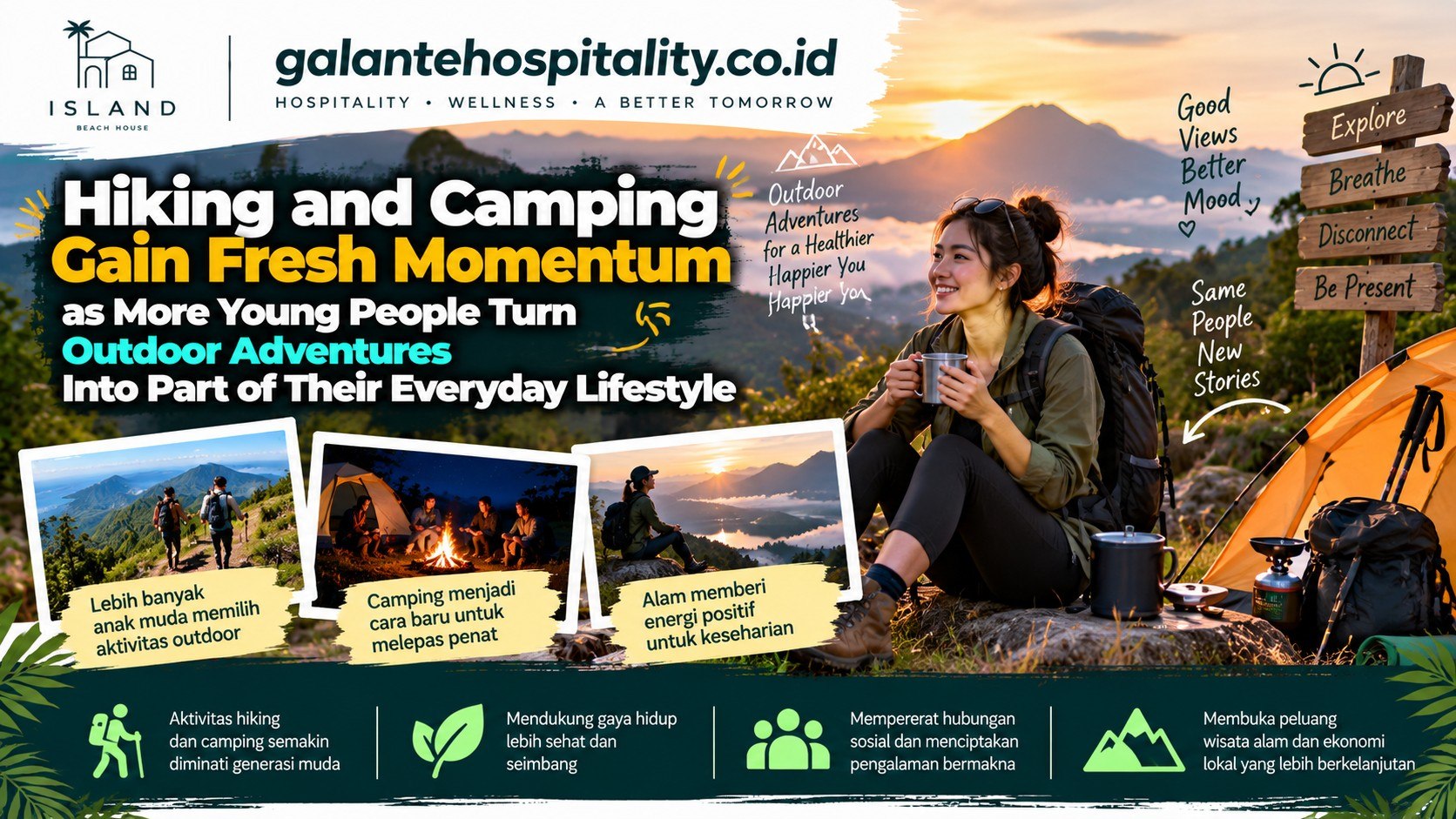

Hiking and camping continue to attract a new generation of outdoor enthusiasts. What was once considered a traditional recreational activity is increasingly becoming part of modern lifestyle culture.
Young people are discovering outdoor activities not only as a way to exercise but also as an opportunity to disconnect from busy routines, explore nature, spend time with friends, and create memorable experiences.
The growing interest is also influencing outdoor gear, travel planning, social media content, and the wider adventure economy.
Why Young People Are Returning to Nature
Modern life is highly connected.
People spend significant amounts of time using smartphones, computers, and digital services. While technology offers convenience, constant connectivity can also create a desire for quieter experiences.
Hiking and camping provide an opportunity to step away from screens and spend time outdoors.
For some people, even a short weekend hike can provide a change of environment.
The appeal is not necessarily about traveling to remote locations. Local parks, forests, hills, beaches, and nearby trails can provide accessible outdoor experiences.
Outdoor Activities Are Becoming More Social
Hiking does not have to be a solo activity.
Groups of friends, families, local communities, and outdoor clubs are organizing trips together. Social platforms also make it easier for people to discover trails and connect with other outdoor enthusiasts.
This social element can make outdoor recreation more approachable for beginners.
Someone who has never gone hiking may feel more comfortable joining an organized group rather than exploring a difficult trail alone.
As participation grows, outdoor communities can also help newcomers learn about safety, equipment, navigation, and responsible behavior.
Technology Has a Role in Outdoor Adventures
Although hiking can provide a break from technology, modern devices are still useful in outdoor environments.
Smartphones can provide navigation, weather information, emergency communication, and trail maps.
Wearable devices can track distance, heart rate, elevation, and other activity information.
Satellite communication technology can also provide an additional communication option in areas where cellular coverage is limited.
However, technology should support outdoor safety rather than encourage people to ignore basic preparation.
A reliable map, sufficient water, appropriate clothing, and knowledge of the route remain important.
Outdoor Gear Is Becoming More Versatile
The growing popularity of hiking and camping is also influencing outdoor equipment.
Consumers increasingly want products that can serve multiple purposes.
A lightweight jacket may be useful for hiking, travel, and everyday activities. A compact backpack may work for both short adventures and city commuting.
This versatility can make outdoor equipment more attractive to people who are not traditional adventure enthusiasts.
Comfort is also becoming increasingly important.
Modern outdoor consumers often expect equipment to combine durability with lightweight materials, practical design, and ease of use.
Sustainability Is Becoming Part of the Conversation
More outdoor enthusiasts are also paying attention to environmental responsibility.
The popularity of natural destinations can create challenges when visitor numbers increase.
Waste, trail erosion, wildlife disturbance, and excessive development can affect fragile environments.
Responsible outdoor recreation therefore matters.
Hikers and campers can help protect natural areas by staying on designated trails, carrying waste out of outdoor locations, respecting wildlife, and following local regulations.
The principle is simple: people should enjoy nature without damaging the environment they came to experience.
Making Outdoor Activities More Accessible
The future of hiking and camping will also depend on accessibility.
Not everyone has access to expensive equipment or the time to take long trips.
Fortunately, outdoor recreation can be adapted to different budgets and experience levels.
A short local hike can be an outdoor adventure. Camping does not always require advanced equipment. Beginners can start with simple activities and gradually develop their skills.
This makes the outdoors more inclusive and allows more people to experience its benefits.
The Future of Hiking and Camping
The renewed interest in hiking and camping reflects a broader desire for experiences that feel meaningful and refreshing.
Outdoor activities offer exercise, exploration, social connection, and opportunities to spend time away from everyday routines.
As more young people become interested in nature, the outdoor industry will continue developing products and services that respond to their needs.
At the same time, responsible recreation will become increasingly important.
The strongest outdoor culture is not simply about going farther or climbing higher. It is about enjoying nature safely while helping preserve it for the people who will explore it next.


