







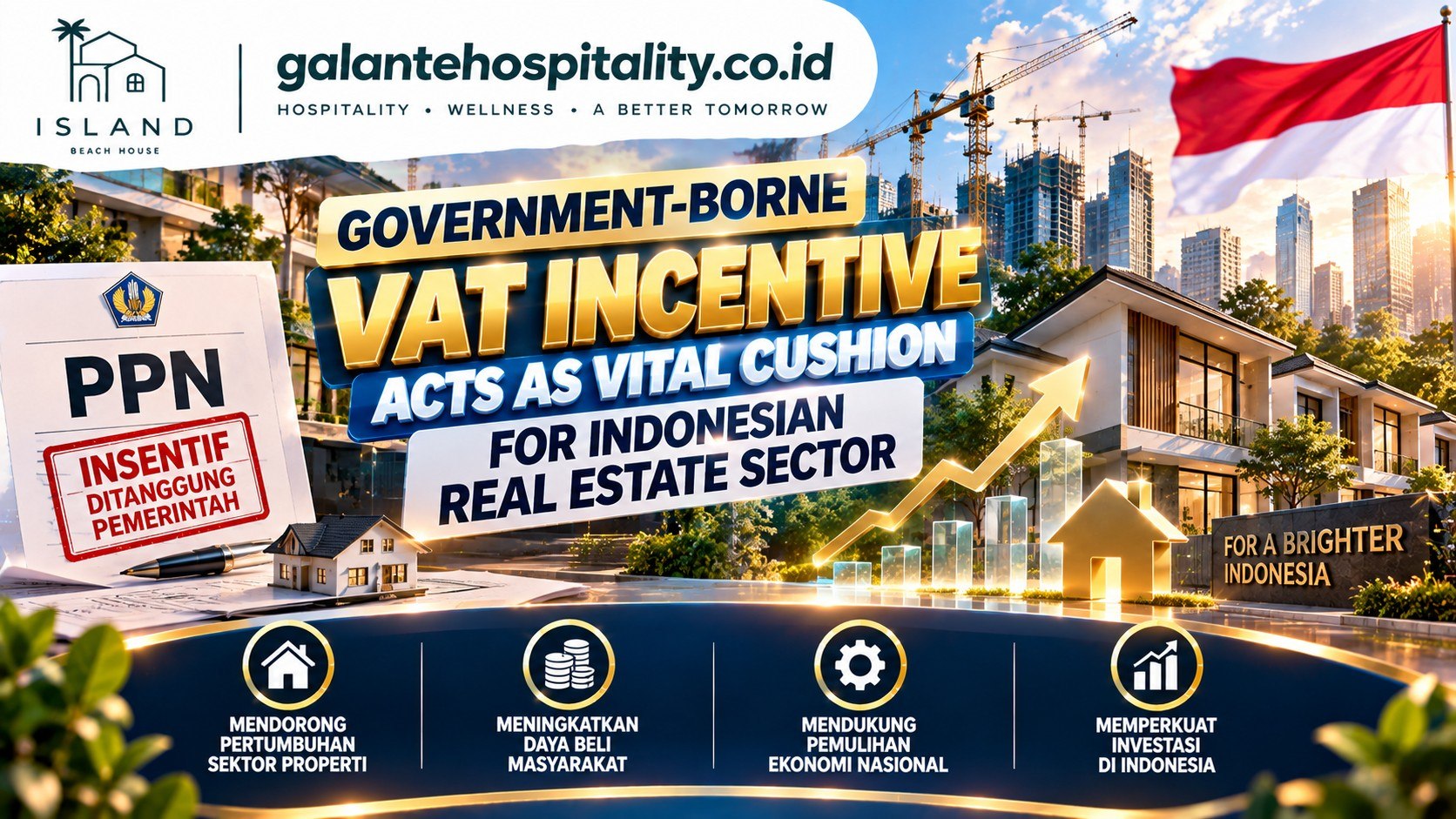

Government-Borne VAT Incentive Supports Indonesian Real Estate
Indonesia’s Government-Borne VAT Incentive is providing additional support for the residential property market in 2026. The policy is designed to stimulate purchasing power while helping maintain economic growth through the housing sector.
The incentive is regulated under Minister of Finance Regulation No. 90 of 2025, which took effect on January 1, 2026. The regulation provides Government-Borne Value Added Tax, or PPN DTP, for eligible sales of landed houses and residential apartment units during the 2026 tax year.
The policy continues a housing tax incentive that has also been implemented in previous years.
How the Government-Borne VAT Incentive Works
Under the 2026 regulation, eligible buyers can receive a 100% Government-Borne VAT Incentive on the VAT payable for the portion of the selling price up to IDR 2 billion.
The incentive applies to new landed houses and new residential apartment units with a maximum selling price of IDR 5 billion.
This means the policy is aimed at a specific segment of the residential property market rather than covering every type of property transaction.
The incentive is available for qualifying transactions during the January-to-December 2026 tax period, subject to the requirements set out in the regulation.
Housing Buyers Can Benefit From Lower Tax Costs
For eligible homebuyers, the Government-Borne VAT Incentive can reduce the tax burden associated with purchasing a qualifying new property.
For example, a qualifying home with a selling price of up to IDR 2 billion can receive the full Government-Borne VAT treatment on the applicable VAT amount. For properties priced above IDR 2 billion but no more than IDR 5 billion, the incentive applies to the eligible portion of the selling price.
The tax benefit can therefore make the overall purchase cost more manageable for buyers who meet the requirements.
New Homes and Apartments Are Covered
The policy covers two main categories of residential property: landed houses and residential apartment units.
Eligible properties must be new and ready for occupancy. They must also meet the requirements concerning property identification and the first transfer from the taxable entrepreneur that developed the property.
This requirement helps ensure that the incentive is directed toward qualifying new residential properties rather than previously transferred units.
Incentive Supports Property Market Activity
The Government-Borne VAT Incentive is intended to stimulate purchasing power in the housing sector.
When buyers receive tax relief on eligible property purchases, the policy can provide an additional financial incentive to complete a transaction. At the same time, stronger housing demand can support activity across the wider property supply chain.
The real estate industry is connected to many other sectors, including construction, building materials, financing, professional services and household goods.
For this reason, government housing incentives can have effects beyond the property transaction itself.
Developers Also Face Specific Requirements
The incentive does not apply automatically to every property sale.
Developers and taxable property sellers must comply with administrative requirements, including issuing the appropriate tax invoice and reporting the realization of the Government-Borne VAT Incentive. The property handover must also be properly documented and registered according to the applicable system.
These requirements are important because the tax authority can recover VAT when transactions fail to meet the conditions established by the regulation.
Government-Borne VAT Incentive Has Specific Limits
Although the policy provides substantial tax relief, buyers should understand its limitations.
The incentive is generally available for one landed house or one residential apartment unit per individual under the applicable provisions. Properties priced above IDR 5 billion do not qualify, while the Government-Borne VAT coverage is limited to the first IDR 2 billion of the selling price.
The regulation also specifies conditions involving the transaction period, property status, tax documentation and handover process.
Indonesia Real Estate Sector Gets Additional Support
The continuation of the Government-Borne VAT Incentive demonstrates the government’s effort to support residential property demand while maintaining economic activity.
For the real estate sector, the policy provides another mechanism to encourage transactions involving qualifying new homes and apartments. For buyers, the tax benefit can reduce part of the cost of purchasing an eligible property.
As the policy remains in effect throughout the 2026 tax year, its implementation will continue to be closely watched by homebuyers, developers and other players in Indonesia’s property market.


