







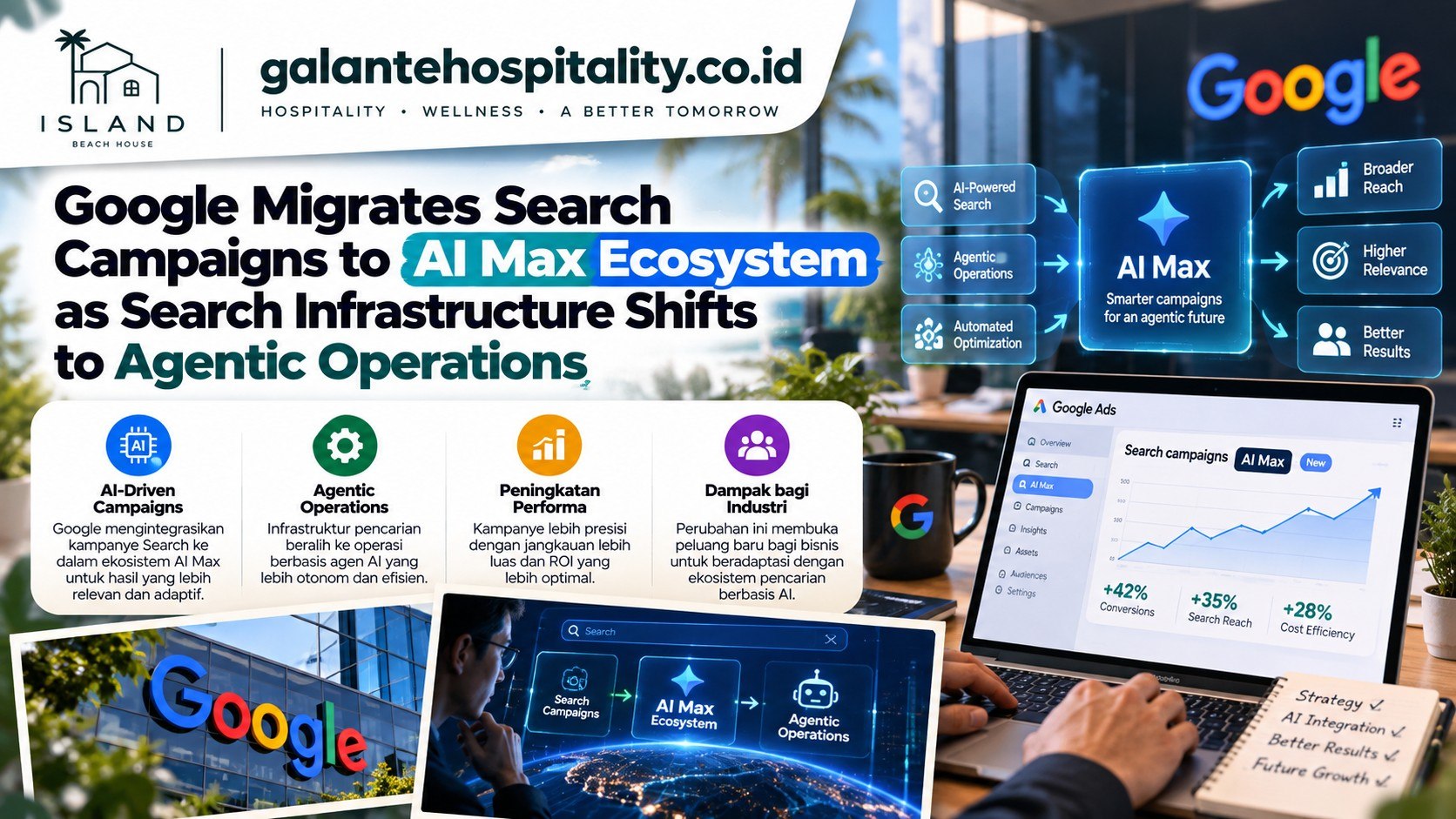

Search Engine Marketing (SEM) is undergoing an unprecedented architectural evolution as Google accelerates the systematic migration of standard Search campaigns into its AI Max ecosystem. Marking a definitive departure from traditional keyword-centric management, this transition consolidates campaign-level broad match, asset customization, and automated landing page routing into an autonomous agentic framework.
With search infrastructure adapting to conversational and generative intent signals, advertisers must pivot from manual keyword bidding toward governing brand guardrails, text guidelines, and first-party conversion data within Google’s agentic advertising models.
1. Structural Evolution: From Manual Bidding to Agentic AI Max
For decades, paid search relied heavily on exact match structures, manual ad copy generation, and granular negative keyword management. The roll-out of Google AI Max restructures how campaigns capture user intent across the Search network.
+-------------------------------------------------------------------+
|            TRADITIONAL SEARCH vs. AI MAX ECOSYSTEM                |
+-------------------------------------------------------------------+
| Campaign Dimension            | AI Max Operational Model          |
+-------------------------------+-----------------------------------+
| Targeting Mechanism           | Intent signals & dynamic URL expansion|
| Ad Copy Execution            | Real-time, query-customized text  |
| Campaign Steering             | Brand controls & text guidelines  |
| Performance Focus             | Conversion value & ROAS targets   |
+-------------------------------+-----------------------------------+
Core Pillars of the AI Max Architecture:
- Search Term Matching: Expands reach beyond static keyword lists by evaluating real-time user context, query semantics, and landing page content.
- Real-Time Text Customization: Generates ad copy variations dynamically tailored to the individual query, rather than cycling through pre-written headline rotations.
- Final URL Expansion: Directs users dynamically to the most relevant landing page on a domain to maximize conversion probability.
2. Navigating the Migration Timelines and Brand Controls
To ensure smooth campaign transitions, digital marketers must manage auto-migration schedules while setting strict operational parameters.
                  AI Max Migration & Governance Flow
                                  |
     +----------------------------+----------------------------+
     |                                                         |
     v                                                         v
[Automated Campaign Inheritance]               [Brand & URL Steering Controls]
Ports existing Search campaigns into           Enforces brand exclusion lists, text guidelines,
AI Max setups while retaining baseline KPIs    and strict destination URL restrictions
1. Phased Migration Deadlines
Google has established distinct migration schedules for legacy formats. While auto-created assets and broad match campaigns transition under current phased roll-outs, advertisers must audit pre-migration baselines to prevent performance fluctuations.
2. Implementing Brand Exclusions
To maintain brand safety and compliance, performance marketing teams utilize campaign-level negative keyword lists, brand exclusion rules, and explicit URL inclusion/exclusion sets to guide autonomous matching algorithms.
3. Redefining Digital Agency Workflows and Metrics
The automation of campaign execution shifts the value proposition of digital marketing agencies:
                 +---------------------------------+
                 |  REDEFINED PERFORMANCE METRICS  |
                 +---------------------------------+
                                   |
   +-------------------------------+-------------------------------+
   |                               |                               |
   v                               v                               v
[First-Party Conversion Signals] [Topical Content Alignment]  [Incremental Lift Assessment]
Nurturing clean CRM data pipelines Ensuring landing pages offer   Measuring true incremental value
to train agentic bidding models   dense, authoritative context   beyond branded search traffic
Rather than focusing on manual query triaging, marketing strategists now specialize in conversion tracking precision, landing page optimization, and high-level media allocation.
4. Outlook for Paid Search Engineering
The migration to the AI Max ecosystem represents a permanent shift toward agentic search operations. Brands that establish robust conversion data pipelines, craft high-quality landing page content, and configure precise steering controls will maintain a distinct ROI advantage in global digital markets.


