







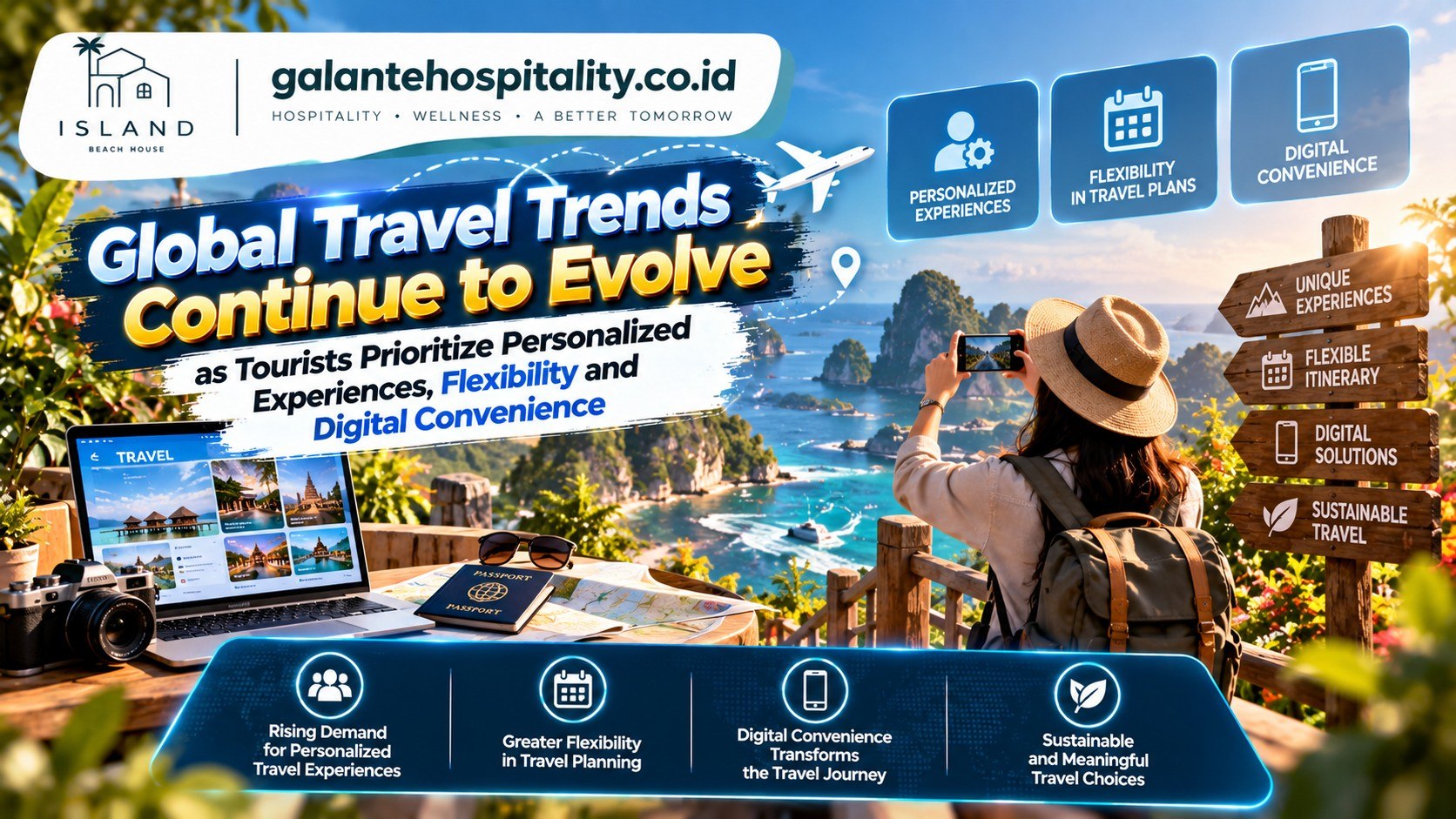

The global travel industry is entering another period of significant transformation as travelers increasingly look for experiences that match their individual interests, schedules and lifestyles.
Personalization, artificial intelligence, digital technology and sustainability are becoming important factors in how people plan and experience travel.
Recent tourism research highlights the growing role of AI and personalized experiences, while broader industry reports show that digital readiness and connectivity are becoming increasingly important for destinations competing in the global tourism market. Hotel News Resource
Travelers Want More Personalized Experiences
Modern travelers are increasingly moving away from one-size-fits-all tourism.
Instead of simply visiting the most famous attractions, many tourists want experiences that feel more personal.
This could include food-focused travel, cultural activities, wellness trips, outdoor adventures or visits to less crowded destinations.
Personalization allows travelers to create itineraries based on their own interests rather than following standardized tour packages.
Travel companies are responding by using customer data and digital platforms to recommend hotels, activities and destinations that are more closely aligned with individual preferences.
Artificial Intelligence Is Changing Travel Planning
Artificial intelligence is becoming an increasingly useful tool throughout the travel journey.
Travelers can use AI-powered services to research destinations, compare options, create itineraries and discover activities.
For travel companies, AI can help analyze customer preferences and improve operational efficiency.
The OECD’s 2026 tourism analysis notes that digitalization and advances in artificial intelligence are creating opportunities to improve tourism management, operational efficiency and personalized experiences. OECD
However, AI does not eliminate the need for human expertise.
Travel remains an experience-driven industry. Travelers still value local knowledge, hospitality and authentic interactions.
The strongest travel businesses may therefore be those that combine digital convenience with genuine human service.
Flexibility Is Becoming More Valuable
Travelers are also placing greater importance on flexibility.
Changing schedules, uncertain economic conditions and unexpected disruptions can make rigid travel plans less attractive.
Flexible booking policies, easy itinerary changes and convenient digital communication can provide travelers with greater confidence when making reservations.
This trend is particularly important for younger travelers, who often expect digital services to work quickly and seamlessly.
Travel companies that make changes and cancellations easier can improve customer satisfaction and build stronger relationships with their audiences.
Sustainable Tourism Remains a Major Priority
Sustainability continues to influence the future of tourism.
Tourism can generate significant economic benefits for destinations, but uncontrolled growth can also create pressure on natural resources, infrastructure and local communities.
As a result, governments and tourism organizations are increasingly focusing on more balanced development.
The OECD emphasizes the importance of making tourism more sustainable and resilient while ensuring that economic, social and environmental benefits are more widely distributed. OECD
For travelers, sustainable tourism can mean choosing environmentally responsible accommodation, supporting local businesses, reducing unnecessary waste and respecting local communities.
Digital Infrastructure Can Strengthen Destinations
Technology is becoming an important part of destination competitiveness.
Digital maps, mobile payments, online booking systems, translation tools and connected transportation can make travel easier for international visitors.
The World Economic Forum’s 2026 Travel & Tourism Development Index reported improvements in digital readiness across many economies, while highlighting how AI is reshaping competition between destinations. Foro Económico Mundial
This means tourism development is no longer based only on beautiful landscapes or cultural attractions.
Destinations also need reliable digital infrastructure, transportation, skilled workers and convenient visitor services.
Travelers Are Looking for Authenticity
Despite the growth of technology, authenticity remains one of the strongest elements of modern travel.
Visitors increasingly want to understand local culture, taste regional food and interact with communities.
This creates opportunities for smaller businesses and local tourism operators.
A family-owned restaurant, local guide, traditional craft workshop or community-based tourism program can provide experiences that large international chains cannot easily reproduce.
Personalized digital discovery can therefore work together with local authenticity.
Technology may help travelers find a unique experience, while local communities provide the experience itself.
The Future of Travel Will Combine Technology and Human Experience
The global travel industry is moving toward a model that combines personalization, flexibility, sustainability and digital convenience.
AI can help travelers make decisions faster. Digital infrastructure can simplify transportation and bookings. Sustainable policies can protect destinations. Local communities can provide authentic experiences.
The challenge is ensuring that technology supports tourism rather than making travel feel overly automated.
Travelers still want memorable moments, meaningful connections and the feeling of discovering something new.
The future of tourism will likely belong to destinations and companies that can balance technological innovation with authentic human experiences.


