







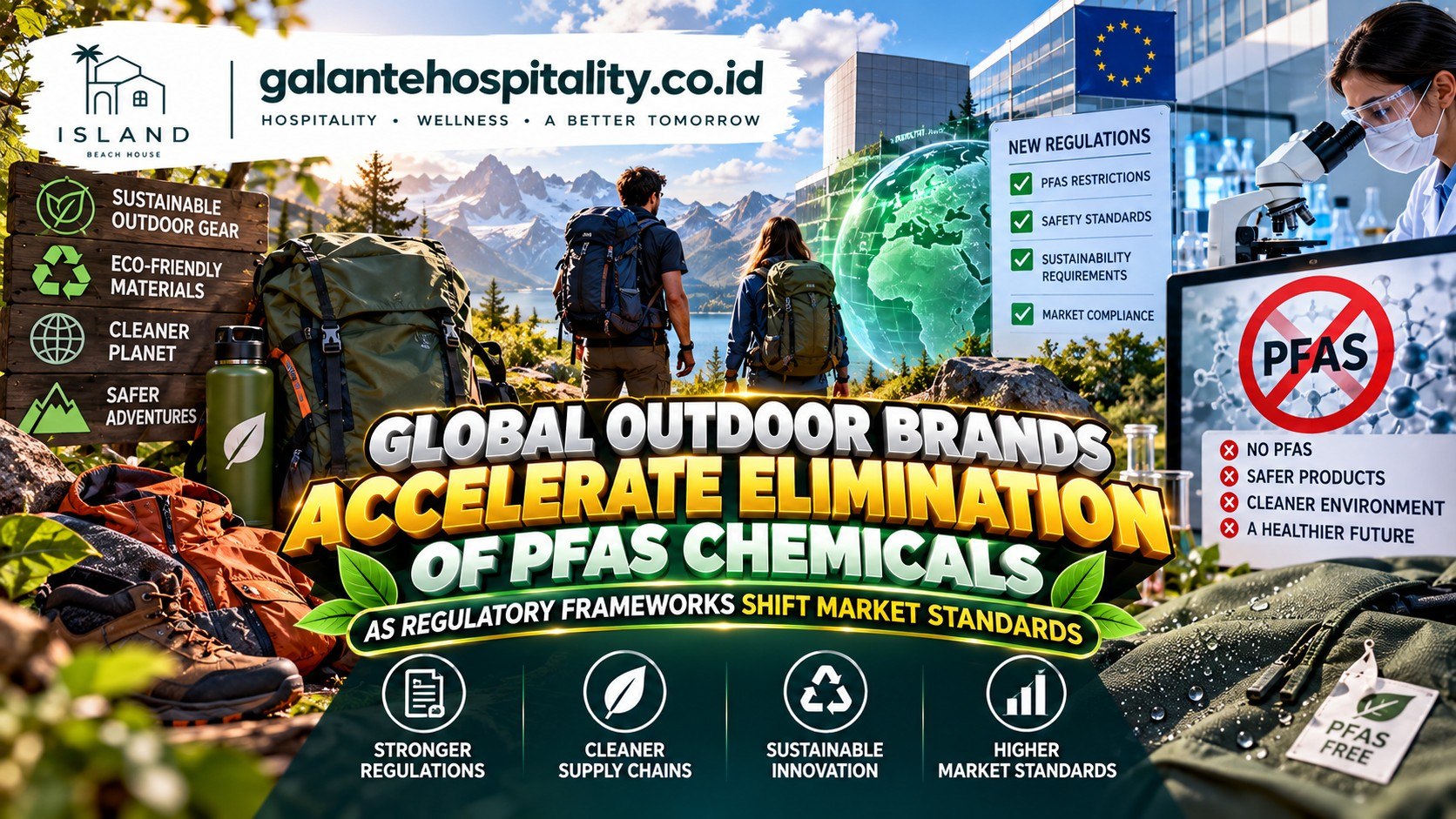

Leading international outdoor gear and technical apparel manufacturers are drastically accelerating the removal of per- and polyfluoroalkyl substances (PFAS) across their global supply chains. Driven by sweeping environmental legislation in key markets—including North America and the European Union—outdoor brands are replacing legacy “forever chemicals” with bio-based waterproofing treatments, expanded polyethylene (ePE) membranes, and high-density mechanical weaving techniques.
This systemic shift marks the end of traditional fluorine-based Durable Water Repellent (DWR) coatings, forcing raw material suppliers and textile engineers to reinvent extreme weather protection standards.
Regulatory Drivers Reshaping Global Outdoor Manufacturing
The primary catalyst for this chemical elimination is a wave of strict state, national, and international environmental mandates aimed at reducing persistent environmental toxins.
+-------------------------------------------------------------------+
|               KEY REGULATORY BANS ON TEXTILE PFAS                 |
+-------------------------------------------------------------------+
| Jurisdiction / Standard       | Enforcement Framework             |
+-------------------------------+-----------------------------------+
| US State Legislation (CA, NY) | Total ban on intentional PFAS in  |
|                               | commercial textiles and apparel   |
| EU REACH & National Directives| Strict fluorine thresholds across |
|                               | consumer goods and outerwear      |
| Eco-Certification Standards   | Complete removal from bluesign    |
| (e.g., bluesign®)             | approved product directories      |
+-------------------------------+-----------------------------------+
Core Factors Driving the Chemical Transition:
- Legal Compliance Mandates: Apparel sold in major consumer markets must comply with total organic fluorine concentration limits, ending the use of long-chain and short-chain fluorocarbons.
- Brand Reputation & Liability: Premium outdoor companies are auditing Tier-1 to Tier-4 supply chains to prevent cross-contamination in factories.
- Consumer Demand for Eco-Safe Gear: Environmental-conscious hikers, mountaineers, and campers prioritize non-toxic gear that does not leach persistent bioaccumulative chemicals into wild ecosystems.
External Reference: Explore regulatory updates on textile environmental standards via theBluesign Technologies Official Portal(Outbound Link Suggestion).
2. Advanced Technical Alternatives to Legacy Waterproofing
Replacing fluorinated chemistry without sacrificing breathable waterproof performance in extreme outdoor conditions required years of intensive research and development.
                Sustainable Waterproof Textile Innovations
                                     |
     +-------------------------------+-------------------------------+
     |                                                               |
     v                                                               v
[PFC/PFAS-Free DWR Treatments]                     [Next-Generation Non-Fluorine Membranes]
Plant-derived wax, silicone, and hydrocarbon       Utilizing microporous ePE and polyurethane (PU)
finishes offering water bead-off protection        structures for durable storm protection
1. Bio-Based and Hydrocarbon Finishes
Manufacturers are deploying plant-derived and paraffin-based DWR finishes that achieve high water repellency while maintaining garment breathability during intense cardio activities like trail running and alpine climbing.
2. Monomaterial Design for Recyclability
In addition to eliminating toxic chemistry, brands are engineering garments from 100% single-polymer fabrics (such as all-polyester constructions). Monomaterial outerwear simplifies post-consumer mechanical recycling, aligning chemical safety with circular economy goals.
3. Impact on Consumer Education and Gear Care
As non-PFAS gear reaches mass retail markets, outdoor brands are shifting consumer expectations regarding gear maintenance:
                 +---------------------------------+
                 |   CONSUMER CARE ADVANCEMENTS    |
                 +---------------------------------+
                                   |
   +-------------------------------+-------------------------------+
   |                               |                               |
   v                               v                               v
[More Frequent Cleaning]    [Eco-Friendly Reproofing]   [Extended Product Lifespan]
Washing garments removes    Applying bio-degradable      Proper care preserves DWR
dirt that degrades non-PFAS  wash-in proofing liquids    performance for years
Because bio-based DWR finishes require occasional re-activation through gentle heat drying and eco-friendly wash-in reproofing products, brands are integrating clear care instructions via digital product passports.
4. Industry Outlook for Sustainable Outdoor Equipment
The global outdoor gear industry’s transition away from PFAS chemicals signals a mature era of environmental responsibility. As non-toxic waterproofing technologies become the global manufacturing baseline, brands that combine certified sustainable chemistry with uncompromising technical durability will win long-term loyalty from eco-minded adventurers worldwide.


