







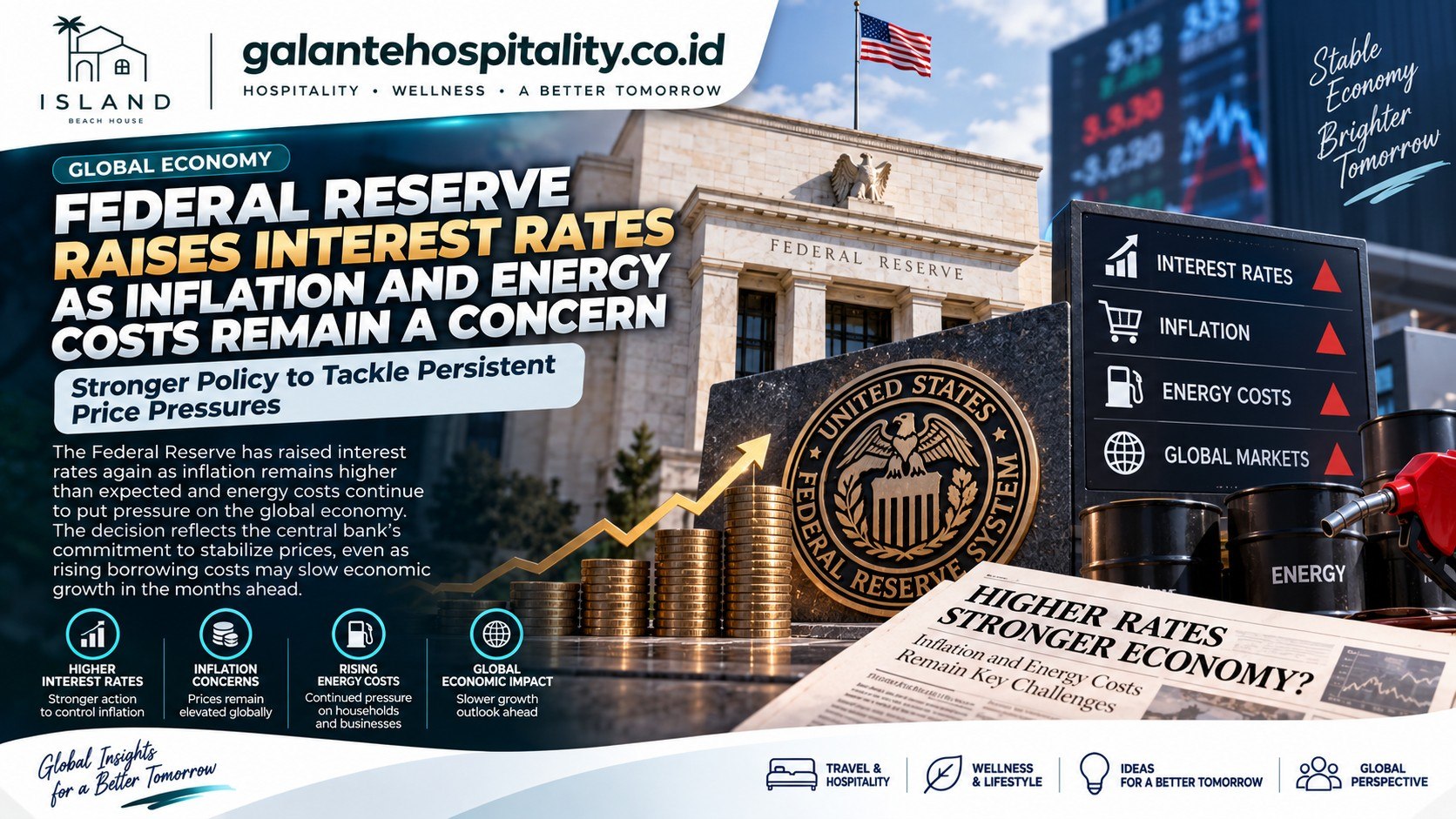

Federal Reserve Raises Benchmark Interest Rate
The Federal Reserve has raised its benchmark interest rate to a range of 3.75% to 4.00%, marking a significant shift in U.S. monetary policy as policymakers continue to focus on persistent inflation.
The quarter-point increase was approved unanimously on September 16, 2026. It was the Federal Reserve’s first rate hike in three years. Policymakers indicated that additional increases could still be considered as they monitor inflation and economic activity.
The decision comes as price pressures remain above the central bank’s long-term target. Federal Reserve officials have also pointed to strong economic activity and consumer demand as factors that could keep inflation elevated.
More Rate Hikes Could Follow
The latest projections show that most Federal Reserve policymakers expect at least one additional rate increase before the end of 2026.
Reuters reported that 16 of 18 policymakers projected at least one more quarter-point increase this year. The projections indicate that the benchmark rate could move into the 4.00%-4.25% range by the end of 2026.
However, future decisions will depend on incoming economic data. Inflation, employment conditions, consumer spending and commodity prices will remain important factors for policymakers.
Higher Rates Could Affect Borrowing Costs
Higher interest rates generally increase borrowing costs across the economy. Consumers can see the effects through credit cards, mortgages and other forms of financing, while businesses may face higher costs when borrowing money for expansion.
The impact is not necessarily immediate or identical across every type of loan. Existing fixed-rate loans, for example, may not change simply because the Federal Reserve adjusts its benchmark rate.
At the same time, higher interest rates can provide better returns for some savings products as financial institutions adjust deposit rates.
Inflation Remains the Main Focus
Federal Reserve officials have emphasized that inflation remains a significant concern.
Minneapolis Fed President Neel Kashkari recently said price pressures were visible across multiple parts of the U.S. economy rather than being limited to energy prices. Richmond Fed President Tom Barkin also said inflation remained a central concern and argued that recent price pressures were broader than temporary energy or tariff effects.
This situation creates a difficult balance for policymakers. Raising rates can help reduce demand and inflationary pressure, but tighter financial conditions can also slow economic activity.
Financial Markets Continue to Watch the Fed
Financial markets have been closely following the Federal Reserve’s policy direction.
After the rate decision, the U.S. dollar strengthened against several major currencies, while Treasury yields and stocks responded to changing expectations about future monetary policy.
Investors are now watching upcoming economic data and comments from Federal Reserve officials for clues about the timing of another possible rate increase.
For households and businesses, the latest decision highlights the importance of monitoring borrowing costs and broader economic conditions as the Federal Reserve continues its fight against inflation.


