







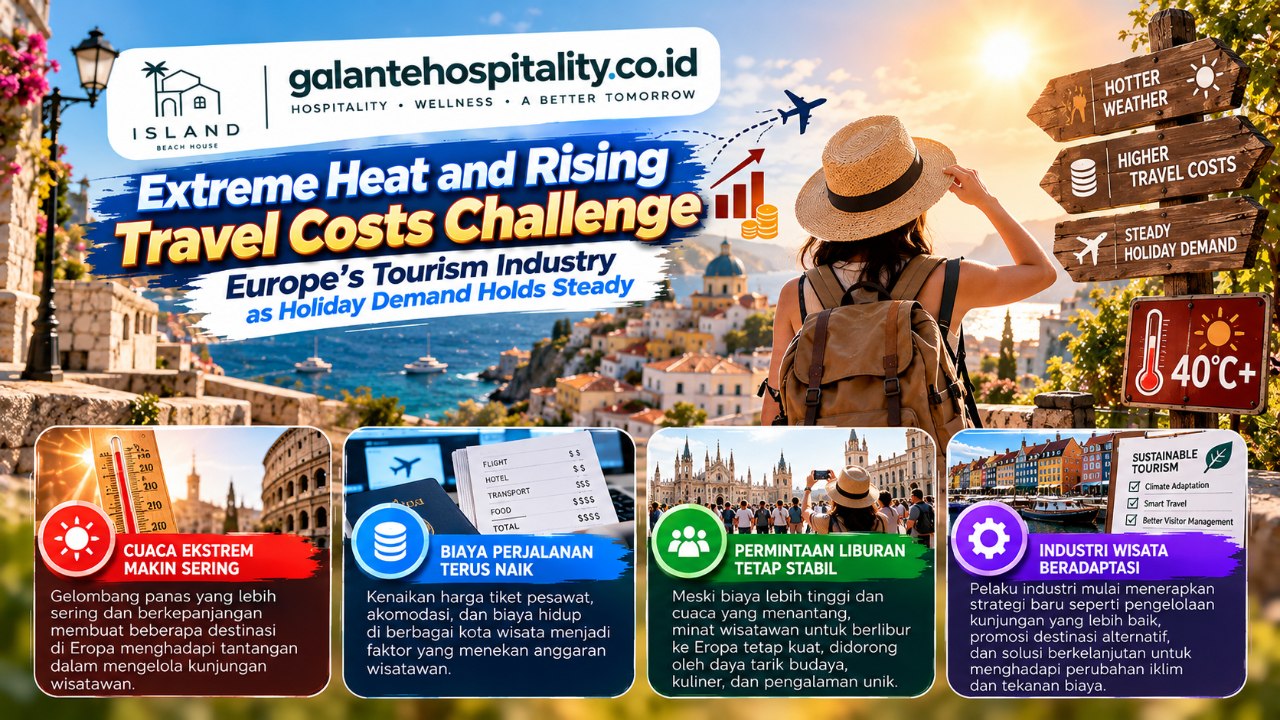

Europe’s tourism industry is facing a combination of challenges as extreme heat and higher travel costs place additional pressure on holiday planning. Despite these concerns, industry representatives reported in October 2026 that many British travelers remained committed to their holiday plans, particularly trips to traditional summer destinations.
According to industry reporting published on October 16, travel companies continued to see demand for summer beach holidays even as fuel costs and broader economic uncertainty affected the travel market. Some tour operators are also adjusting activities in response to hotter conditions and environmental pressures.
The situation illustrates the complexity of Europe’s tourism outlook. Travelers continue to value holidays, but changing weather conditions and affordability may influence how, when, and where they choose to travel.
Extreme Heat Creates New Challenges for Destinations
High temperatures can affect many aspects of the travel experience. Walking tours, outdoor attractions, hiking routes, and sightseeing activities may become more difficult during the hottest hours of the day.
Heat can also increase demand for drinking water, shaded areas, cooling facilities, and medical assistance. Destinations that receive large numbers of visitors must consider these needs when preparing for peak travel periods.
For tourism businesses, extreme weather may require changes to operating schedules and activity planning. Outdoor excursions may need earlier departure times, while heat-sensitive activities may be shortened or replaced with alternatives.
Travelers should check local weather forecasts before departure and follow guidance from local authorities. Staying hydrated, avoiding strenuous activities during peak heat, and recognizing symptoms of heat-related illness can help reduce risks.
Travel Costs Influence Holiday Decisions
The cost of transportation remains an important consideration for travelers planning trips across Europe. Fuel prices can influence airline operating expenses, while accommodation, airport transfers, food, and activities contribute to the total holiday budget.
Industry representatives reported that higher fuel costs had not immediately stopped many British holidaymakers from traveling, although businesses were monitoring the potential impact on future prices. Some airlines had previously secured fuel supplies at fixed prices, but such arrangements do not necessarily protect them indefinitely from rising costs.
For consumers, this means that advertised package prices and flight fares may change as travel dates approach.
A practical approach is to calculate the full cost of a holiday rather than focusing exclusively on the ticket price. Travelers can compare accommodation options, use public transportation where practical, and select activities that fit their budgets.
Flexible dates may also provide additional choices, depending on destination and availability.
Travelers May Consider Different Seasons and Destinations
Extreme summer temperatures have encouraged discussion about changing travel patterns, including the possibility of visiting cooler destinations or traveling outside the hottest months.
However, changes in traveler behavior are not uniform. Some people continue to prefer traditional Mediterranean beach holidays, while others may prioritize milder weather or outdoor activities that are more comfortable in spring and autumn.
Travel companies are responding in different ways. Some are reviewing heat-sensitive excursions, while destinations are considering how to maintain visitor comfort and protect local environments.
Traveling outside peak periods can offer benefits, but visitors should still check seasonal conditions. A destination that is cooler in one month may experience rain, limited transport services, or closures of certain attractions.
The best choice depends on the traveler’s priorities, budget, mobility, and tolerance for different weather conditions.
Tourism Businesses Need Better Climate Preparedness
Hotels, tour operators, airlines, and destination managers may need to adapt their operations to changing weather patterns.
Possible measures include providing clearer heat-safety information, improving shade and ventilation, adjusting outdoor activity schedules, and developing alternative indoor experiences. Emergency plans may also need to account for heat-related medical incidents and transport disruptions.
These measures can improve visitor safety while helping businesses maintain service quality.
Destinations must also consider the needs of local residents. High visitor numbers combined with hot weather can increase pressure on water supplies, public spaces, transportation, and emergency services.
Sustainable tourism planning therefore requires cooperation between businesses, local authorities, infrastructure providers, and communities.
Travelers Should Prepare More Carefully
Visitors planning a European holiday should review weather forecasts, travel insurance, cancellation policies, and local safety guidance before departure.
During hot weather, lightweight clothing, sun protection, regular hydration, and flexible daily schedules can make trips more manageable. Travelers with health concerns may need additional precautions and should seek appropriate professional advice when necessary.
It is also sensible to keep essential booking information accessible and understand the options available if severe weather affects planned activities.
Travelers should avoid assuming that all attractions will operate normally during extreme conditions. Checking official updates can help prevent unnecessary disruption.
The Outlook for European Tourism
Europe’s tourism industry continues to attract visitors, but the combination of climate pressures and travel costs is making planning more complex.
Businesses that communicate clearly, adapt activities, and prepare for changing conditions may be better positioned to meet travelers’ needs. Destinations that invest in resilient infrastructure and responsible tourism practices can also improve their ability to manage future challenges.
For travelers, the main lesson is to balance personal preferences with practical considerations. A successful holiday depends not only on choosing a popular destination, but also on preparing for weather conditions, understanding the total cost, and maintaining flexibility.
As the industry prepares for future seasons, affordability, visitor safety, and climate adaptation are likely to remain important parts of the conversation about sustainable tourism in Europe.


