







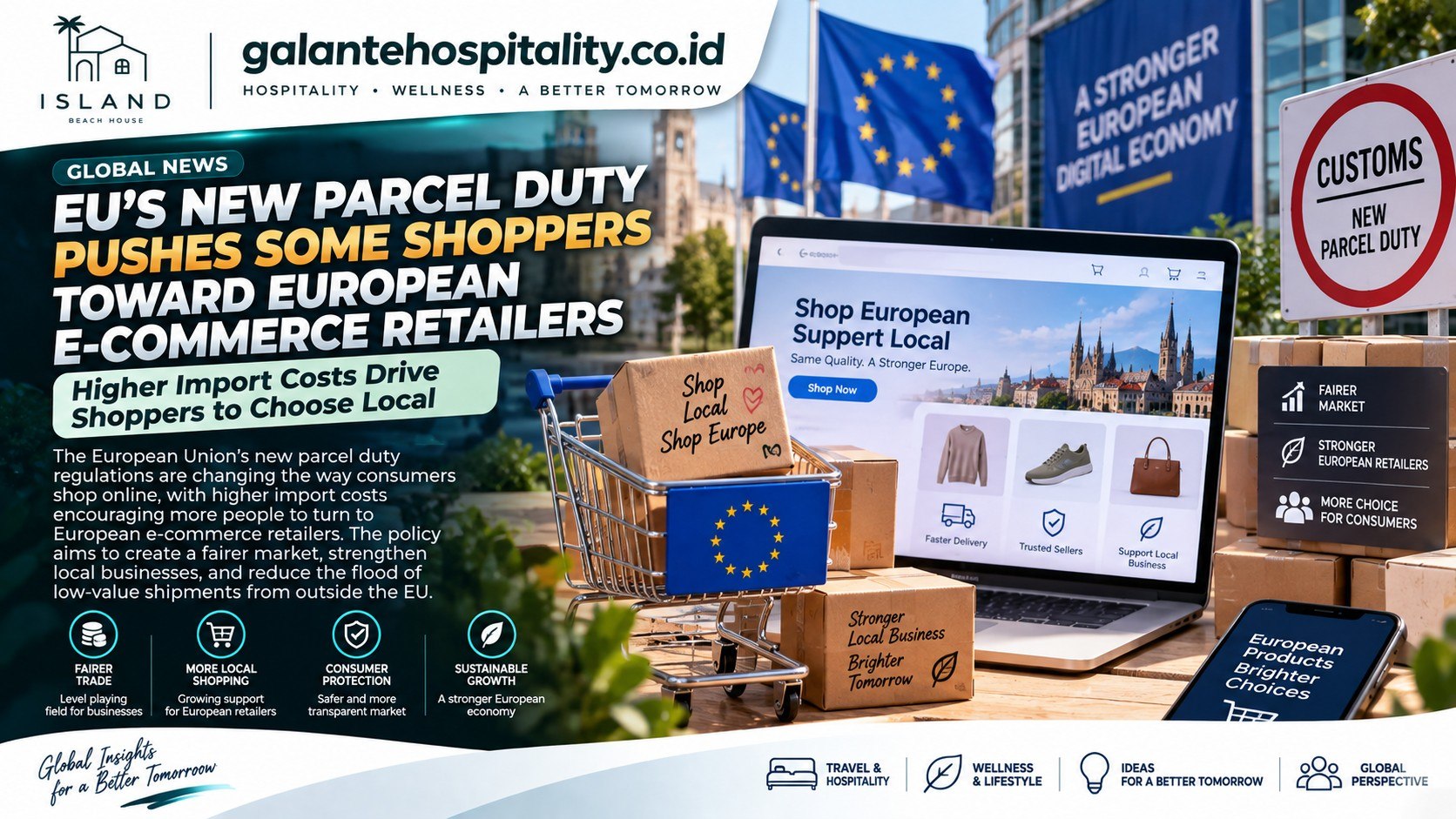

New EU Rules Reshape E-Commerce Competition
Online shopping in Europe is experiencing a shift following the introduction of new customs rules for low-value parcels arriving from outside the European Union.
From July 1, 2026, the EU introduced a temporary €3 customs duty on goods bought online and imported in individual parcels valued at up to €150. The measure replaced the previous duty exemption for such shipments.
The change is designed to address the rapid growth of low-value e-commerce imports and create a more balanced competitive environment between European retailers and sellers based outside the bloc.
European Retailers See Stronger Online Sales
Polish fashion retailer LPP has reported faster online sales growth at its Sinsay brand following the introduction of the new rules.
According to Reuters, Sinsay’s online sales growth accelerated by around 20% to 30% from mid-August, while the company said changing shopping patterns were helping European retailers compete with international e-commerce platforms.
The development comes as consumers adjust to the additional cost associated with some low-value imports.
Billions of Small Parcels Enter the EU
The EU says the volume of low-value e-commerce shipments has increased dramatically in recent years.
In 2025, approximately 5.9 billion low-value e-commerce items entered the European Union, four times the volume recorded in 2022. The large number of small shipments has placed additional pressure on customs authorities.
European officials have also raised concerns about products that may not comply with EU standards.
Chinese E-Commerce Platforms Face New Pressure
The policy change affects the competitive environment for international platforms that rely heavily on shipments of relatively inexpensive products directly to European consumers.
Reuters reported that shoppers have shown increased interest in European retailers following the introduction of the new duty, although Chinese e-commerce companies are also adapting by developing warehouses within Europe.
This means the impact of the policy may extend beyond the price of individual parcels.
Sinsay Expands Its Digital Strategy
LPP has also been developing its own e-commerce strategy.
Sinsay launched a marketplace in August 2026, allowing selected external retail partners to sell products through its platform. The company expects the marketplace to expand its product selection significantly, with more than 100,000 products potentially available by 2027.
The marketplace is designed to complement Sinsay’s existing fashion and lifestyle offering.
Online Sales Continue to Grow
LPP reported that its overall e-commerce revenue increased 16.4% year-on-year in the second quarter of 2026.
The company attributed part of the improvement to restored logistics capacity in Southeastern Europe, stronger performance marketing and continued growth through mobile applications.
At Sinsay, mobile purchases accounted for 84% of online sales, highlighting the importance of mobile shopping to the brand’s digital business.
EU Customs Reform Goes Further
The €3 duty is only part of a broader EU customs reform.
The European Parliament and Council adopted a major customs reform on September 16, 2026. The reform aims to modernize customs systems and introduce new rules designed specifically to address the growth of e-commerce shipments.
The EU also plans to introduce a handling fee for small parcels from November 1, 2026, while online platforms and sellers will take greater responsibility for customs formalities and duty payments.
A Changing E-Commerce Landscape
The new rules are creating a different environment for online retailers operating in Europe.
European businesses may gain opportunities as consumers reconsider the cost and convenience of importing low-value products from outside the region. At the same time, international e-commerce companies are adapting their logistics networks to the new regulatory environment.
For consumers, the changes could mean that the final cost of an online purchase depends increasingly on where a product is shipped from and how the seller handles customs requirements.
The European e-commerce market is therefore entering a new phase in which pricing, logistics, regulation and digital shopping experiences are becoming increasingly interconnected.


