







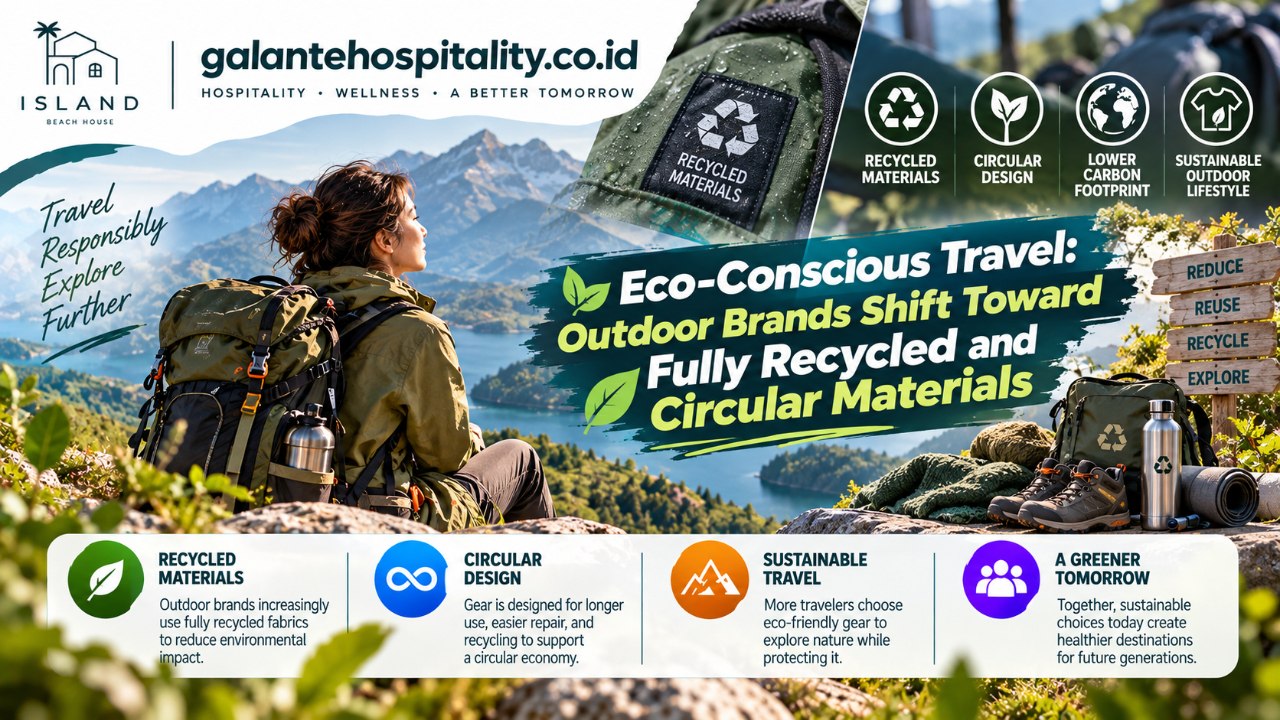

Sustainability is becoming a major consideration in the outdoor equipment industry as consumers and manufacturers pay closer attention to the environmental impact of clothing, footwear, backpacks, tents, and travel accessories. Outdoor brands are increasingly exploring recycled materials and circular production models designed to reduce waste and extend the useful life of products.
The shift reflects a broader challenge facing the industry. Many outdoor products rely on synthetic fabrics, plastic components, metal hardware, adhesives, and specialized coatings. These materials can deliver durability and weather protection, but they may also make products difficult to repair, recycle, or process at the end of their useful life.
Recycled materials offer one approach to reducing demand for newly extracted resources. Recycled polyester, for example, can be produced using recovered plastic materials, while recycled nylon may be sourced from selected industrial waste streams or discarded products. Their environmental benefits depend on the source material, manufacturing process, transportation requirements, and the durability of the finished product.
However, recycled content alone does not guarantee that a product is environmentally responsible. A garment may contain recycled fabric while still relying on difficult-to-separate components or coatings that complicate recycling. Brands therefore need to consider the entire product lifecycle, from material selection and manufacturing to repair and eventual disposal.
Circular design seeks to address these challenges by keeping materials and products in use for longer. Instead of following a traditional model in which items are manufactured, purchased, and discarded, circular approaches emphasize durability, repair, reuse, resale, and material recovery.
Some outdoor companies offer repair programs that allow customers to replace damaged zippers, patch torn fabric, or restore worn equipment. Others operate resale initiatives that give used products a second life. These programs can help consumers obtain functional equipment at lower prices while reducing the volume of products sent to landfills.
Product design also plays a crucial role. Equipment made with replaceable components may be easier to maintain than products that require complete replacement after a single part fails. Reducing unnecessary material combinations can also improve the prospects for recycling, provided the selected materials retain the strength and protection required for outdoor use.
At the same time, outdoor brands must balance environmental goals with safety and performance. Hiking jackets, climbing equipment, waterproof footwear, and camping shelters must meet demanding requirements. Replacing a conventional material with a recycled alternative is beneficial only when the finished product remains suitable for its intended use.
Consumers can support more sustainable purchasing habits by considering product longevity before buying new equipment. Choosing durable items, maintaining them properly, purchasing secondhand gear, and repairing damage when possible can reduce unnecessary consumption. Renting specialized equipment for occasional trips may also be a practical alternative to purchasing items that will rarely be used.
Transparency is essential as sustainability claims become more common. Shoppers should look for clear information about recycled content, manufacturing standards, repair availability, and product care. Broad claims such as environmentally friendly or completely circular require supporting evidence to be meaningful.
The transition toward recycled and circular materials will require collaboration among designers, manufacturers, retailers, recycling providers, and consumers. Although technical and economic barriers remain, longer-lasting products and better recovery systems offer a path toward reducing waste while preserving the quality and reliability that outdoor enthusiasts expect.


