







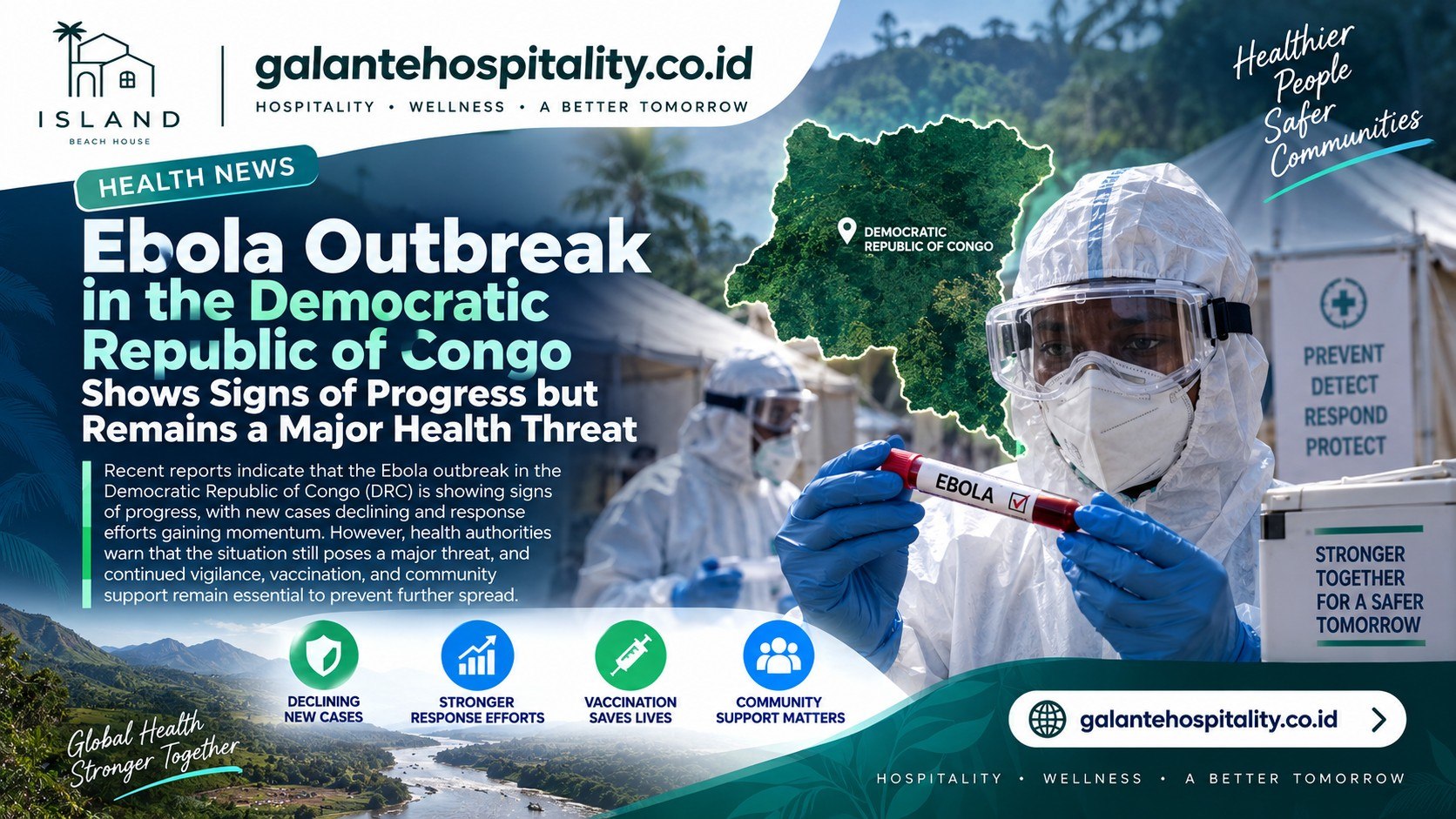

Ebola Outbreak Continues in the Democratic Republic of Congo
The Ebola outbreak caused by the Bundibugyo virus in the Democratic Republic of Congo remains a major public health concern, although international response efforts continue.
In its latest Disease Outbreak News update, the World Health Organization reported that the outbreak had expanded into another health zone, bringing the total number of affected health zones to 61 across six provinces.
The affected provinces include Bas-Uélé, Haut-Uélé, Ituri, North Kivu, South Kivu and Tshopo.
Thousands of Confirmed Cases Reported
According to WHO data covering the situation through September 7, 2026, a cumulative 6,778 confirmed cases had been reported across the affected countries.
Of that total, 6,757 cases were reported in the Democratic Republic of Congo, while 20 were reported in Uganda and one case was diagnosed in France after the patient had traveled from the Democratic Republic of Congo.
WHO also reported 3,269 deaths overall and at least 1,611 people who had recovered.
The figures underline the scale of the outbreak and the continued need for surveillance and response measures.
Cross-Border Transmission Remains a Concern
WHO has warned that sustained transmission in the Democratic Republic of Congo creates a risk of the virus spreading across borders.
Health screening and surveillance activities remain in operation at airports, ports and official land border crossings. However, WHO noted that travel through informal crossing routes continues to present challenges for disease surveillance and could facilitate the movement of the virus.
This makes coordination between neighboring countries an important part of the ongoing response.
Health Authorities Continue Monitoring
The latest WHO update also recorded additional confirmed cases and deaths in the Democratic Republic of Congo after the previous Disease Outbreak News report.
International health authorities continue monitoring the situation while supporting surveillance, case management and other outbreak response activities.
The WHO has emphasized that continued vigilance remains important while transmission persists.
Public Health Response Remains Essential
The Ebola outbreak demonstrates the importance of rapid disease detection, surveillance and coordination between health authorities.
While response measures can help limit transmission, continued monitoring is necessary as long as new cases are being reported.
For communities in affected areas, access to accurate health information and appropriate medical services remains an important part of the broader public health response.


