







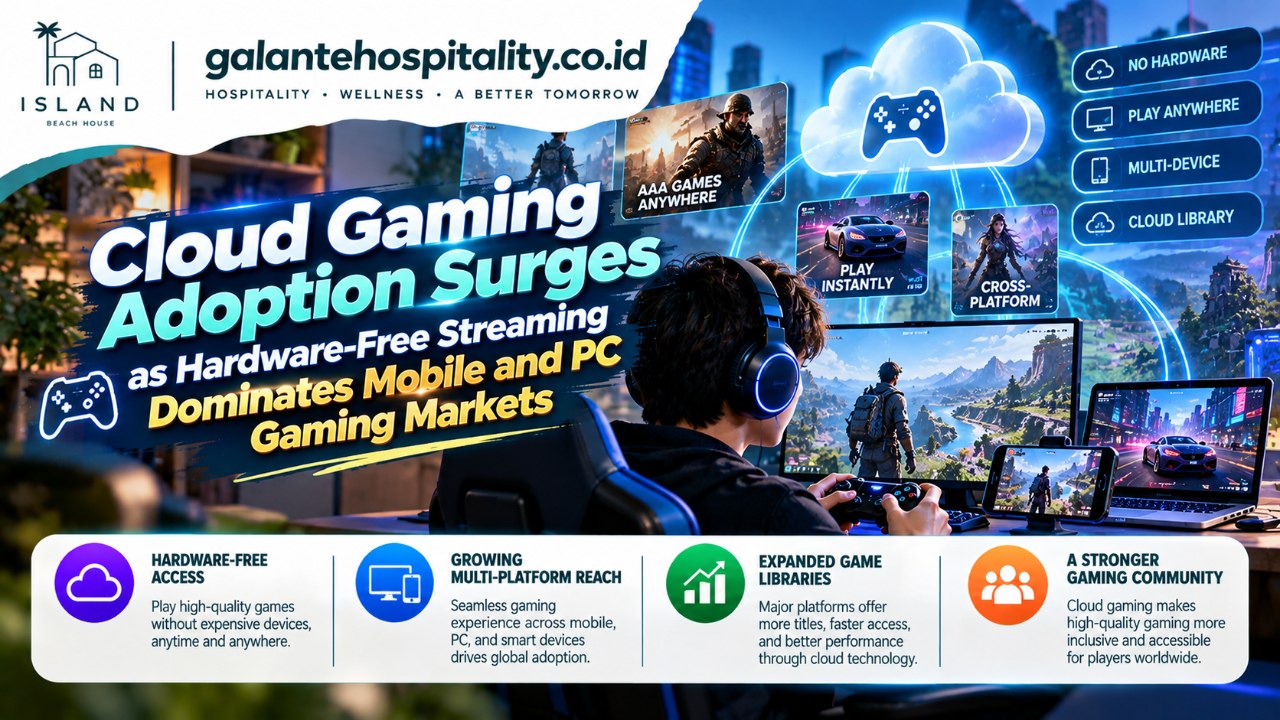

Cloud gaming is changing how players access digital entertainment by allowing supported games to run on remote servers and stream to compatible devices over the internet. Rather than relying entirely on powerful local hardware, users can play selected titles through smartphones, computers, tablets, televisions, or other supported screens.
The model offers an alternative to traditional gaming systems, which often require dedicated consoles, gaming PCs, or periodic hardware upgrades. With cloud gaming, much of the processing takes place in remote data centers. The player’s device receives the streamed video and sends control inputs back to the server.
This arrangement can reduce the initial cost of accessing certain games, particularly for users who already own a compatible device. Instead of purchasing an expensive computer to run demanding titles, players may be able to access supported games through a subscription or another service-specific payment model.
However, cloud gaming does not eliminate all hardware requirements. Users still need a compatible device, a reliable internet connection, and access to a service that supports their chosen games and region. Some platforms also require subscriptions, separate game purchases, or additional controllers.
Internet quality is one of the most important factors determining the experience. Because gameplay depends on continuous communication between a device and remote servers, network latency can affect how quickly actions appear on screen. Delays may be particularly noticeable in competitive shooters, fighting games, and other titles that require precise timing.
A stable connection with sufficient bandwidth can improve streaming quality, but network speed alone does not guarantee low latency. The distance between the player and the service’s servers, network congestion, and the quality of the local connection can also affect responsiveness.
Mobile gaming presents both opportunities and challenges. Smartphones provide portability, allowing users to access supported games without carrying a dedicated console. Yet mobile networks may experience fluctuating coverage, and extended streaming can consume substantial data and battery power. Players using mobile connections should check data allowances and consider whether Wi-Fi offers a more reliable option.
For PC gamers, cloud services may provide access to demanding games on devices that cannot run them locally. This can make gaming more accessible to users with older computers or limited storage. Nevertheless, players who prioritize highly responsive controls, extensive customization, offline access, or modifications may still prefer locally installed games.
Game availability is another important consideration. Not every title is supported by every service, and licensing agreements can change. Players should verify game libraries, supported devices, regional availability, subscription terms, and whether their existing purchases can be used before committing to a platform.
The environmental impact of cloud gaming also deserves attention. Remote data centers require electricity for computing and cooling, while network infrastructure consumes energy to deliver streamed content. The overall impact depends on factors such as server efficiency, electricity sources, device lifespan, and how cloud gaming compares with local hardware use.
As streaming technology and network infrastructure improve, cloud gaming may become an increasingly useful part of the gaming market. Its long-term appeal will depend on affordability, responsiveness, reliable access, and a strong selection of games. Rather than replacing every traditional gaming system, cloud services are likely to offer another way for players to choose how and where they play.


