







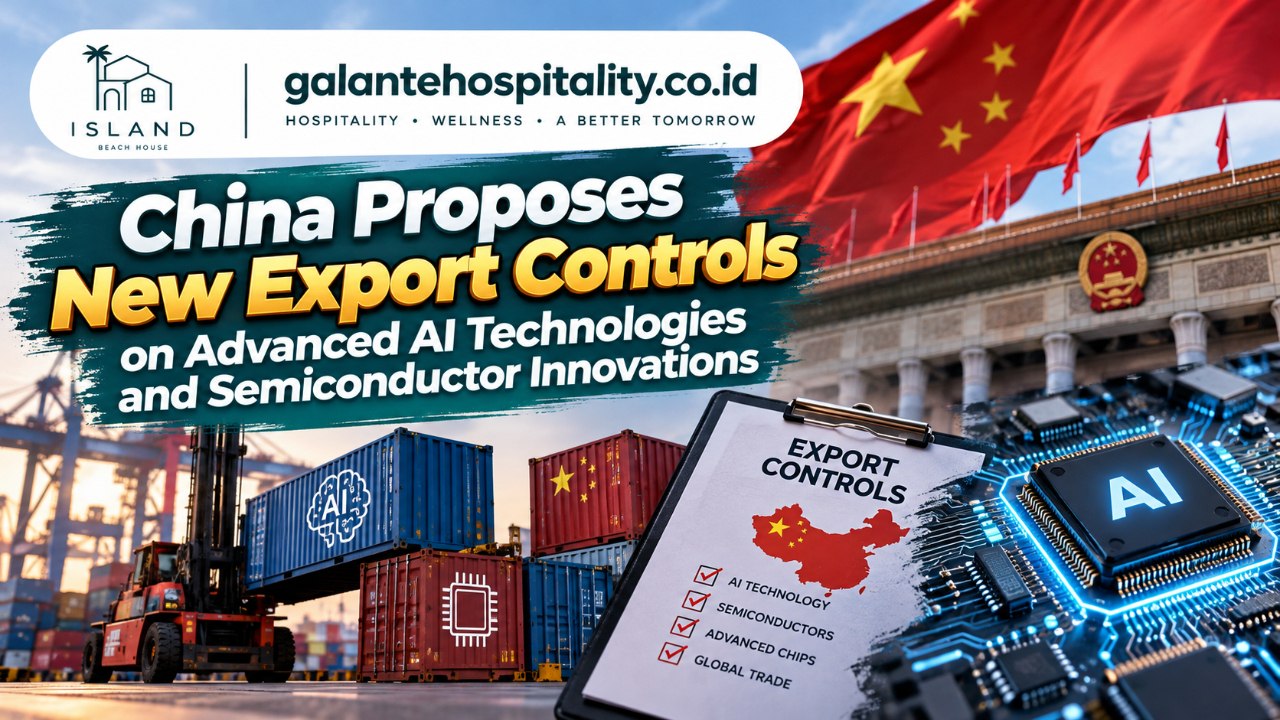

China has proposed new export controls covering advanced artificial intelligence technologies and semiconductor-related innovations, highlighting the growing importance of technology in global economic competition. The proposal, announced on October 16, 2026, covers 40 categories of advanced technologies, including 23 related to artificial intelligence.
The development could influence how advanced technology moves between countries, particularly as governments increasingly treat artificial intelligence and semiconductor capabilities as strategic assets.
AI Technology Becomes a Strategic Priority
Artificial intelligence is now widely used in business operations, scientific research, manufacturing, cybersecurity, and digital services. Advanced AI models can process large amounts of information, automate complex tasks, and support decision-making across different industries.
China’s proposed controls reportedly cover technologies such as large AI models, autonomous AI agents, chip design, and computing systems. The measures could affect the overseas transfer of certain technologies, depending on the final rules and technical thresholds established by authorities.
The proposal reflects a broader international trend in which governments seek to protect sensitive technologies while maintaining their positions in competitive industries.
Implications for the Semiconductor Industry
Semiconductors are essential components in smartphones, computers, data centers, vehicles, and advanced AI systems. Their design and manufacturing processes require specialized knowledge, substantial investment, and sophisticated equipment.
Export restrictions can influence companies that depend on international technology partnerships. Businesses may need to review licensing requirements, supplier relationships, and research arrangements to ensure compliance with new regulations.
However, the practical effects will depend on the final scope of the controls. A proposal does not automatically mean that every technology included in the draft is immediately prohibited from export.
Global Technology Competition Continues
The United States and China have introduced various measures affecting access to strategic technologies in recent years. These policies have made semiconductor production, AI development, and access to computing resources important issues in international economic relations.
For technology companies, the changing regulatory environment creates both risks and incentives to diversify supply chains. Some businesses may invest in alternative suppliers, expand local research capabilities, or develop products that rely less on restricted technologies.
Smaller companies could face additional challenges because compliance reviews and supply-chain adjustments can require significant resources.
What Businesses Should Watch
Companies operating in artificial intelligence and semiconductor markets will need to monitor official announcements and the final implementation of the proposed rules. Important details include which technologies are covered, what licensing procedures apply, and whether existing commercial arrangements receive transitional treatment.
Businesses should also avoid assuming that a proposal has already become a comprehensive export ban. The exact requirements will depend on the final regulations and their enforcement.
The Future of AI and Semiconductor Innovation
China’s proposal highlights how technological innovation increasingly intersects with national security, trade policy, and industrial development.
The global AI industry will continue to depend on research collaboration, computing infrastructure, specialized hardware, and access to skilled workers. At the same time, companies must navigate an increasingly complex regulatory landscape.
For businesses and consumers, the long-term effects will depend on how governments balance technological security with international cooperation. The outcome could influence the cost, availability, and development of advanced AI systems in the years ahead.


