







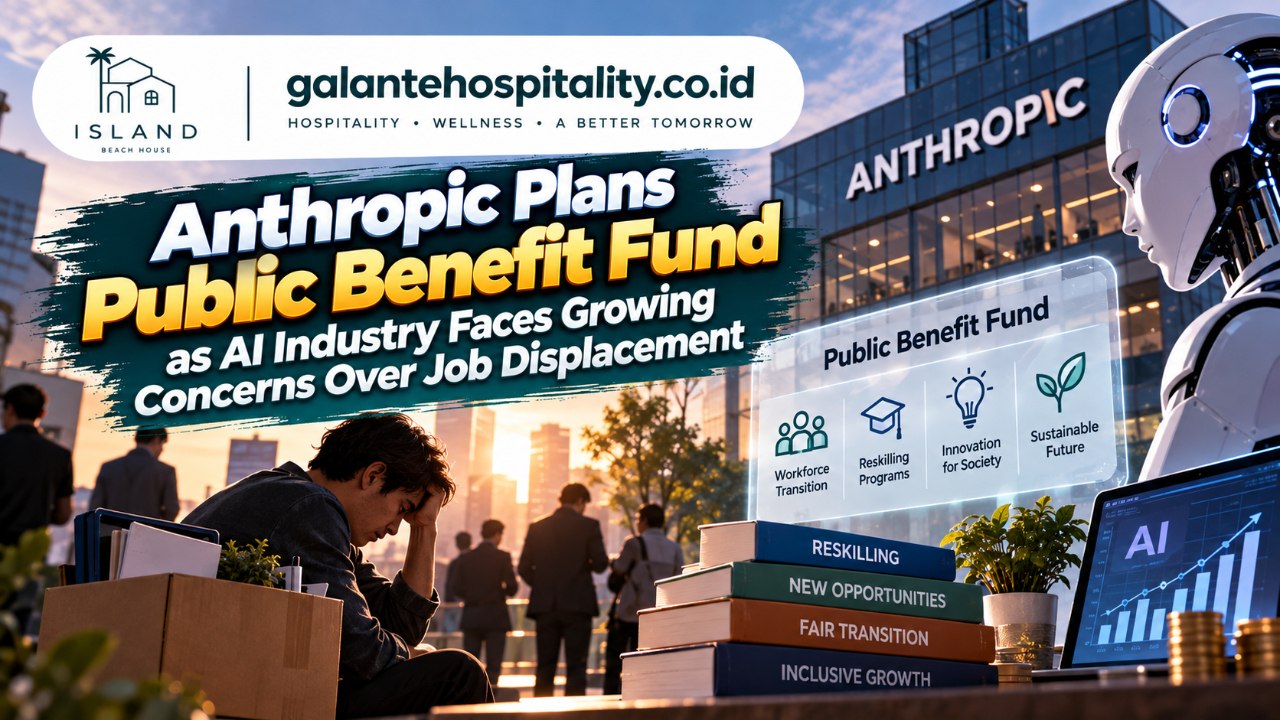

Artificial intelligence company Anthropic has announced plans to allocate 5% of its shares to a new Public Benefit Fund designed to support initiatives serving the public good. The announcement, reported on October 18, 2026, comes as the company prepares for a possible initial public offering and the technology industry faces growing concerns about AI’s impact on employment.
The proposed fund is intended to give the company a way to support nonprofit organizations, community initiatives, and programs addressing the effects of technological change on workers.
A New Approach to Corporate Responsibility
Anthropic develops Claude, an artificial intelligence system used for tasks such as writing, coding, research, and information analysis. As AI tools become more capable, the company has increasingly faced questions about how the technology could affect employment, productivity, and society.
According to the announcement, the new fund would be established as a wholly owned limited liability company. It could also receive additional shares as Anthropic’s valuation increases, subject to conditions and board discretion.
The company said the fund would support public-benefit activities, including nonprofit donations and initiatives aimed at helping workers affected by changes in the labor market.
The structure represents an effort to connect corporate growth with a broader social mission. However, the effectiveness of the initiative will depend on its governance, funding, and the outcomes of the programs it supports.
AI Raises Questions About the Future of Work
AI systems are increasingly capable of performing tasks that previously required substantial human time, including document preparation, software development, customer support, and data analysis.
These capabilities can help organizations improve efficiency and reduce repetitive work. At the same time, they may change the skills employers need and reduce demand for certain tasks or job roles.
The effects are unlikely to be identical across every industry. Some workers may see their responsibilities transformed rather than eliminated, while others may need to retrain or move into different occupations.
This makes access to education, professional development, and employment support increasingly important.
Supporting Workers Through Technological Change
A public-benefit fund could potentially help finance retraining programs, employment services, and initiatives designed to improve access to economic opportunities.
Workers facing changes in their industries may benefit from practical training in digital tools, communication, problem-solving, and specialized technical skills. Career guidance and job-placement services could also help people transition into new roles.
However, funding alone cannot solve every challenge associated with automation. Effective programs need to identify the needs of affected communities and measure whether participants actually gain useful skills or find sustainable employment.
Cooperation between companies, educational institutions, governments, and labor organizations will remain important.
Corporate Growth and Public Benefit
Anthropic’s announcement comes as the company considers a possible public offering. As a public benefit corporation, it operates under a structure that requires consideration of broader public interests alongside financial performance.
The proposed fund could strengthen that commitment by creating a dedicated mechanism for public-benefit activities. Nevertheless, the initiative’s long-term impact will depend on how the company defines its priorities, manages the fund, and reports its results.
Investors and the public will likely pay attention to transparency, accountability, and the relationship between the fund’s activities and the wider effects of AI adoption.
What Comes Next for the AI Industry?
Anthropic’s plan reflects a wider debate about how companies developing powerful AI systems should share the benefits of technological progress.
AI can create new business opportunities and improve productivity, but the transition may also place pressure on workers whose skills are becoming less relevant to changing industries.
Initiatives such as public-benefit funding could contribute to the response, provided they are supported by effective implementation and measurable results.
As AI adoption expands, companies will face growing expectations to demonstrate not only what their technology can accomplish, but also how they address its economic and social consequences.


