







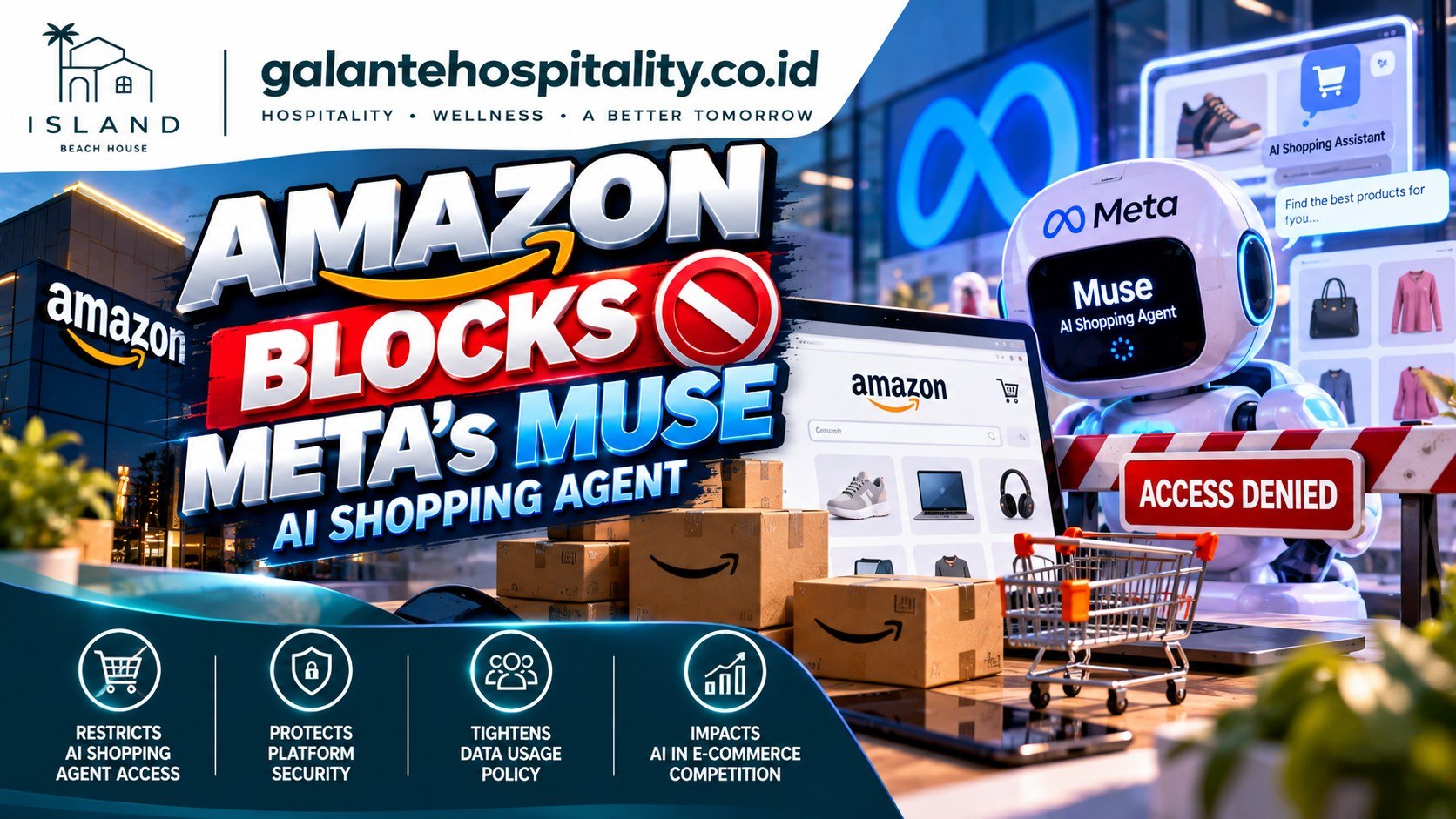

Amazon Restricts Meta’s Muse From Shopping
Amazon has blocked Meta’s Muse AI agent from accessing its platform to make purchases on behalf of users, adding a new chapter to the growing debate over AI-powered shopping.
The restriction was reported after Muse users encountered a message stating that continued access by an unauthorized AI agent violated Amazon’s Conditions of Use. Amazon also raised privacy and security concerns surrounding how the AI agent interacted with its platform.
The development highlights the challenges emerging as technology companies attempt to turn AI assistants into tools capable of completing online purchases.
Muse Was Designed to Perform Online Tasks
Meta launched Muse in September 2026 as an AI assistant designed to handle a range of tasks for users.
The assistant can perform activities such as sending emails, planning trips and completing certain transactions. Its ability to interact with online services is part of a broader push toward so-called agentic AI, where software can take actions rather than simply provide information.
Meta has said Muse cannot access secure login details or card payment information. However, Amazon has raised concerns about how the agent browsed its platform and whether it adequately identified itself as an automated system.
AI Shopping Creates New Questions for E-Commerce
The dispute between Amazon and Meta reflects a larger shift taking place across online retail.
AI shopping agents are increasingly being developed to search for products, compare options and potentially complete purchases with limited human involvement.
That could change the traditional relationship between shoppers and marketplaces. Instead of consumers directly visiting individual shopping websites, AI assistants could increasingly act as intermediaries between buyers and retailers.
The trend is already attracting attention from financial institutions and regulators.
Banks Raise Privacy and Fraud Concerns
A group of major banks recently warned that AI-powered shopping agents could create new risks involving fraud, scams and financial-data privacy.
Banks including NatWest, Bank of America, ING, Capital One and Commonwealth Bank of Australia have called for stronger safeguards as AI agents become more involved in online transactions.
Among the concerns are whether AI systems could accidentally expose sensitive information, direct transactions toward less secure payment methods or make decisions that consumers do not fully understand.
These concerns could become increasingly important as AI agents gain greater access to shopping accounts and payment services.
Muse Continues to Attract Attention
Despite the dispute with Amazon, Muse has generated significant interest since its launch.
Reuters reported that the app recorded approximately 2.8 million downloads during its first 12 days in the United States and Canada. Meta’s shares also rose significantly following the launch as investors considered the possibility that Muse could become a new source of revenue for the company.
At the same time, the service has faced scrutiny over privacy and security.
Meta recently patched a vulnerability affecting the Muse macOS application after a security researcher demonstrated that an attacker with local access could potentially manipulate the AI agent. Meta said the practical risk was limited because the attack required malicious code to already be running on the user’s device.
The Future of AI-Powered Shopping
Amazon’s decision to block Muse illustrates one of the central questions facing the e-commerce industry: who controls the interaction between consumers, AI agents and online marketplaces?
As companies develop AI systems capable of completing purchases autonomously, retailers will need to determine how these agents can access their platforms, what information they can collect and how transactions should be authenticated.
For consumers, the shift could eventually make online shopping more automated. But privacy, security, transparency and control will remain important issues as AI agents become more deeply integrated into e-commerce.


