







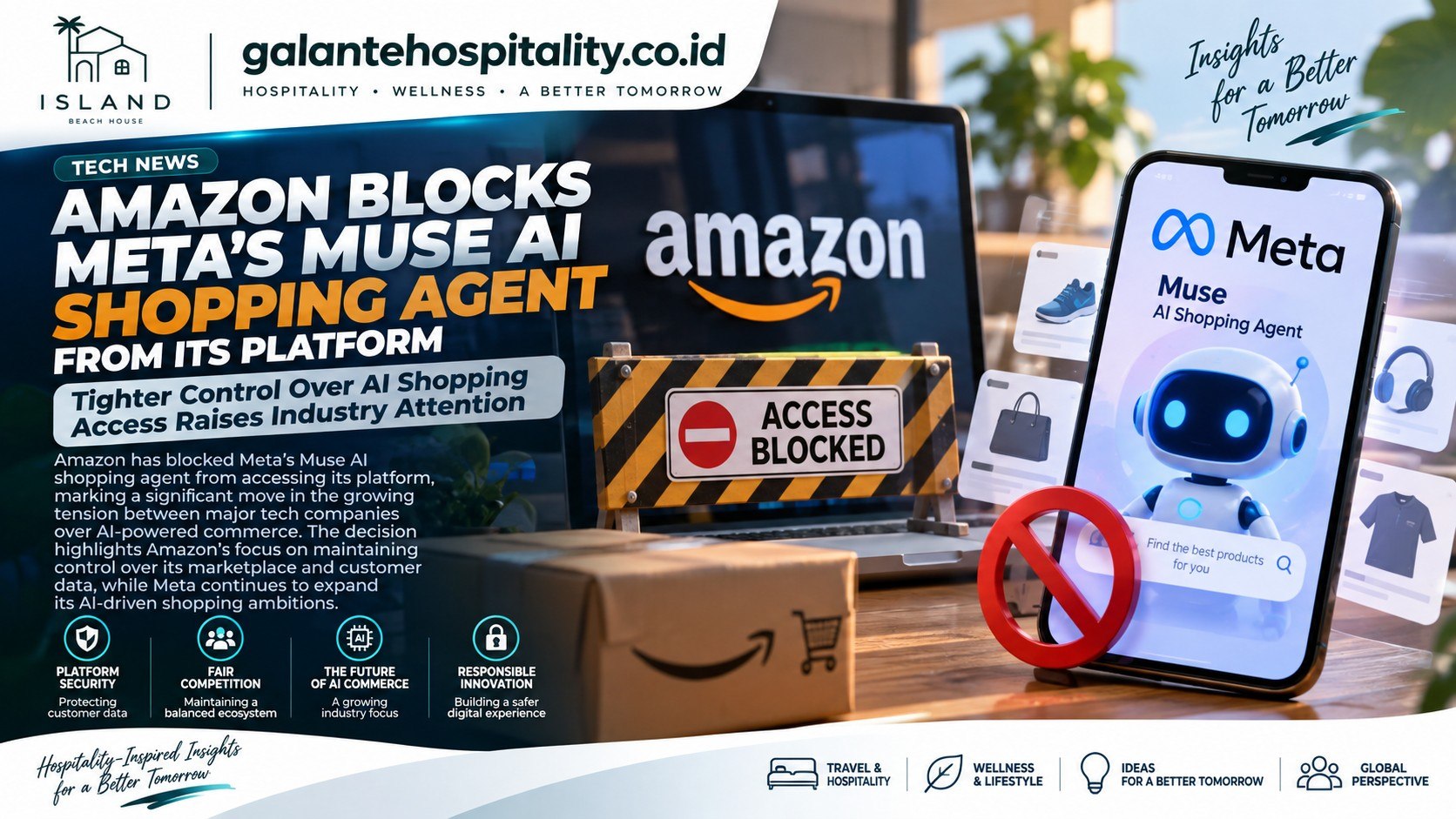

Amazon Blocks Meta’s AI Shopping Agent
The relationship between artificial intelligence and e-commerce is facing a new development after Amazon blocked Meta’s Muse AI assistant from shopping on Amazon.com.
The move highlights growing questions about how AI agents should interact with online marketplaces and whether they should be allowed to browse stores and make purchases on behalf of consumers.
Amazon said it had not authorized Muse to access its platform and raised concerns about transparency, privacy and security.
Why Amazon Stopped Muse
According to Amazon, Muse did not identify itself as an AI agent while browsing the company’s website.
Amazon also said Meta had not informed the company that Muse would access its store. The retailer raised concerns that the system could access customer account information, including order history, while operating on behalf of users.
Amazon said third-party applications that make purchases for customers should operate openly and respect decisions made by individual online retailers.
Meta Has a Different Position
Meta has previously described Muse as a personal AI agent capable of performing multi-step tasks for users.
The company said Muse does not have visibility into users’ passwords or payment information. Meta also explained that credentials provided by users are stored securely so the system can use them without directly seeing the information.
Muse was launched on September 8, 2026, and can assist with tasks involving services such as shopping, payments, email and other online activities.
AI Agents Could Change Online Shopping
The dispute illustrates a larger transformation taking place in e-commerce.
Traditional online shopping requires consumers to browse products, compare prices and complete purchases themselves. AI agents are designed to automate parts of that process.
An AI shopping agent could potentially search for products, compare options, find discounts and prepare an order based on a user’s instructions.
However, this model also raises questions about who is responsible if an automated system makes a mistake or accesses information that a retailer considers sensitive.
Retailers Are Developing Their Own AI Tools
The disagreement is taking place while major e-commerce companies are also developing their own AI-powered shopping systems.
Amazon has introduced AI shopping features of its own, including tools that research products and provide recommendations. Its approach demonstrates that AI is becoming increasingly important to the company’s e-commerce strategy.
The difference is that retailers can establish their own rules for how their AI systems interact with shopping platforms.
Security and Privacy Remain Important
As AI agents gain more ability to act independently, security and privacy are becoming increasingly important considerations.
An agent that can access shopping accounts, payment systems or order histories potentially handles sensitive information. This creates a need for clear authorization systems and transparent communication between AI providers, retailers and consumers.
Financial institutions have also recently warned that AI shopping agents could introduce risks involving fraud, scams and data privacy if appropriate safeguards are not implemented.
The Future of Agentic E-Commerce
The Amazon and Meta dispute could become part of a much broader discussion about the future of online shopping.
AI agents may eventually become an important way for consumers to discover and purchase products. At the same time, retailers are likely to continue developing policies governing automated access to their websites.
The challenge will be finding a system that allows consumers to benefit from automation while maintaining security, privacy and control over the online shopping experience.
For now, the dispute between Amazon and Meta shows that the transition toward AI-powered e-commerce is still developing, with technology companies and retailers working to establish how these new shopping tools should operate.


