







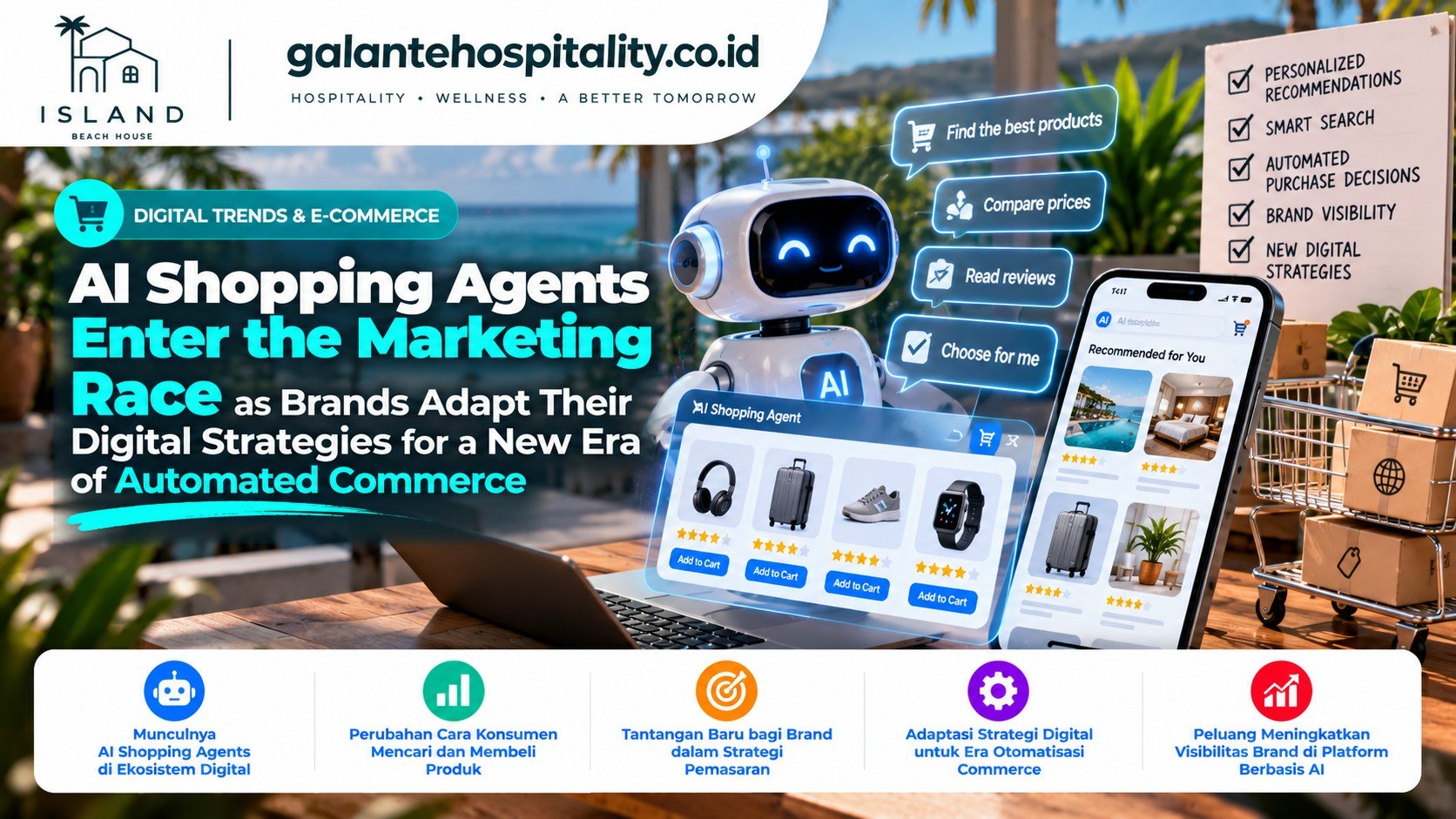

AI Shopping Agents Create a New Marketing Frontier
Artificial intelligence is moving deeper into e-commerce as shopping agents begin taking a more active role in product discovery and purchasing. Instead of simply helping consumers find information, some AI agents are being designed to search for products and complete shopping tasks on behalf of users.
The development is creating a new challenge for marketers: brands may increasingly need to optimize not only for human shoppers and search engines, but also for automated shopping systems.
Recent reporting shows that retailers are taking different approaches to this emerging technology. Some companies are preparing their systems for AI-driven shopping, while others are restricting or blocking agent purchases because of concerns involving data control, security and customer experience.
From Search Results to Automated Purchases
Traditional e-commerce usually requires customers to search, compare products and complete checkout themselves.
AI shopping agents could change that process.
A consumer might provide an instruction such as finding a particular type of product within a budget. An AI system can potentially compare available options and assist with the purchasing process.
This creates a different kind of customer journey in which the consumer may not visit multiple product pages or marketplaces before making a decision.
Product Information Becomes Critical
For brands, accurate product information could become increasingly important.
AI systems need structured information about products, including pricing, specifications, availability, shipping details and other attributes. If product information is incomplete or inconsistent, automated systems may struggle to understand what a brand offers.
Marketing teams may therefore need to work more closely with e-commerce, technology and product-data teams.
Retailers Are Taking Different Approaches
The rise of agentic commerce has not produced a uniform response from retailers.
According to recent reporting, Walmart, Gap and Best Buy are among companies preparing for AI shopping agents, while Amazon and eBay have taken a more restrictive approach. Other businesses have adopted policies that allow browsing but limit automated purchasing.
These differences highlight the uncertainty surrounding the technology.
Consumer trust is another important factor. Some shoppers may welcome automated purchasing for routine products, while others may prefer to remain directly involved in more complex or personal buying decisions.
Marketing Strategies May Need to Adapt
AI shopping agents could eventually influence how brands approach digital marketing.
Product pages may need to become more structured. Product descriptions should communicate important information clearly. Pricing and inventory data should also remain accurate.
At the same time, brands cannot rely entirely on automation. Strong brand identity, customer trust and direct relationships remain important because consumers still make emotional and experience-based purchasing decisions.
A New Stage for Digital Commerce
AI shopping agents are still developing, and adoption remains uneven. Retailers are balancing potential convenience with questions about security, privacy, customer relationships and control over the shopping experience.
For marketers, the development represents another expansion of digital discovery. The future of e-commerce may involve a combination of traditional search, social discovery, marketplaces and AI-powered shopping assistance.
Brands that understand how consumers and automated systems discover products will be better prepared for the changing digital commerce environment.


