







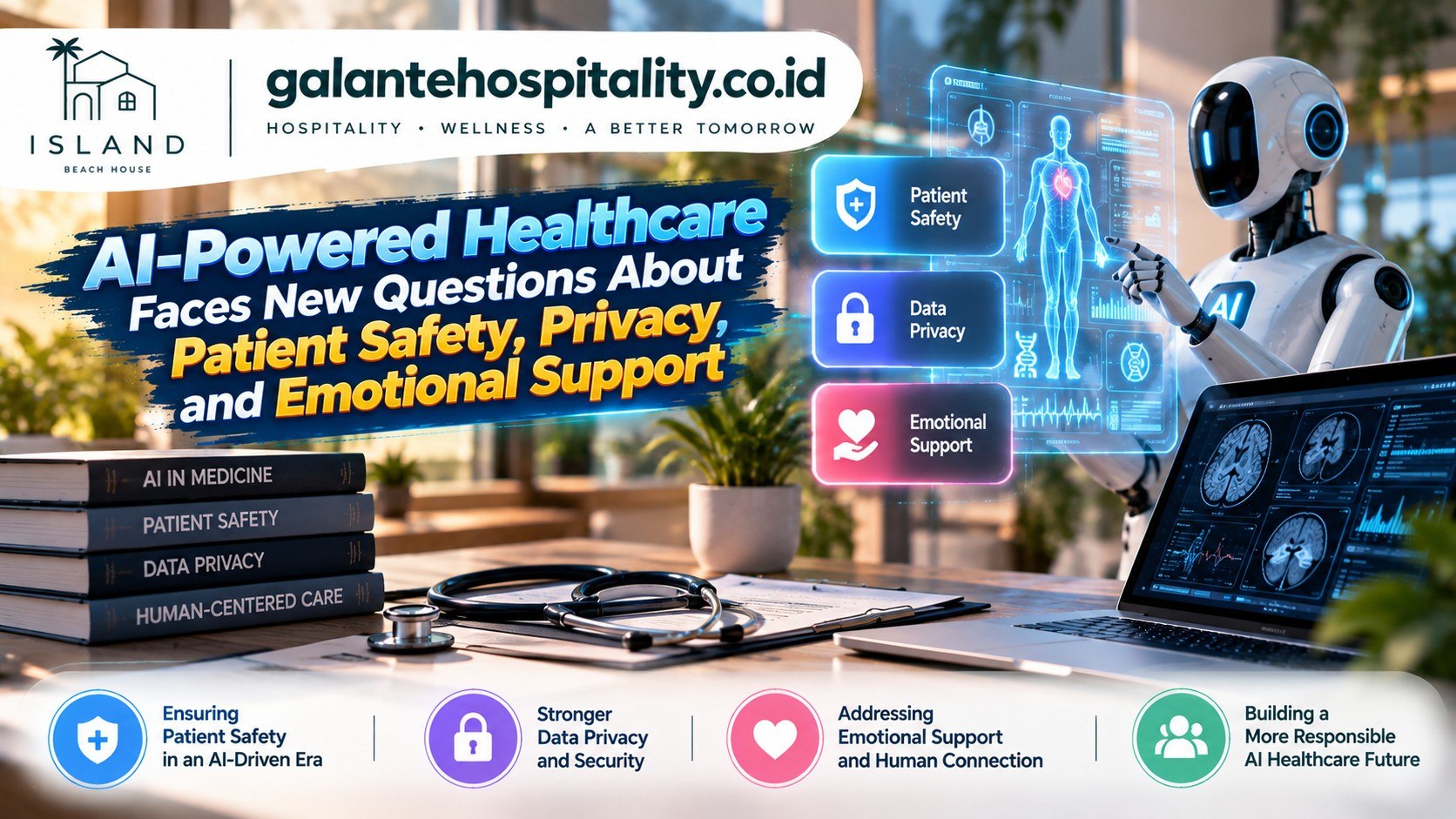

Artificial intelligence is becoming an increasingly important part of healthcare, supporting activities such as medical documentation, health information analysis, administrative work, and patient communication. These applications have the potential to improve efficiency and help healthcare professionals manage growing demands.
However, the expansion of AI-powered healthcare also raises important questions about patient safety, data privacy, and the role of human judgment in medical decisions.
As hospitals, clinics, and digital health companies explore new AI tools, they must ensure that technological progress supports reliable care rather than introducing unnecessary risks.
How Artificial Intelligence Is Changing Healthcare
Healthcare organizations handle large amounts of information, including patient records, laboratory results, medical images, appointment schedules, and treatment documentation.
AI systems can help process this information and identify patterns that healthcare professionals may wish to investigate further. Depending on the application and its validation, these tools may assist with medical image analysis, clinical documentation, patient scheduling, and other specialized tasks.
AI-powered administrative assistants can also help organize records and prepare draft summaries, potentially reducing some repetitive work for medical staff.
Nevertheless, the capabilities of these systems vary significantly. An AI tool designed to summarize medical documents should not automatically be treated as a diagnostic system, and a system developed for one clinical purpose may not be appropriate for another.
Healthcare providers must evaluate each tool according to its intended use, performance, and potential consequences if it produces an incorrect result.
Patient Safety Must Remain the Priority
Medical decisions can have serious consequences, making accuracy and reliability essential when AI is used in clinical settings.
An AI system may misinterpret information, overlook relevant medical history, or produce a convincing but incorrect explanation. Such errors can be difficult for patients to recognize, particularly when the information is presented in confident language.
Healthcare professionals should therefore review AI-generated recommendations when clinical judgment is required. AI outputs should be considered alongside patient history, examination findings, relevant test results, and established medical guidance.
Hospitals and clinics should also establish procedures for identifying errors, reporting unexpected behavior, and reviewing the performance of deployed systems.
Regular evaluation is particularly important because a tool that performs well in one setting may produce different results when used with another patient population or different types of medical information.
Protecting Sensitive Patient Information
Privacy is another major concern as healthcare organizations introduce AI-powered services.
Medical records may contain highly sensitive information about a person’s health, identity, medications, and treatment history. If these details are handled improperly, patients could face privacy violations, discrimination, or other forms of harm.
Healthcare providers should understand how an AI system collects, processes, stores, and shares patient information before adopting it.
Appropriate safeguards may include encryption, access restrictions, secure data storage, audit logs, and clear policies governing the use of patient records.
Organizations should also ensure that staff members understand which tools are approved for handling confidential information. Entering identifiable patient details into an unapproved public AI service can create avoidable privacy risks.
Patients deserve clear explanations about how their information is used, particularly when AI plays a meaningful role in a healthcare service.
Can AI Provide Emotional Support to Patients?
AI-powered chatbots are also being used to provide general health information, answer common questions, and offer conversational support.
For some people, digital tools may provide convenient access to basic information outside regular clinic hours. They can also help users prepare questions before an appointment or understand general medical terminology.
However, emotional support and mental healthcare require careful consideration. A chatbot cannot fully replace the understanding, clinical assessment, and personal relationship provided by a qualified healthcare professional.
AI systems may misunderstand emotional cues, fail to recognize the seriousness of a situation, or offer advice that is inappropriate for an individual’s circumstances.
Digital health services should clearly explain their limitations and provide pathways to professional assistance when a person’s needs exceed the system’s capabilities.
Urgent symptoms and mental health emergencies require appropriate professional or emergency support rather than reliance on an automated conversation.
The Risk of Unequal Healthcare Outcomes
AI systems learn from data, and the quality and diversity of that data can influence their performance.
If a system is trained using information that does not adequately represent certain populations, it may perform less reliably for those groups. Differences in age, language, medical history, and access to healthcare can also affect how well a tool works in practice.
Healthcare organizations should assess whether AI systems perform consistently across relevant patient groups and investigate meaningful differences in outcomes.
Accessibility is equally important. Digital healthcare should not create additional barriers for people who have limited internet access, disabilities, language difficulties, or limited familiarity with technology.
AI should help expand access to appropriate care rather than make essential services harder to reach.
Why Healthcare Professionals Still Matter
The introduction of AI does not remove the need for qualified healthcare professionals. Instead, it creates a need for staff who understand both the benefits and the limitations of these tools.
Doctors, nurses, pharmacists, and other professionals can provide context that automated systems may not fully understand. They can also communicate uncertainty, consider patient preferences, and adapt care to individual circumstances.
Healthcare organizations should provide training that helps staff recognize AI-generated errors, protect patient information, and use approved tools appropriately.
Clear accountability is essential as well. Patients and professionals should understand who is responsible for reviewing recommendations, making clinical decisions, and responding when an AI system produces an unsafe result.
What Patients Should Know About AI-Powered Healthcare
Patients can take several practical steps when interacting with AI-supported health services.
First, they should ask how the technology is being used and whether a qualified professional reviews its output. They should also avoid sharing unnecessary sensitive information through unverified applications.
Second, patients should seek clarification when AI-generated information conflicts with advice from their healthcare provider or does not match their symptoms.
Finally, they should remember that online health information cannot always account for individual medical circumstances. A qualified healthcare professional remains the appropriate source for personalized assessment and treatment decisions.
Conclusion
AI-powered healthcare offers opportunities to improve administrative efficiency, support medical professionals, and make some health information easier to access. However, these benefits must be balanced against concerns about patient safety, privacy, fairness, and emotional support.
Responsible implementation requires careful testing, strong data protection, transparent communication, and appropriate human oversight.
The future of healthcare technology should not be measured solely by how much work AI can automate. Its real value lies in whether it helps healthcare professionals deliver safer, more accessible, and more effective care while protecting the people they serve.


