







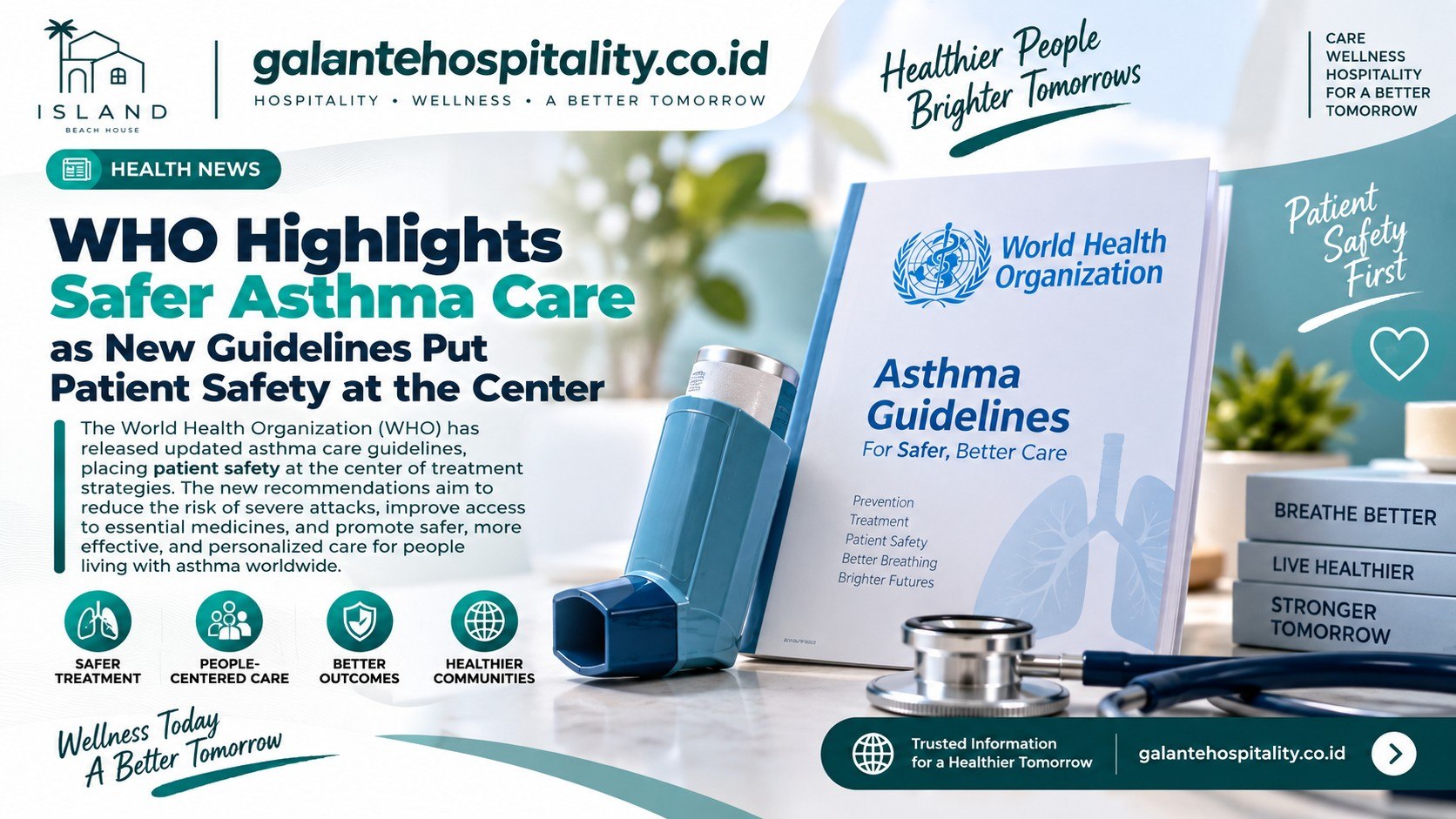

The World Health Organization is placing patient safety at the center of updated asthma care guidance, highlighting the importance of effective treatment, correct inhaler use and continuous follow-up for people living with the condition.
The WHO announced on September 17, 2026, that its forthcoming asthma guidance will focus on strengthening evidence-based primary care and reducing avoidable harm. The updated guidance is expected to be published in early 2027.
The announcement comes as part of World Patient Safety Day 2026, which focuses on safe care for people living with noncommunicable diseases.
Asthma Remains a Major Global Health Concern
According to WHO, asthma affected an estimated 363 million people in 2023 and was associated with approximately 442,000 deaths.
Most asthma-related deaths occur in low- and lower-middle-income countries, where underdiagnosis, undertreatment and limited access to appropriate medicines remain significant challenges.
Although effective asthma treatments are available, access to those treatments remains uneven between countries and health systems.
WHO reported that in 2023, bronchodilator inhalers were available in public primary healthcare facilities in fewer than two-thirds of low- and lower-middle-income countries. Steroid inhalers were available in fewer than half of those facilities.
Correct Inhaler Use Is an Important Part of Treatment
Having asthma medication is only one part of safe care. Patients also need to understand which medicine they are using, why it is prescribed and how it should be taken.
WHO emphasizes the importance of correct inhaler technique and regular assessment of asthma control.
Reliever inhalers can provide quick symptom relief by opening narrowed airways. However, frequent reliance on these medicines may indicate that asthma is not adequately controlled and can be associated with a higher risk of severe attacks.
Inhaled corticosteroids, meanwhile, help reduce airway inflammation and can lower the risk of severe asthma attacks and asthma-related death.
Patients Need to Be Part of Their Own Care
WHO’s approach also emphasizes patient involvement.
People living with asthma need clear information about their medicines, how to recognize worsening symptoms and when to seek medical assistance.
Healthcare workers can support this process by demonstrating proper inhaler techniques, reviewing symptoms and discussing treatment decisions with patients.
This approach is consistent with the broader message of World Patient Safety Day 2026, which calls for people living with chronic diseases to become active partners in their healthcare.
Updated Guidance Expected in 2027
The forthcoming WHO asthma guidance is intended to help strengthen primary healthcare and close gaps between medical evidence and everyday treatment.
The organization says safer asthma care requires more than access to medication. It also involves appropriate prescribing, correct use of medical devices, continuous follow-up and clear communication between patients and healthcare professionals.
As asthma remains a major global health issue, the updated guidance is expected to provide another framework for improving long-term care and reducing avoidable risks.


