







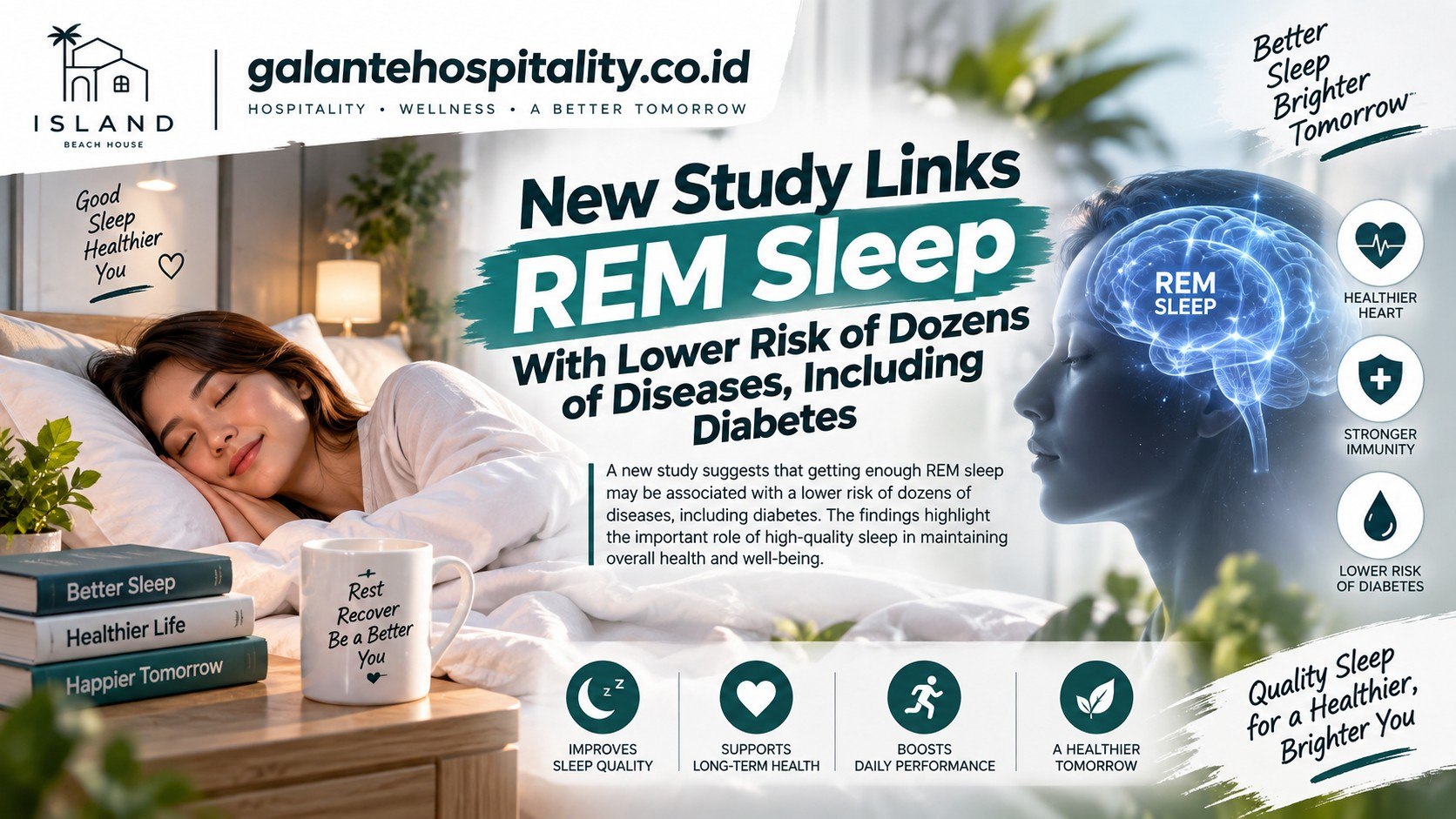

Study Examines Sleep Beyond Total Hours
A large new study is drawing attention to the relationship between sleep stages and long-term disease risk.
Published in PLOS Medicine on September 17, 2026, the study analyzed real-world sleep data from nearly 100,000 UK Biobank participants. Instead of relying only on self-reported sleep duration, researchers used wrist-worn accelerometers to assess sleep patterns and different stages of sleep.
The researchers then examined health outcomes over a median follow-up period of approximately 8.9 years.
More REM Sleep Was Associated With Lower Risk of 83 Diseases
One of the study’s notable findings involved rapid eye movement, or REM sleep.
Greater REM sleep duration was associated with a lower risk of 83 incident diseases across 12 categories.
The associations included several cardiovascular and neurological conditions. Researchers reported lower risks associated with heart failure, atrial fibrillation, ischemic heart disease, parkinsonism, multiple sclerosis, dementia, and Alzheimer’s disease among people with greater REM sleep duration.
However, the findings show associations rather than proof that increasing REM sleep directly prevents these diseases.
Deep Sleep Was Also Linked to Several Health Outcomes
The researchers also examined deep sleep.
Greater deep sleep duration was associated with a lower risk of seven diseases across five categories. These included type 2 diabetes, major depressive disorder, sleep apnea, and Parkinson’s disease.
The findings suggest that sleep quality and sleep architecture may provide additional information about health beyond simply measuring how long someone sleeps.
Six to Eight Hours Was Associated With More Favorable Patterns
The study also looked at overall sleep duration.
Researchers found that sleeping between six and eight hours was associated with more favorable sleep patterns and lower disease risk compared with other durations in the study population.
This does not mean that every individual should automatically target exactly the same number of hours. Sleep needs can vary, and the researchers emphasized that their findings were observational.
The Study Cannot Prove Cause and Effect
One important limitation is that the study cannot establish that particular sleep patterns directly cause or prevent specific diseases.
The researchers specifically noted that the observational design means causality cannot be inferred. Other factors that were not fully captured by the study may also influence both sleep and health outcomes.
There is also the possibility of reverse causation for some conditions. For example, an existing health problem could disrupt sleep rather than poor sleep being the original cause of the condition.
Sleep Quality Deserves More Attention
The findings highlight why sleep research is increasingly looking beyond total sleep time.
REM sleep, deep sleep, light sleep, and periods of wakefulness during the night can provide different information about sleep architecture.
The study found that greater wakefulness after sleep onset was associated with an increased risk of several conditions, while irregular sleep patterns were associated with some mental and physical health outcomes.
Conclusion
The new UK Biobank study adds to evidence that sleep duration and sleep architecture are both relevant areas of health research.
Greater REM sleep was associated with lower risks of 83 diseases, while more deep sleep was associated with lower risks of several conditions. However, the results are observational and should not be interpreted as proof that changing one sleep stage will prevent disease.
For now, the findings reinforce the importance of viewing sleep as more than simply the number of hours spent in bed.


