







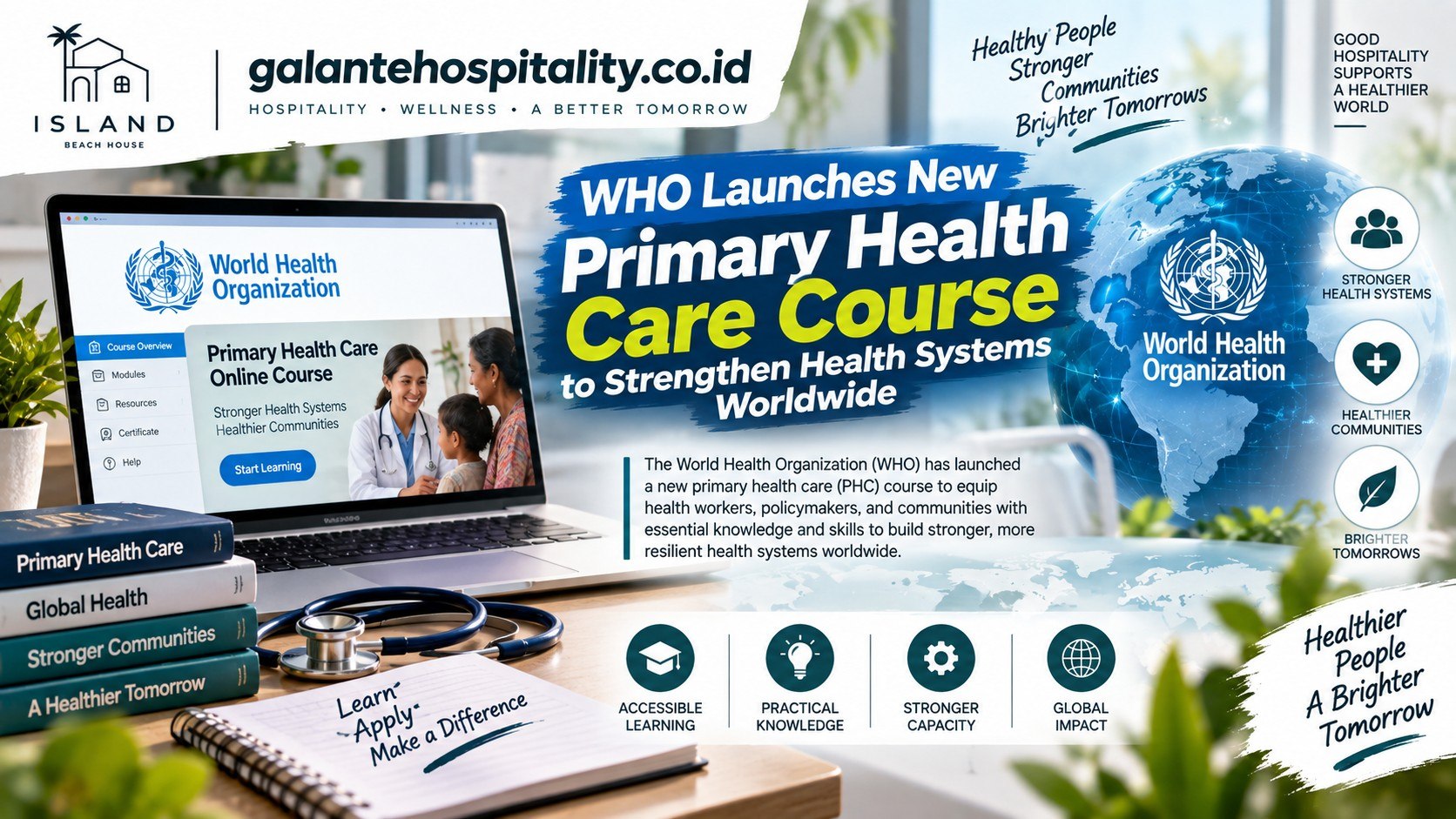

WHO Introduces a New Primary Health Care Course
The World Health Organization (WHO) has launched a new free online course designed to improve understanding and implementation of primary health care (PHC) around the world.
The course, called The Primary Health Care Approach: A Short Course, is available through the WHO Academy online learning platform. WHO said the initiative aims to address gaps in understanding how primary health care can be put into practice across different health systems.
Primary health care places people and communities at the center of health systems and is considered an important component of efforts toward universal health coverage.
Course Covers Five Core Modules
The new course is self-paced and requires approximately 1.5 hours to complete.
According to WHO, the program consists of five core modules covering why primary health care matters, its three core components, and the strategic and operational approaches that can help strengthen PHC systems.
The course also introduces learners to political-economy analysis and leadership approaches focused on compassion. Videos, country examples, and additional resources are included to help participants connect the material with their own work and local circumstances.
Primary Health Care Remains a Global Priority
WHO says primary health care has been part of the global health agenda for nearly 50 years. However, implementation has remained fragmented in many settings.
The organization argues that a shared understanding of PHC could help countries translate global commitments into practical improvements in health services and system performance.
Primary health care is particularly important because it can connect communities with essential health services closer to where people live and work.
Thousands Have Already Taken Part
The course was adapted from a longer leadership capacity-building program launched by WHO in 2024.
WHO reported that more than 3,000 participants from over 140 countries had taken part in the new course during its first few months of availability. The response, according to the organization, reflects continuing interest in practical approaches to strengthening primary health care.
The course is currently available in English, while additional language versions are being explored.
Health Workers and Other Learners Can Benefit
The course is not limited to one professional group. WHO describes it as a resource for people working in clinics, classrooms, communities, workplaces, and other settings connected to health.
Participants who complete the course can also receive a WHO Academy Award of Completion recognizing the knowledge gained.
The broader goal is to help create a common understanding of primary health care and encourage its practical application in different environments.
Why Primary Health Care Matters
Strong primary health care can play an important role in making health services more accessible and people-centered.
Instead of focusing only on treatment after illness occurs, primary health care can support prevention, early intervention, community engagement, and continuity of care.
WHO’s new course therefore focuses not only on the definition of PHC but also on how health systems can move from broad commitments toward implementation.
Conclusion
WHO’s new primary health care course provides a free and accessible way for learners around the world to understand the principles and practical approaches behind stronger primary health care systems.
With a short self-paced format and examples from different settings, the course is designed to help translate the concept of primary health care into practical action.


