







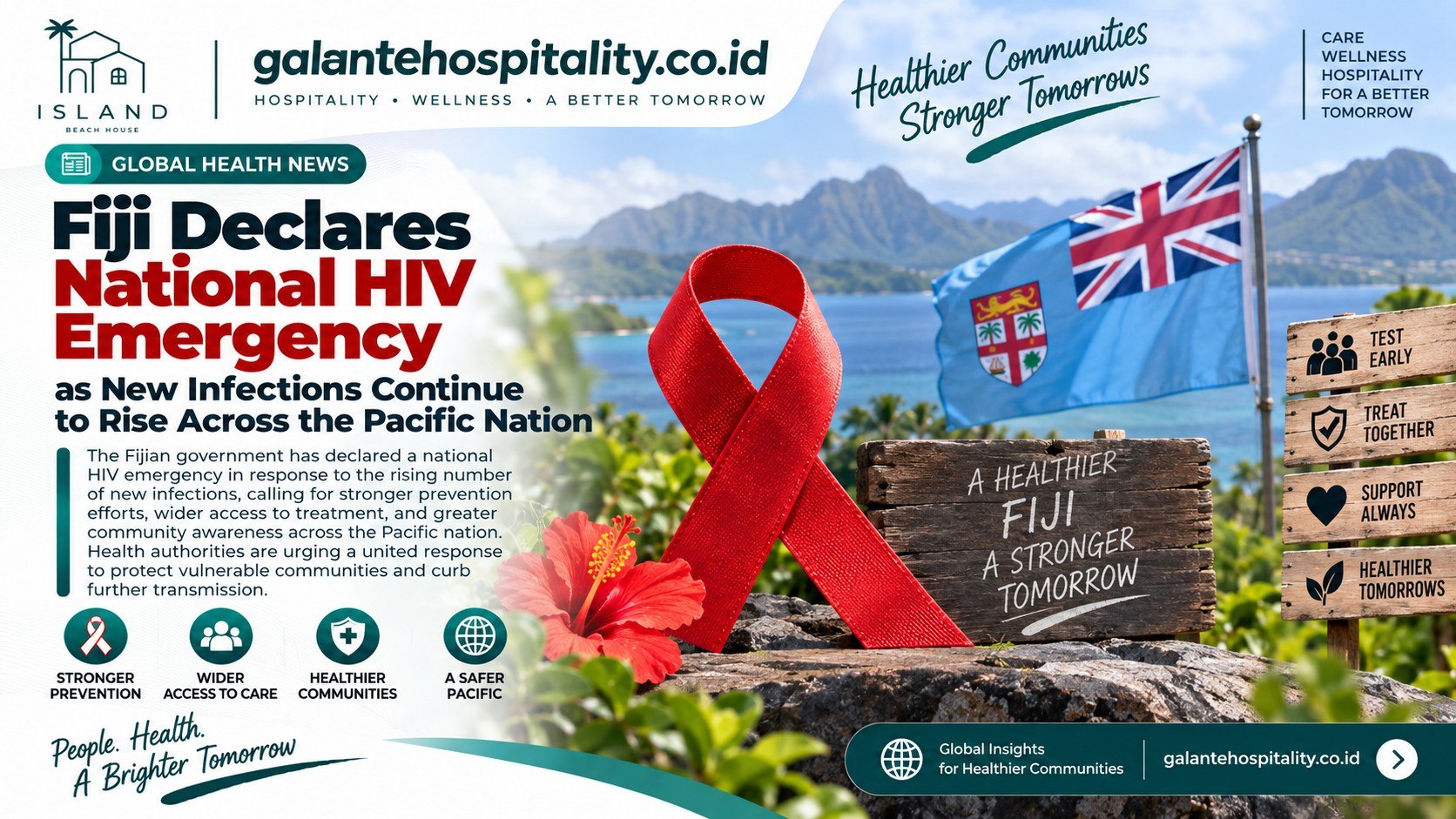

Fiji has declared a national HIV emergency following a sharp increase in reported HIV diagnoses, prompting the government to expand testing, prevention and treatment efforts across the Pacific island nation.
The declaration was made in September 2026 as health authorities responded to a significant increase in HIV infections. According to Reuters, Fiji recorded 2,016 new HIV diagnoses in 2025, while government estimates indicate that around one in 60 adults in the country is now living with HIV.
The government had previously declared an HIV outbreak in January 2025, but authorities said the latest situation required a broader and more coordinated response.
HIV Diagnoses Have Increased Sharply
Fiji’s recent figures show a substantial increase compared with previous years.
Reuters reported that the country recorded 2,016 new diagnoses in 2025, representing a 27 percent increase from the previous year. UNAIDS estimates that around 9,100 people in Fiji were living with HIV in 2025.
Health authorities also reported that only about 39 percent of people living with HIV were aware of their status, while approximately 22 percent were receiving antiretroviral treatment.
These figures have increased pressure on the country’s healthcare system and prompted authorities to strengthen access to testing and treatment.
Government Plans to Expand Testing and Prevention
Fiji’s government is planning to expand free, voluntary and confidential HIV testing.
Authorities also plan to improve access to prevention medication, including pre-exposure prophylaxis, commonly known as PrEP, as well as harm-reduction services for people who inject drugs.
The response is intended to identify infections earlier and connect people with appropriate treatment and support.
Expanded testing can also help people who do not know their HIV status access healthcare sooner.
Transmission Has Multiple Factors
According to UNAIDS data reported by Reuters, more than half of cases with a known transmission route were linked to sexual transmission, while more than 42 percent were associated with injecting drug use.
Health authorities have therefore emphasized that the response needs to cover multiple areas, including testing, treatment, prevention and harm reduction.
The government has also established a five-minister Cabinet subcommittee to address barriers to the national response.
Protecting Mothers and Children Is Also a Concern
The increase in HIV cases has also raised concerns about transmission from mothers to children.
Reuters reported that 59 babies were born with HIV in 2025, with 18 dying before their first birthday.
These figures underline the importance of early testing and access to appropriate treatment during pregnancy and after childbirth.
Fiji’s health authorities are now working to strengthen services nationwide as part of the emergency response.
A Wider Public Health Response
The HIV emergency declaration reflects the need for a coordinated approach involving testing, treatment, prevention and public health education.
Fiji has also emphasized that discrimination against people living with HIV is illegal and that services are available nationwide.
As the country responds to the rise in diagnoses, expanded access to healthcare and accurate health information will remain important components of its national HIV strategy.


